
Shri Kalabhairava Ashtakam
Introduction to Shri Kalabhairava Ashtakam
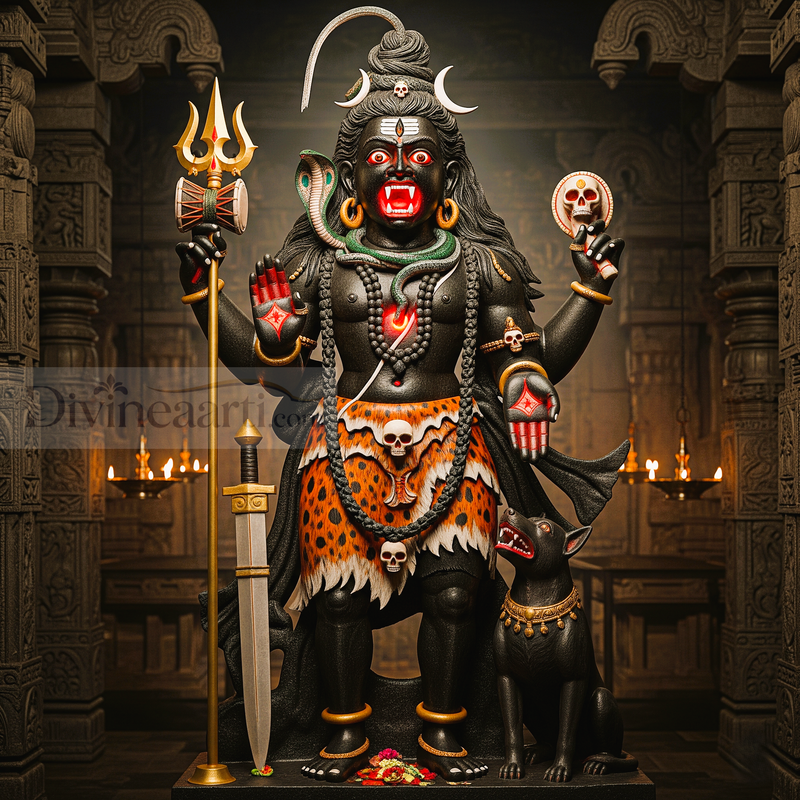
The Shri Kalabhairava Ashtakam beginning with "Devarajasevyamanapavanan" is a powerful eight-verse hymn composed by Adi Shankaracharya that glorifies Lord Kalabhairava, the fierce manifestation of Lord Shiva and the supreme lord of time. "Kala" means time, and "Bhairava" means the terrifying one — together signifying the deity who transcends and controls the very fabric of time itself.
This ashtakam celebrates the awe-inspiring form of Lord Kalabhairava — adorned with serpents, wielding a trident, accompanied by His divine dog, and residing in the sacred city of Kashi (Varanasi). Each verse describes His cosmic powers, His role as the destroyer of sins, and His supreme authority over death and time, while also revealing His compassionate nature toward sincere devotees.
Reciting this ashtakam with devotion invokes the fierce grace of Lord Kalabhairava, dissolving karmic bonds, removing all time-related fears, and granting spiritual liberation. It is especially beneficial for those seeking protection from evil forces, freedom from the cycle of birth and death, and the awakening of higher consciousness beyond the limitations of time.
Watch Shri Kalabhairava Ashtakam
Shri Kalabhairava Ashtakam: Sanskrit, English & Tamil Verses
॥ अथ श्रीकालभैरवाष्टकम् ॥

शिवरहस्यान्तर्गते महादेवाख्ये
शिवपार्वतीसंवादे
ईश्वर उवाच।

देवराजसेव्यमानपावनाङ्घ्रिपङ्कजं
व्यालयज्ञसूत्रमिन्दुशेखरं कृपाकरम्।
नारदादियोगिवृन्दवन्दितं दिगम्बरं
काशिकापुराधिनाथकालभैरवं भजे॥1॥

भुक्तिमुक्तिदायकं प्रशस्तचारुविग्रहं
नितान्तभक्तवत्सलं समस्तलोकपालकम्।
निक्वणन्मनोज्ञहेमकिङ्किणीलसत्कटिं
काशिकापुराधिनाथकालभैरवं भजे॥2॥

भानुकोटिभास्वरं भवाब्धितारकं परं
नीलकण्ठनीप्सितार्थदायकं त्रिलोचनम्।
कालकालमम्बुजाक्षकन्धराहरं शिवं
काशिकापुराधिनाथकालभैरवं भजे॥3॥

शूलटङ्कपाशदण्डपाणिमादिकारणं
श्यामकायमादिदेवमक्षरं निरामयम्।
भीमवक्रिमभ्रुवं विचित्रताण्डवप्रियं
काशिकापुराधिनाथकालभैरवं भजे॥4॥

रत्नपादुकाप्रभाविरामपादयुग्मकं
नित्यमद्वितीयमिष्टदैवतं निरञ्जनम्।
मृत्युदर्पनाशनं करालं दंष्ट्रभीषणं
काशिकापुराधिनाथकालभैरवं भजे॥5॥

धर्मसेतुपालनमधर्ममार्गनाशनं
कर्मपाशमोचनं सुकर्मदायकं प्रभुम्।
सुवर्णवर्णकेशपाशशोभिताङ्गनिर्मलं
काशिकापुराधिनाथकालभैरवं भजे॥6॥

अट्टहासभिन्नपद्द्मजाण्डकोटिसन्ततिं
दृष्टिपातनष्टपापजालमुग्रशासनम्।
अष्टसिद्धिदायकं कपालमालिकाधरं
काशिकापुराधिनाथकालभैरवं भजे॥7॥

भूतसङ्घनायकं विशालकीर्तिदायकं
काशिवासकोकपुण्यपापशोधनप्रभुम्।
नीतिमार्गकोविदं पुरातनं जगत्प्रभुं
काशिकापुराधिनाथकालभैरवं भजे॥8॥

॥ फलश्रुतिः ॥

कालभैरवाष्टकं पठन्ति ये मनोहरं
ज्ञानमुक्तिसाधनं पवित्रपुण्यवर्धनम्।
शोकमोहदैन्यलोभकोपतापनाशनं
ते प्रयान्ति कालभैरवादि सेवितं प्रभुं हरम्॥9॥

॥ इति शिवरहस्यान्तर्गते कालभैरवाष्टकं सम्पूर्णम् ॥
॥ Atha Shri Kaalabhairavashtakam ॥

Shivarahasyaantargate Mahaadevaakhye
Shivapaarvateesamvaade
Ishvara Uvaacha.

Devaraajaasevyamaanapaavanaaghriapankajam
Vyaalayajnasuutramindhushekaram Kripaaakaram.
Naaradaadiyogivrindavanditam Digambaram
Kaashikaa Puraadhinaatha Kaalabhairavam Bhaje॥1॥

Bhuktimuktidaayakam Prashastachaaruvigaiham
Nitaantabhaktavatsalam Samastalokpaalkam.
Nikvanmanojnaahemakinkineelasatkatim
Kaashikaa Puraadhinaatha Kaalabhairavam Bhaje॥2॥

Bhaanukotibhaaswaram Bhavaabdhitaarakam Param
Neelakanthanipsitaarthadaayakam Trilochanam.
Kaalakaalambujaakshakandharaaharam Shivam
Kaashikaa Puraadhinaatha Kaalabhairavam Bhaje॥3॥

ShuulatankaapaashaDandapaanimaadikaaranam
Shyaamakaayamaadidevamaksharam Niraamayam.
Bheemavakrimabhravum Vichitratandavpriyam
Kaashikaa Puraadhinaatha Kaalabhairavam Bhaje॥4॥

Ratnapaadukaaprabhaaviraamapadayugmakam
Nityamadwiteeeyamistadhaivatam Niranjanam.
Mrityudarpanaashanam Karaalam Damshtrabhishanam
Kaashikaa Puraadhinaatha Kaalabhairavam Bhaje॥5॥

Dharmaistupaalanmadharmmaarganaashanam
Karmapaashamochanam Sukarmadaayakam Prabhum.
Suvarnavarnakeshapaashshobhitaanganirmalam
Kaashikaa Puraadhinaatha Kaalabhairavam Bhaje॥6॥

Attahaasabhinnapadmjaandakotisantatim
Drishtipaatnaashtapaapjaalamugrashaasanam.
Ashtasiddhidaayakam Kapaalamaalikadharam
Kaashikaa Puraadhinaatha Kaalabhairavam Bhaje॥7॥

Bhootasanghanayakam Vishaalkirtidaayakam
Kaashivaasalokpunyapaapshodhanprabhum.
Neetimaargakovidam Puraatanam Jagatprabhum
Kaashikaa Puraadhinaatha Kaalabhairavam Bhaje॥8॥

॥ Phalashrutih ॥

Kaalabhairavashtakam Pathanti Ye Manoharam
Jnaanamuktisaadhanam Pavitrapunyavardhanam.
Shokmohdainyalobhkoptaapanaashanam
Te Prayaanti Kaalabhairavaadi Sevitam Prabhum Haram॥9॥

॥ Iti Shivarahasyaantargate Kaalabhairavashtakam Sampurnam ॥
॥ அத ஶ்ரீகாலபைரவாஷ்டகம் ॥
ஶிவரஹஸ்யாந்தர்கதே மஹாதேவாக்யே

ஶிவபார்வதீஸம்வாதே

ஈஶ்வர உவாச।

தேவராஜஸேவ்யமானபாவனாங்க்ரிபங்கஜம்வ்யாலயஜ்ஞஸூத்ரமிந்துஶேகரம் க்ருபாகரம்।

நாரதாதியோகிவ்ருந்தவந்திதம் திகம்பரம்காஶிகாபுராதிநாதகாலபைரவம் பஜே॥1॥

புக்திமுக்திதாயகம் ப்ரஶஸ்தசாருவிக்ரஹம்நிதாந்தபக்தவத்ஸலம் ஸமஸ்தலோகபாலகம்।

நிக்வணன்மனோஜ்ஞஹேமகிங்கிணீலஸத்கடிம்காஶிகாபுராதிநாதகாலபைரவம் பஜே॥2॥

பானுகோடிபாஸ்வரம் பவாப்திதாரகம் பரம்நீலகண்டனீப்ஸிதார்ததாயகம் த்ரிலோசனம்।

காலகாலமம்புஜாக்ஷகந்தராஹரம் ஶிவம்காஶிகாபுராதிநாதகாலபைரவம் பஜே॥3॥

ஶூலடங்கபாஶதண்டபாணிமாதிகாரணம்ஶ்யாமகாயமாதிதேவமக்ஷரம் நிராமயம்।

பீமவக்ரிமப்ருவம் விசித்ரதாண்டவப்ரியம்காஶிகாபுராதிநாதகாலபைரவம் பஜே॥4॥

ரத்னபாதுகாப்ரபாவிராமபாதயுக்மகம்நித்யமத்விதீயமிஷ்டதைவதம் நிரஞ்ஜனம்।

ம்ருத்யுதர்பநாஶனம் கராலம் தம்ஷ்ட்ரபீஷணம்காஶிகாபுராதிநாதகாலபைரவம் பஜே॥5॥

தர்மஸேதுபாலனமதர்மமார்கநாஶனம்கர்மபாஶமோசனம் ஸுகர்மதாயகம் ப்ரபும்।

ஸுவர்ணவர்ணகேஶபாஶஶோபிதாங்கநிர்மலம்காஶிகாபுராதிநாதகாலபைரவம் பஜே॥6॥

அட்டஹாஸபின்னபத்த்மஜாண்டகோடிஸந்ததிம்த்ருஷ்டிபாதநஷ்டபாபஜாலமுக்ரஶாஸனம்।

அஷ்டஸித்திதாயகம் கபாலமாலிகாதரம்காஶிகாபுராதிநாதகாலபைரவம் பஜே॥7॥

பூதஸங்கநாயகம் விஶாலகீர்திதாயகம்காஶிவாஸகோகபுண்யபாபஶோதனப்ரபும்।

நீதிமார்ககோவிதம் புராதனம் ஜகத்ப்ரபும்காஶிகாபுராதிநாதகாலபைரவம் பஜே॥8॥

॥ பலஶ்ருதிः ॥
காலபைரவாஷ்டகம் படந்தி யே மனோஹரம்ஜ்ஞானமுக்திஸாதனம் பவித்ரபுண்யவர்தனம்।

ஶோகமோஹதைன்யலோபகோபதாபநாஶனம்தே ப்ரயாந்தி காலபைரவாதி ஸேவிதம் ப்ரபும் ஹரம்॥9॥

॥ இதி ஶிவரஹஸ்யாந்தர்கதே காலபைரவாஷ்டகம் ஸம்பூர்ணம் ॥
॥ అథ శ్రీకాలభైరవాష్టకం ॥
శివరహస్యాంతర్గతే మహాదేవాఖ్యే

శివపార్వతీసంవాదే

ఈశ్వర ఉవాచ।

దేవరాజసేవ్యమానపావనాంఘ్రిపంకజంవ్యాలయజ్ఞసూత్రమిందుశేఖరం కృపాకరం।

నారదాదియోగివృందవందితం దిగంబరంకాశికాపురాధినాథకాలభైరవం భజే॥1॥

భుక్తిముక్తిదాయకం ప్రశస్తచారువిగ్రహంనితాంతభక్తవత్సలం సమస్తలోకపాలకం।

నిక్వణన్మనోజ్ఞహేమకింకిణీలసత్కటింకాశికాపురాధినాథకాలభైరవం భజే॥2॥

భానుకోటిభాస్వరం భవాబ్ధితారకం పరంనీలకంఠనీప్సితార్థదాయకం త్రిలోచనం।

కాలకాలమంబుజాక్షకంధరాహరం శివంకాశికాపురాధినాథకాలభైరవం భజే॥3॥

శూలటంకపాశదండపాణిమాదికారణంశ్యామకాయమాదిదేవమక్షరం నిరామయం।

భీమవక్రిమభ్రువం విచిత్రతాండవప్రియంకాశికాపురాధినాథకాలభైరవం భజే॥4॥

రత్నపాదుకాప్రభావిరామపాదయుగ్మకంనిత్యమద్వితీయమిష్టదైవతం నిరంజనం।

మృత్యుదర్పనాశనం కరాలం దంష్ట్రభీషణంకాశికాపురాధినాథకాలభైరవం భజే॥5॥

ధర్మసేతుపాలనమధర్మమార్గనాశనంకర్మపాశమోచనం సుకర్మదాయకం ప్రభుం।

సువర్ణవర్ణకేశపాశశోభితాంగనిర్మలంకాశికాపురాధినాథకాలభైరవం భజే॥6॥

అట్టహాసభిన్నపద్ద్మజాండకోటిసంతతిందృష్టిపాతనష్టపాపజాలముగ్రశాసనం।

అష్టసిద్ధిదాయకం కపాలమాలికాధరంకాశికాపురాధినాథకాలభైరవం భజే॥7॥

భూతసంఘనాయకం విశాలకీర్తిదాయకంకాశివాసకోకపుణ్యపాపశోధనప్రభుం।

నీతిమార్గకోవిదం పురాతనం జగత్ప్రభుంకాశికాపురాధినాథకాలభైరవం భజే॥8॥

॥ ఫలశ్రుతిః ॥
కాలభైరవాష్టకం పఠంతి యే మనోహరంజ్ఞానముక్తిసాధనం పవిత్రపుణ్యవర్ధనం।

శోకమోహదైన్యలోభకోపతాపనాశనంతే ప్రయాంతి కాలభైరవాది సేవితం ప్రభుం హరం॥9॥

॥ ఇతి శివరహస్యాంతర్గతే కాలభైరవాష్టకం సంపూర్ణం ॥
Verse-by-Verse Meaning of Shri Kalabhairava Ashtakam
1 First Verse
व्यालयज्ञसूत्रमिन्दुशेखरं कृपाकरम्।
नारदादियोगिवृन्दवन्दितं दिगम्बरं
काशिकापुराधिनाथकालभैरवं भजे॥1॥
2 Second Verse
नितान्तभक्तवत्सलं समस्तलोकपालकम्।
निक्वणन्मनोज्ञहेमकिङ्किणीलसत्कटिं
काशिकापुराधिनाथकालभैरवं भजे॥2॥
3 Third Verse
नीलकण्ठनीप्सितार्थदायकं त्रिलोचनम्।
कालकालमम्बुजाक्षकन्धराहरं शिवं
काशिकापुराधिनाथकालभैरवं भजे॥3॥
4 Fourth Verse
श्यामकायमादिदेवमक्षरं निरामयम्।
भीमवक्रिमभ्रुवं विचित्रताण्डवप्रियं
काशिकापुराधिनाथकालभैरवं भजे॥4॥
5 Fifth Verse
नित्यमद्वितीयमिष्टदैवतं निरञ्जनम्।
मृत्युदर्पनाशनं करालं दंष्ट्रभीषणं
काशिकापुराधिनाथकालभैरवं भजे॥5॥
6 Sixth Verse
कर्मपाशमोचनं सुकर्मदायकं प्रभुम्।
सुवर्णवर्णकेशपाशशोभिताङ्गनिर्मलं
काशिकापुराधिनाथकालभैरवं भजे॥6॥
7 Seventh Verse
दृष्टिपातनष्टपापजालमुग्रशासनम्।
अष्टसिद्धिदायकं कपालमालिकाधरं
काशिकापुराधिनाथकालभैरवं भजे॥7॥
8 Eighth Verse
काशिवासकोकपुण्यपापशोधनप्रभुम्।
नीतिमार्गकोविदं पुरातनं जगत्प्रभुं
काशिकापुराधिनाथकालभैरवं भजे॥8॥
✦ Phala Shruti (Fruit of Recitation)
ज्ञानमुक्तिसाधनं पवित्रपुण्यवर्धनम्।
शोकमोहदैन्यलोभकोपतापनाशनं
ते प्रयान्ति कालभैरवादि सेवितं प्रभुं हरम्॥9॥
Spiritual Benefits of Reciting Shri Kalabhairava Ashtakam
- Destroys Time-Related Fears: Eliminates anxiety about death, aging, and the passage of time
- Removes Sins: Purifies accumulated karmic debts and past transgressions
- Grants Fearlessness: Bestows supreme courage and freedom from all fears
- Protects from Evil Spirits: Shields devotees from negative entities and dark forces
- Bestows Moksha: Opens the path to liberation and freedom from the cycle of rebirth
- Removes Kala Sarpa Dosha: Mitigates the effects of adverse planetary influences
- Grants Spiritual Awakening: Awakens higher consciousness and inner wisdom
- Dissolves Karmic Bonds: Frees the soul from the chains of accumulated karma
Chanting Instructions
- Sit in a clean, quiet place facing east or north
- Light a lamp and incense before the image of Lord Kalabhairava
- Offer black sesame seeds, flowers, or mustard oil to the Lord
- Chant with devotion, meditating on the fierce yet liberating form of Kalabhairava
- Ideal times: Kalashtami, Bhairava Ashtami, Saturdays, midnight
- Recite 1, 3, or 11 times for maximum spiritual benefit
- Conclude with surrender to the lotus feet of Lord Kalabhairava
❓ Frequently Asked Questions About Shri Kalabhairava Ashtakam
What is Kalabhairava Ashtakam and who composed it?
Kalabhairava Ashtakam is one of the most celebrated hymns in Hindu tradition, composed by Jagadguru Adi Shankaracharya. It consists of eight verses (ashtakam) plus a phala shruti, each ending with the refrain "Kashikapuraadhinatha Kalabhairavam Bhaje" (I worship Kalabhairava, the lord of Kashi). It glorifies Lord Kalabhairava, the fierce manifestation of Lord Shiva who is the supreme lord of time (Kala) and the presiding deity of the sacred city of Kashi (Varanasi).
What are the spiritual benefits of chanting Kalabhairava Ashtakam?
The phala shruti declares that this ashtakam is "jnanamuktisadhanam" (means to knowledge and liberation) and "pavitrapunyavardhanam" (increaser of sacred merit). Regular chanting destroys grief (shoka), delusion (moha), misery (dainya), greed (lobha), anger (kopa), and suffering (tapa). It also removes the fear of death, dissolves karmic bonds, protects from evil forces, bestows the eight supernatural powers (ashta siddhis), and ultimately leads the devotee to Lord Shiva.
When is the best time to recite Kalabhairava Ashtakam?
The most auspicious times are Kalashtami (the eighth day of the dark fortnight, sacred to Kalabhairava), Bhairava Ashtami, Saturdays, and midnight (the hour of Bhairava). It is also powerfully chanted during Maha Shivaratri and at twilight. For daily practice, Brahma Muhurta (pre-dawn) or late evening are ideal. Reciting it while visiting Kashi (Varanasi) is considered supremely meritorious.
Who is Lord Kalabhairava and what is His significance?
Lord Kalabhairava is the fierce manifestation of Lord Shiva whose name combines "Kala" (time/death) and "Bhairava" (the terrifying one). He is the supreme lord of time who transcends and controls the very fabric of time itself. He is the presiding deity (Kotwal) of Kashi (Varanasi), the sacred city of liberation. According to Shaiva tradition, Bhairava manifested when Lord Shiva severed the fifth head of Brahma to curb his ego, and His worship is essential for spiritual progress and liberation from the cycle of birth and death.
What does "Kashikapuraadhinatha" mean in the refrain?
"Kashikapuraadhinatha" is a compound Sanskrit word meaning "the supreme lord (adhinatha) of the city (pura) of Kashi (Kashika)." Kashi (modern-day Varanasi/Benares) is considered the most sacred city in Hinduism, and Lord Kalabhairava is its protector and presiding deity. Every verse ends with this epithet followed by "Kalabhairavam Bhaje" (I worship Kalabhairava), anchoring the devotee's mind in the supreme lordship of Kalabhairava over the holiest city of liberation.
Can Kalabhairava Ashtakam remove the fear of death?
Yes, this is one of the primary purposes of this ashtakam. Verse 5 specifically describes Kalabhairava as "mrityudarpanashanam" — the destroyer of the pride of death. Since Kalabhairava is "Kalakala" (the death of Death itself, as stated in verse 3), His worship transcends the fear of mortality. The phala shruti confirms that this hymn destroys all forms of suffering (tapa) and leads the devotee to Lord Shiva, thereby conquering the very cycle of birth and death.
Is Shri Kalabhairava Ashtakam available in Tamil lyrics?
Yes. This page includes Shri Kalabhairava Ashtakam in Tamil (தமிழ்) script along with Sanskrit and English transliteration for easier recitation.