
Shri Shakambharyashtakam
Introduction to Shri Shakambharyashtakam
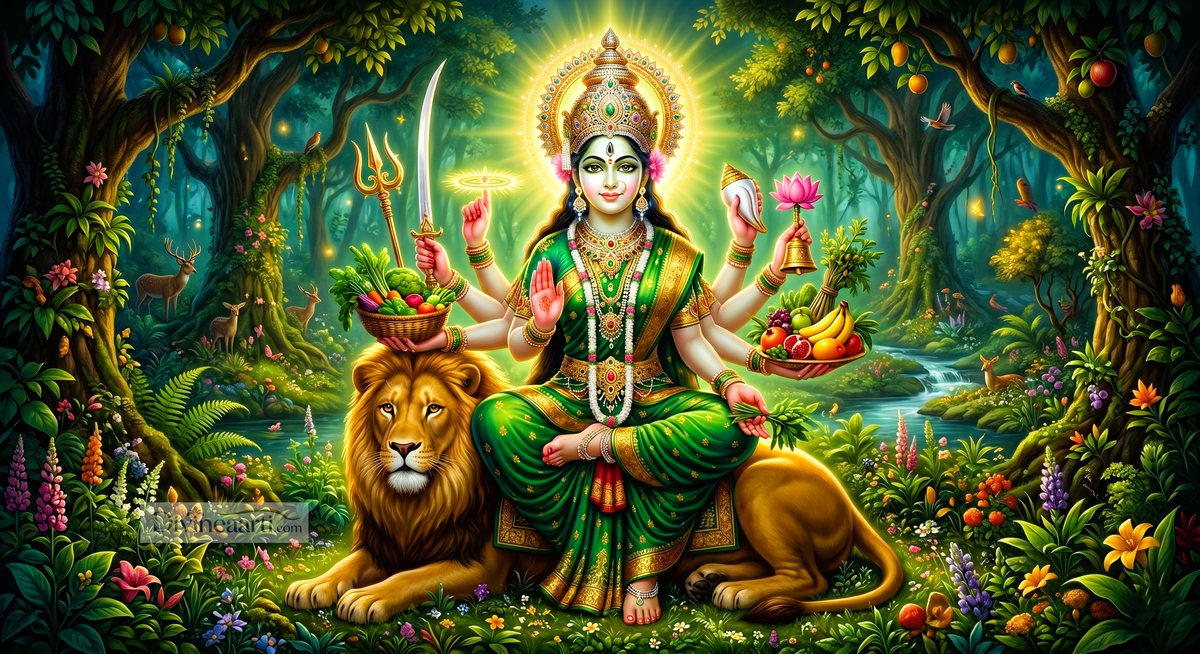
The Shri Shakambharyashtakam is a profound eight-verse hymn composed by the great philosopher-saint Adi Shankaracharya. It is dedicated to Goddess Shakambhari, a beautiful and powerful incarnation of Goddess Parvati/Durga. The name "Shakambhari" roughly translates to "The Bearer of the Greens" or "She who nourishes with vegetation."
According to Puranic legends, during a severe hundred-year drought on Earth, the sages and devotees prayed fervently to the Divine Mother. Responding to their desperate cries, the Goddess manifested as Shakambhari, generating life-saving vegetation, fruits, and herbs from Her own divine body to nourish all living beings and end the famine.
Reciting this Ashtakam purifies the heart and invokes the protective, motherly grace of the Goddess. It is a prayer for both material sustenance and spiritual liberation, recognizing the Divine Mother as the ultimate source of life, energy, and unwavering protection against all worldly fears.
Shri Shakambharyashtakam: Sanskrit & English Verses
॥ श्रीशाकम्भर्यष्टकम् ॥

शक्तिः शाम्भवविश्वरूपमहिमा माङ्गल्यमुक्तामणि-
र्धण्टा शूलमसिं लिपिं च दधतीं दक्षैश्चतुर्भिः करैः ।
वामैर्बाहुभिरर्घ्यशेषभरितं पात्रं च शीर्षं तथा
चक्रं खेटकमन्धकारिदयिता त्रैलोक्यमाता शिवा ॥ १॥

देवी दिव्यसरोजपादयुगले मञ्जुक्वणन्नूपुरा
सिंहारूढकलेवरा भगवती व्याघ्राम्बरावेष्टिता ।
वैडूर्यादिमहार्घरत्नविलसन्नक्षत्रमालोज्ज्वला
वाग्देवी विषमेक्षणा शशिमुखी त्रैलोक्यमाता शिवा ॥ २॥

ब्रह्माणी च कपालिनी सुयुवती रौद्री त्रिशूलान्विता
नाना दैत्यनिबर्हिणी नृशरणा शङ्खासिखेटायुधा ।
भेरीशङ्खक्ष् मृदङ्गक्ष् घोषमुदिता शूलिप्रिया चेश्वरी
माणिक्याढ्यकिरीटकान्तवदना त्रैलोक्यमाता शिवा ॥ ३॥

वन्दे देवि भवार्तिभञ्जनकरी भक्तप्रिया मोहिनी
मायामोहमदान्धकारशमनी मत्प्राणसञ्जीवनी ।
यन्त्रं मन्त्रजपौ तपो भगवती माता पिता भ्रातृका
विद्या बुद्धिधृती गतिश्च सकलत्रैलोक्यमाता शिवा ॥ ४॥

श्रीमातस्त्रिपुरे त्वमब्जनिलया स्वर्गादिलोकान्तरे
पाताले जलवाहिनी त्रिपथगा लोकत्रये शङ्करी ।
त्वं चाराधकभाग्यसम्पदविनी श्रीमूर्ध्नि लिङ्गाङ्किता
त्वां वन्दे भवभीतिभञ्जनकरीं त्रैलोक्यमातः शिवे ॥ ५॥

श्रीदुर्गे भगिनीं त्रिलोकजननीं कल्पान्तरे डाकिनीं
वीणापुस्तकधारिणीं गुणमणिं कस्तूरिकालेपनीम् ।
नानारत्नविभूषणां त्रिनयनां दिव्याम्बरावेष्टितां
वन्दे त्वां भवभीतिभञ्जनकरीं त्रैलोक्यमातः शिवे ॥ ६॥

नैरृत्यां दिशि पत्रतीर्थममलं मूर्तित्रये वासिनीं
साम्मुख्या च हरिद्रतीर्थमनघं वाप्यां च तैलोदकम् ।
गङ्गादित्रयसङ्गमे सकुतुकं पीतोदके पावने
त्वां वन्दे भवभीतिभञ्जनकरीं त्रैलोक्यमातः शिवे ॥ ७॥

द्वारे तिष्ठति वक्रतुण्डगणपः क्षेत्रस्य पालस्ततः
शक्रेड्या च सरस्वती वहति सा भक्तिप्रिया वाहिनी ।
मध्ये श्रीतिलकाभिधं तव वनं शाकम्भरी चिन्मयी
त्वां वन्दे भवभीतिभञ्जनकरीं त्रैलोक्यमातः शिवे ॥ ८॥

शाकम्भर्यष्टकमिदं यः पठेत्प्रयतः पुमान् ।
स सर्वपापविनिर्मुक्तः सायुज्यं पदमाप्नुयात् ॥ ९॥

॥ इति श्रीमच्छङ्कराचार्यविरचितं शाकम्भर्यष्टकं सम्पूर्णम् ॥
॥ Shri Shakambharyashtakam ॥

Shaktih shaambhava-vishvaroopa-mahimaa maangalya-muktaamanir-
ghantaa shoolamasim lipim cha dadhateem dakshais-chaturbhih karaih |
Vaamair-baahubhir-arghya-shesha-bharitam paatram cha sheersham tathaa
chakram khetakam-andhakaari-dayitaa trailokya-maataa shivaa || 1 ||

Devee divya-saroja-paada-yugale manju-kvanan-noopuraa
Simhaaroodha-kalevaraa bhagavatee vyaaghraambaraa-veshtitaa |
Vaidyooryaadi-mahaargha-ratna-vilasan-nakshatramaalojjvalaa
Vaagdevee vishamekshanaa shashimukhee trailokya-maataa shivaa || 2 ||

Brahmaanee cha kapaalinee suyuvatee raudree trishoolaanvitaa
Naanaa daitya-nibarhinee nrisharanaa shankhaasi-khetaayudhaa |
Bheree-shankha-mridanga-ghosha-muditaa shoolipriyaa cheshvaree
Maanikyaadhya-kireeta-kaanta-vadanaa trailokya-maataa shivaa || 3 ||

Vande devi bhavaarti-bhanjanakaree bhaktapriyaa mohinee
Maayaa-moha-madaan-dhakaara-shamanee mat-praana-sanjeevanee |
Yantram mantra-japau tapo bhagavatee maataa pitaa bhraatrikaa
Vidyaa buddhi-dhriti gatishcha sakala-trailokya-maataa shivaa || 4 ||

Shreemaatas-tripure tvamabja-nilayaa svargaadi-lokaan-tare
Paataale jalavaahinee tripathagaa lokatraye shankaree |
Tvam chaaraadhaka-bhaagya-sampad-avinee shreemoordhni lingaankitaa
Tvaam vande bhavabheeti-bhanjanakareem trailokya-maatah shive || 5 ||

Shreedurge bhagineem triloka-jananeem kalpaantare daakineem
Veenaa-pustaka-dhaarineem gunamanim kastoorikaa-lepaneem |
Naanaa-ratna-vibhooshanaam trinayanaam divyaambaraa-veshtitaam
Vande tvaam bhavabheeti-bhanjanakareem trailokya-maatah shive || 6 ||

Nairrityaam dishi patra-teertham-amalam moorti-traye vaasineem
Saammukhyaa cha haridra-teertham-anagham vaapyaam cha tailodakam |
Gangaadi-traya-sangame sakutukam peetodake paavane
Tvaam vande bhavabheeti-bhanjanakareem trailokya-maatah shive || 7 ||

Dvaare tishthati vakratunda-ganapah kshetrasya paalas-tatah
Shakredyaa cha sarasvatee vahati saa bhaktipriyaa vaahinee |
Madhye shreetilakaabhidham tava vanam shaakambharee chinmayee
Tvaam vande bhavabheeti-bhanjanakareem trailokya-maatah shive || 8 ||

Shaakambharyashtakam-idam yah pathet-prayatah pumaan |
Sa sarvapaapa-vinirmuktah saayujyam padamaapnuyaat || 9 ||

॥ Iti Shrimachhankaraacharyavirachitam Shakambharyashtakam Sampoornam ॥
Verse-by-Verse Meaning of Shakambharyashtakam
1 First Verse
र्घण्टा शूलमसिं लिपिं च दधतीं दक्षैश्चतुर्भिः करैः ।
वामैर्बाहुभिरर्घ्यशेषभरितं पात्रं च शीर्षं तथा
चक्रं खेटकमन्धकारिदयिता त्रैलोक्यमाता शिवा ॥ १॥
2 Second Verse
सिंहारूढकलेवरा भगवती व्याघ्राम्बरावेष्टिता ।
वैडूर्यादिमहार्घरत्नविलसन्नक्षत्रमालोज्ज्वला
वाग्देवी विषमेक्षणा शशिमुखी त्रैलोक्यमाता शिवा ॥ २॥
3 Third Verse
नाना दैत्यनिबर्हिणी नृशरणा शङ्खासिखेटायुधा ।
भेरीशङ्खक्ष् मृदङ्गक्ष् घोषमुदिता शूलिप्रिया चेश्वरी
माणिक्याढ्यकिरीटकान्तवदना त्रैलोक्यमाता शिवा ॥ ३॥
4 Fourth Verse
मायामोहमदान्धकारशमनी मत्प्राणसञ्जीवनी ।
यन्त्रं मन्त्रजपौ तपो भगवती माता पिता भ्रातृका
विद्या बुद्धिधृती गतिश्च सकलत्रैलोक्यमाता शिवा ॥ ४॥
5 Fifth Verse
पाताले जलवाहिनी त्रिपथगा लोकत्रये शङ्करी ।
त्वं चाराधकभाग्यसम्पदविनी श्रीमूर्ध्नि लिङ्गाङ्किता
त्वां वन्दे भवभीतिभञ्जनकरीं त्रैलोक्यमातः शिवे ॥ ५॥
6 Sixth Verse
वीणापुस्तकधारिणीं गुणमणिं कस्तूरिकालेपनीम् ।
नानारत्नविभूषणां त्रिनयनां दिव्याम्बरावेष्टितां
वन्दे त्वां भवभीतिभञ्जनकरीं त्रैलोक्यमातः शिवे ॥ ६॥
7 Seventh Verse
साम्मुख्या च हरिद्रतीर्थमनघं वाप्यां च तैलोदकम् ।
गङ्गादित्रयसङ्गमे सकुतुकं पीतोदके पावने
त्वां वन्दे भवभीतिभञ्जनकरीं त्रैलोक्यमातः शिवे ॥ ७॥
8 Eighth Verse
शक्रेड्या च सरस्वती वहति सा भक्तिप्रिया वाहिनी ।
मध्ये श्रीतिलकाभिधं तव वनं शाकम्भरी चिन्मयी
त्वां वन्दे भवभीतिभञ्जनकरीं त्रैलोक्यमातः शिवे ॥ ८॥
✦ Phala Shruti (Fruit of Recitation)
स सर्वपापविनिर्मुक्तः सायुज्यं पदमाप्नुयात् ॥ ९॥
Spiritual Benefits of Reciting Shri Shakambharyashtakam
- Divine Nourishment: Grants material sustenance and ensures one's home is never devoid of food and prosperity.
- Removes Worldly Fears: Specifically eliminates the anxieties, stresses, and fears associated with physical survival.
- Freedom from Sin: Purifies the heart and frees the devotee from accumulated karmic burdens.
- Spiritual Liberation: Paves the way to Sayujya Mukti, the ultimate union with the Divine Mother.
- Dispels Darkness: Clears away illusion, arrogance, and the darkness of ignorance as promised in the verses.
- Strengthens Devotion: Ignites a deep, unconditional love for Goddess Durga and Lord Shiva.
Chanting Instructions
- Sit in a clean, quiet space facing east or north.
- Light a ghee lamp or incense in front of an image or idol of Goddess Durga / Shakambhari.
- As Shakambhari is the goddess of vegetation, offering fresh green leaves, fruits, or vegetables is considered highly auspicious.
- Chant the verses with deep feeling, meditating on Her magnificent form as described in the hymn.
- Ideal times: Navaratri, Fridays, or early morning (Brahma Muhurta).
- Recite 1, 3, or 11 times for spiritual clarity and peace.
❓ Frequently Asked Questions About Shakambharyashtakam
What is Shri Shakambharyashtakam?
Shri Shakambharyashtakam is a powerful eight-verse Sanskrit hymn dedicated to Goddess Shakambhari, an incarnation of the Divine Mother (Durga/Parvati). The hymn beautifully describes Her divine weapons, adornments, the comfort She brings to devotees, and Her pervasive presence in the universe.
Who composed the Shakambharyashtakam?
This Ashtakam was composed by the great 8th-century philosopher and saint, Adi Shankaracharya. Known for consolidating the doctrine of Advaita Vedanta, he also composed numerous exquisite devotional hymns to awaken Bhakti (devotion) in the hearts of spiritual seekers.
Who is Goddess Shakambhari?
Goddess Shakambhari is a form of Devi Parvati. The name comes from "Shaka" (vegetables/greens) and "Bhari" (one who bears or nourishes). According to Hindu texts like the Devi Mahatmyam, She manifested during a catastrophic century-long drought to save humanity and living creatures by providing life-saving herbs, fruits, and vegetables from Her own form.
What are the benefits of reciting this Ashtakam?
As stated in the final verse (Phala Shruti), anyone who recites this hymn with a pure heart is freed from all sins and ultimately attains liberation (Sayujya). It is also chanted to seek protection from fears, mental anxieties, and to ensure a household is always blessed with adequate sustenance and prosperity.