
Annapurna Chalisa Lyrics in Hindi | Shri Annapurna Chalisa with Meaning
Introduction to Shri Annapurna Chalisa | Annapurna Chalisa Meaning
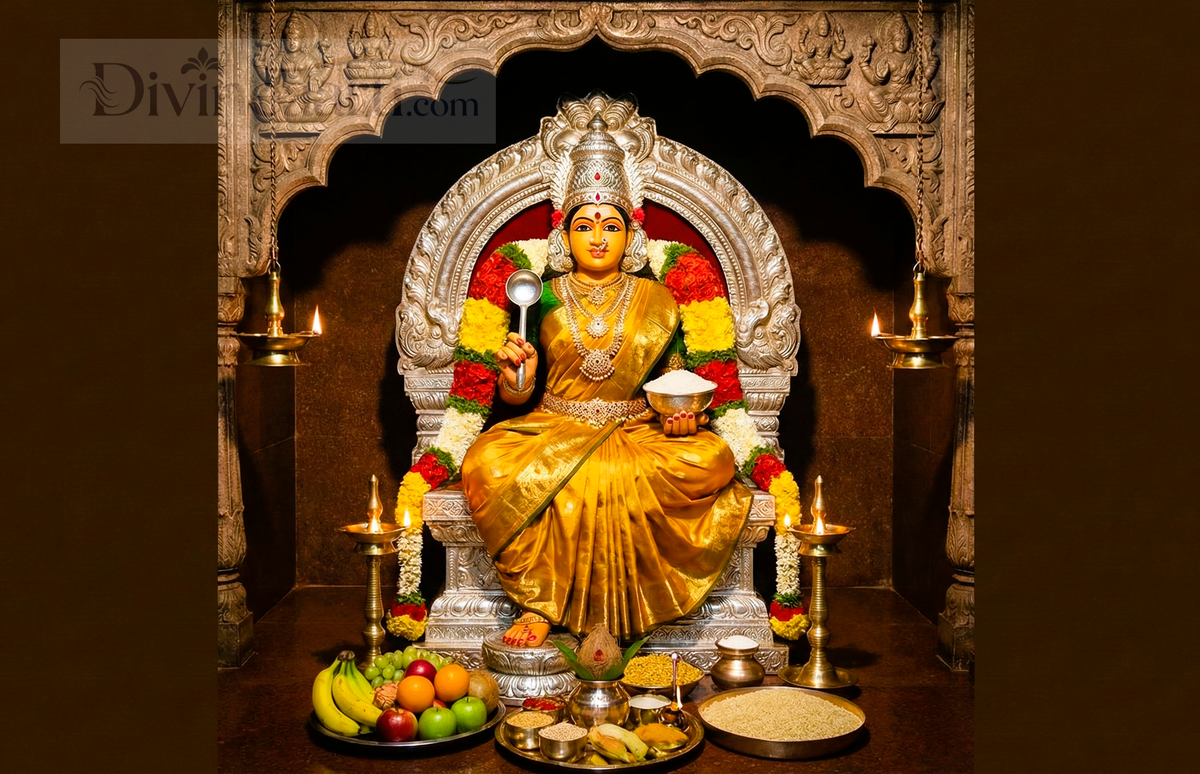
The Shri Annapurna Chalisa is a sacred devotional hymn comprising 40 verses dedicated to Goddess Annapurna, the divine mother of food and nourishment. Goddess Annapurna, an avatar of Goddess Parvati, is revered as the provider of food and sustenance to all living beings. Her name derives from Sanskrit: "Anna" meaning food and "Purna" meaning complete or full, signifying she who is full of food or the complete provider of nourishment.
This powerful Chalisa celebrates the divine mother's role in ensuring that no devotee goes hungry and that abundance flows into the lives of those who worship her with pure hearts. The worship of Goddess Annapurna is particularly significant in Hindu households, where food is considered sacred and offering meals to others is regarded as one of the highest forms of service.
The Annapurna Chalisa invokes the goddess's blessings for food security, prosperity, and spiritual nourishment. It reminds devotees of the sacred connection between physical sustenance and spiritual growth, teaching that true abundance encompasses both material and spiritual realms.
This comprehensive guide provides insights into each verse's spiritual meaning, the transformative benefits of regular recitation, optimal methods and timing for worship, and the extraordinary power that comes from connecting with Goddess Annapurna's nurturing energy.
Food & Abundance: Understanding Annapurna's Divine Grace | Annapurna Devi Mahima
The Divine Provider of Nourishment
Goddess Annapurna represents the cosmic principle of nourishment and sustenance. According to Hindu mythology, she manifested when Lord Shiva declared that the material world, including food, was an illusion. To demonstrate the importance of food for survival and spiritual practice, Goddess Parvati took the form of Annapurna and started feeding the hungry, forcing Lord Shiva himself to seek food from her.
Symbol of Complete Abundance
The goddess is typically depicted holding a golden ladle and a vessel full of porridge or rice, symbolizing her endless capacity to nourish all beings. Her depictions often show Lord Shiva begging for food from her, illustrating that even the greatest gods depend on the divine feminine principle for sustenance.
Spiritual Nourishment and Wisdom
Beyond physical food, Goddess Annapurna represents spiritual nourishment - the knowledge, wisdom, and grace that feed the soul. Her worship helps devotees understand that true abundance includes intellectual growth, emotional well-being, and spiritual evolution alongside material prosperity.
The Sacred Connection to Kashi (Varanasi)
Goddess Annapurna's most famous temple is the Annapurna Devi Temple in Varanasi, one of the holiest cities in Hinduism. It is believed that the goddess never lets anyone go hungry in Kashi, and her blessings extend to all who worship her with devotion.
Protector Against Hunger and Poverty
Devotees worship Goddess Annapurna to ensure that their families never face food shortage or poverty. Her grace is believed to bring prosperity, eliminate financial difficulties, and create an environment where generosity and sharing flourish.
Shri Annapurna Chalisa - 40 Sacred Verses | Annapurna Chalisa Lyrics Hindi
॥ दोहा ॥
विश्वेश्वर पदपदम की रज निज शीश लगाय ।
अन्नपूर्णे, तव सुयश बरनौं कवि मतिलाय ।

॥ चौपाई ॥
नित्य आनंद करिणी माता,
वर अरु अभय भाव प्रख्याता ॥

जय ! सौंदर्य सिंधु जग जननी,
अखिल पाप हर भव-भय-हरनी ॥

श्वेत बदन पर श्वेत बसन पुनि,
संतन तुव पद सेवत ऋषिमुनि ॥

काशी पुराधीश्वरी माता,
माहेश्वरी सकल जग त्राता ॥

वृषभारुढ़ नाम रुद्राणी,
विश्व विहारिणि जय ! कल्याणी ॥

पतिदेवता सुतीत शिरोमणि,
पदवी प्राप्त कीन्ह गिरी नंदिनि ॥

पति विछोह दुःख सहि नहिं पावा,
योग अग्नि तब बदन जरावा ॥

देह तजत शिव चरण सनेहू,
राखेहु जात हिमगिरि गेहू ॥

प्रकटी गिरिजा नाम धरायो,
अति आनंद भवन मँह छायो ॥

नारद ने तब तोहिं भरमायहु,
ब्याह करन हित पाठ पढ़ायहु ॥ 10 ॥

ब्रहमा वरुण कुबेर गनाये,
देवराज आदिक कहि गाये ॥

सब देवन को सुजस बखानी,
मति पलटन की मन मँह ठानी ॥

अचल रहीं तुम प्रण पर धन्या,
कीहनी सिद्ध हिमाचल कन्या ॥

निज कौ तब नारद घबराये,
तब प्रण पूरण मंत्र पढ़ाये ॥

करन हेतु तप तोहिं उपदेशेउ,
संत बचन तुम सत्य परेखेहु ॥

गगनगिरा सुनि टरी न टारे,
ब्रहां तब तुव पास पधारे ॥

कहेउ पुत्रि वर माँगु अनूपा,
देहुँ आज तुव मति अनुरुपा ॥

तुम तप कीन्ह अलौकिक भारी,
कष्ट उठायहु अति सुकुमारी ॥

अब संदेह छाँड़ि कछु मोसों,
है सौगंध नहीं छल तोसों ॥

करत वेद विद ब्रहमा जानहु,
वचन मोर यह सांचा मानहु ॥ 20 ॥

तजि संकोच कहहु निज इच्छा,
देहौं मैं मनमानी भिक्षा ॥

सुनि ब्रहमा की मधुरी बानी,
मुख सों कछु मुसुकाय भवानी ॥

बोली तुम का कहहु विधाता,
तुम तो जगके स्रष्टाधाता ॥

मम कामना गुप्त नहिं तोंसों,
कहवावा चाहहु का मोंसों ॥

दक्ष यज्ञ महँ मरती बारा,
शंभुनाथ पुनि होहिं हमारा ॥

सो अब मिलहिं मोहिं मनभाये,
कहि तथास्तु विधि धाम सिधाये ॥

तब गिरिजा शंकर तव भयऊ,
फल कामना संशयो गयऊ ॥

चन्द्रकोटि रवि कोटि प्रकाशा,
तब आनन महँ करत निवासा ॥

माला पुस्तक अंकुश सोहै,
कर मँह अपर पाश मन मोहै ॥

अन्न्पूर्णे ! सदापूर्णे,
अज अनवघ अनंत पूर्णे ॥ 30 ॥

कृपा सागरी क्षेमंकरि माँ,
भव विभूति आनंद भरी माँ ॥

कमल विलोचन विलसित भाले,
देवि कालिके चण्डि कराले ॥

तुम कैलास मांहि है गिरिजा,
विलसी आनंद साथ सिंधुजा ॥

स्वर्ग महालक्ष्मी कहलायी,
मर्त्य लोक लक्ष्मी पदपायी ॥

विलसी सब मँह सर्व सरुपा,
सेवत तोहिं अमर पुर भूपा ॥

जो पढ़िहहिं यह तव चालीसा,
फल पाइंहहि शुभ साखी ईसा ॥

प्रात समय जो जन मन लायो,
पढ़िहहिं भक्ति सुरुचि अघिकायो ॥

स्त्री कलत्र पति मित्र पुत्र युत,
परमैश्रवर्य लाभ लहि अद्भुत ॥

राज विमुख को राज दिवावै,
जस तेरो जन सुजस बढ़ावै ॥

पाठ महा मुद मंगल दाता,
भक्त मनोवांछित निधि पाता ॥ 40 ॥

॥ दोहा ॥
जो यह चालीसा सुभग,
पढ़ि नावैंगे माथ ।
तिनके कारज सिद्ध सब,
साखी काशी नाथ  ||
॥ Doha ॥
Vishweshvar Padpadam Ki Raj Nij Shish Lagay ।
Annapurne, Tav Suyash Baranaun Kavi Matilay ।

॥ Chaupai ॥
Nity Anand Karini Mata,
Var Aru Abhay Bhav Prakhyata ॥
Jai ! Saundarya Sindhu Jag Janani,
Akhil Pap Har Bhav-bhay-harani ॥

Shwet Badan Par Shwet Basan Puni,
Santan Tuv Pad Sevat Rishimuni ॥
Kashi Puradhishvari Mata,
Maheshwari Sakal Jag Trata ॥

Vrishabharudh Naam Rudrani,
Vishwa Viharini Jai ! Kalyani ॥
Patidevta Sutit Shiromani,
Padavi Prapt Kinh Giri Nandini ॥

Pati Vichhoh Duhkh Sahi Nahin Pava,
Yog Agni Tab Badan Jarava ॥
Deh Tajat Shiv Charan Sanehu,
Rakhehu Jat Himagiri Gehu ॥

Prakati Girija Nam Dharyo,
Ati Anand Bhavan Manh Chhayo ॥
Narad Ne Tab Tohin Bharamayahu,
Byah Karan Hit Path Padhayahu ॥ 10 ॥

Brahma Varun Kuber Ganaye,
Devraj Adik Kahi Gaye ॥
Sab Devan Ko Sujas Bakhani,
Mati Paltan Ki Man Manh Thani ॥

Achal Rahin Tum Pran Par Dhanya,
Kihani Siddh Himachal Kanya ॥
Nij Kau Tab Narad Ghabraye,
Tab Pran Pooran Mantra Padhaye ॥

Karan Hetu Tap Tohin Updesheu,
Sant Bachan Tum Satya Parekhehu ॥
Gagnagira Suni Tari Na Tare,
Brahan Tab Tuv Pas Padhare ॥

Kaheu Putri Var Mangu Anoopa,
Dehun Aj Tuv Mati Anurupa ॥
Tum Tap Kinh Alaukik Bhari,
Kasht Uthayahu Ati Sukumari ॥

Ab Sandeh Chhandi Kachhu Moson,
Hai Saugandh Nahin Chhal Toson ॥
Karat Ved Vid Brahma Janahu,
Vachan Mor Yah Sancha Manahu ॥ 20 ॥

Taji Sankoch Kahahu Nij Ichchha,
Dehaun Main Manmani Bhiksha ॥
Suni Brahma Ki Madhuri Bani,
Mukh Son Kachhu Musukay Bhavani ॥

Boli Tum Ka Kahahu Vidhata,
Tum to Jagke Srashtadhata ॥
Mam Kamna Gupt Nahin Tonson,
Kahavava Chahahu Ka Monson ॥

Daksh Yagya Mahan Marati Bara,
Shambhunath Puni Hohin Hamara ॥
So Ab Milahin Mohin Manabhaye,
Kahi Tathastu Vidhi Dham Sidhaye ॥

Tab Girija Shankar Tav Bhayu,
Phal Kamna Sanshayo Gayu ॥
Chandrakoti Ravi Koti Prakasha,
Tab Anan Mahan Karat Nivasa ॥

Mala Pustak Ankush Sohai,
Kar Manh Apar Pash Man Mohai ॥
Annpurne ! Sadapurne,
Aj Anavagh Anant Purne ॥ 30 ॥

Kripa Sagari Kshemankari Man,
Bhav Vibhooti Anand Bhari Man ॥
Kamal Vilochan Vilasit Bhale,
Devi Kalike Chandi Karale ॥

Tum Kailas Manhi Hai Girija,
Vilasi Anand Sath Sindhuja ॥
Svarg Mahalakshmi Kahalayi,
Marty Lok Lakshmi Padapayi ॥

Vilasi Sab Manh Sarv Sarupa,
Sevat Tohin Amar Pur Bhoopa ॥
Jo Padhihahin Yah Tav Chalisa,
Phal Painhahi Shubh Sakhi Isa ॥

Prat Samay Jo Jan Man Layo,
Padhihahin Bhakti Suruchi Aghikayo ॥
Stri Kalatr Pati Mitr Putr Yut,
Paramaishravary Labh Lahi Adbhut ॥

Raj Vimukh Ko Raj Divavai,
Jas Tero Jan Sujas Badhavai ॥
Path Maha Mud Mangal Data,
Bhakt Manovanchhit Nidhi Pata ॥ 40 ॥

॥ Doha ॥
Jo Yah Chalisa Subhag,
Padhi Navainge Math ।
Tinke Karaj Siddh Sab,
Sakhi Kashi Nath ॥
Detailed Meaning and Translation | Annapurna Chalisa Meaning in English
Opening Doha - Seeking Shiva's Blessings
"विश्वेश्वर पदपदम की रज निज शीश लगाय ।
अन्नपूर्णे, तव सुयश बरनौं कवि मतिलाय ॥"
Translation: "I apply the dust of Lord Shiva's feet on my head. O Annapurna, I narrate your good deeds as per the poet's imagination."
Meaning: The poet seeks blessings from Lord Shiva before praising Goddess Annapurna. This establishes the divine connection and humility in approaching the goddess.
Verse 1 - Eternal Joy and Blessings
"नित्य आनंद करिणी माता,
वर अरु अभय भाव प्रख्याता ॥"
Translation: "Mother who brings eternal joy, renowned for granting boons and fearlessness."
Meaning: Goddess Annapurna is described as the source of everlasting happiness and the giver of blessings and protection from all fears.
Verse 2 - Victory to the Ocean of Beauty
"जय ! सौंदर्य सिंधु जग जननी,
अखिल पाप हर भव-भय-हरनी ॥"
Translation: "Victory to the ocean of beauty, mother of the world, who destroys all sins and removes the fear of worldly existence."
Meaning: The goddess is praised as supremely beautiful and the universal mother who eliminates sins and the cycle of birth and death.
Verse 3 - White Complexion and Devotee Service
"श्वेत बदन पर श्वेत बसन पुनि,
संतन तुव पद सेवत ऋषिमुनि ॥"
Translation: "With fair complexion and white garments, sages and saints serve at your feet."
Meaning: The goddess has a radiant white form symbolizing purity, and even great sages worship her devotedly.
Verse 4 - Queen of Kashi and Universal Savior
"काशी पुराधीश्वरी माता,
माहेश्वरी सकल जग त्राता ॥"
Translation: "Mother, the queen of Kashi, Maheshwari who saves the entire world."
Meaning: As the ruler of the holy city of Kashi and consort of Lord Shiva, she protects all beings.
Verse 5 - Rider of the Bull and Auspicious One
"वृषभारुढ़ नाम रुद्राणी,
विश्व विहारिणि जय ! कल्याणी ॥"
Translation: "Named Rudrani, riding the bull, the playful one in the universe, victory to the auspicious one."
Meaning: The goddess rides a bull (Nandi) and is known as Rudrani, bringing prosperity and joy everywhere.
Verse 6 - Consort of the Pure and Daughter of the Mountain
"पतिदेवता सुतीत शिरोमणि,
पदवी प्राप्त कीन्ह गिरी नंदिनि ॥"
Translation: "The crest jewel of pure-hearted husband, daughter of the mountain who attained the position."
Meaning: As Parvati, daughter of the Himalayas, she became the ideal wife and attained the highest status.
Verse 7 - Suffering Separation from Husband
"पति विछोह दुःख सहि नहिं पावा,
योग अग्नि तब बदन जरावा ॥"
Translation: "Could not bear the pain of separation from husband, then burned her body in yogic fire."
Meaning: Unable to endure separation from Shiva, Parvati performed severe penance, even immolating herself.
Verse 8 - Preserved by Shiva's Grace
"देह तजत शिव चरण सनेहू,
राखेहु जात हिमगिरि गेहू ॥"
Translation: "While leaving the body, out of affection for Shiva's feet, preserved her and took her to the Himalayan home."
Meaning: Shiva, moved by her devotion, saved her and took her to the Himalayas.
Verse 9 - Manifesting as Parvati
"प्रकटी गिरिजा नाम धरायो,
अति आनंद भवन मँह छायो ॥"
Translation: "Manifested as Girija, spread immense joy in the abode."
Meaning: As Parvati (daughter of mountains), she brought great happiness to Shiva's home.
Verse 10 - Narada's Marriage Advice
"नारद ने तब तोहिं भरमायहु,
ब्याह करन हित पाठ पढ़ायहु ॥"
Translation: "Narada then deluded you, taught lessons for marriage."
Meaning: Sage Narada advised Parvati on how to win Shiva's love and marry him.
Verse 11 - Gods' Praise and Invitation
"ब्रहमा वरुण कुबेर गनाये,
देवराज आदिक कहि गाये ॥"
Translation: "Brahma, Varuna, Kubera invited, Indra and others sang praises."
Meaning: The gods invited Shiva for the wedding and praised him.
Verse 12 - Praising the Gods' Glory
"सब देवन को सुजस बखानी,
मति पलटन की मन मँह ठानी ॥"
Translation: "Praised the good deeds of all gods, kept the army of intellect in mind."
Meaning: The gods' virtues were extolled, and wisdom was invoked.
Verse 13 - Firm in Vow, Praised by Himalaya's Daughter
"अचल रहीं तुम प्रण पर धन्या,
कीहनी सिद्ध हिमाचल कन्या ॥"
Translation: "Remained firm on vow, blessed, accomplished by Himalaya's daughter."
Meaning: Parvati remained steadfast in her penance and was blessed.
Verse 14 - Narada's Assurance
"निज कौ तब नारद घबराये,
तब प्रण पूरण मंत्र पढ़ाये ॥"
Translation: "Narada then got worried for himself, then taught the mantra to fulfill the vow."
Meaning: Narada taught Parvati mantras to succeed in her penance.
Verse 15 - Advising Penance
"करन हेतु तप तोहिं उपदेशेउ,
संत बचन तुम सत्य परेखेहु ॥"
Translation: "Advised penance for accomplishment, you tested the words of saints as true."
Meaning: Narada guided her penance, and she followed saintly advice faithfully.
Verse 16 - Brahma's Arrival
"गगनगिरा सुनि टरी न टारे,
ब्रहां तब तुव पास पधारे ॥"
Translation: "Hearing the sound of penance, without delay, Brahma then arrived near you."
Meaning: Brahma came to Parvati upon hearing her intense penance.
Verse 17 - Requesting a Boon
"कहेउ पुत्रि वर माँगु अनूपा,
देहुँ आज तुव मति अनुरुपा ॥"
Translation: "Said daughter, ask for an unparalleled boon, I will give according to your wisdom."
Meaning: Brahma offered Parvati a boon matching her intelligence.
Verse 18 - Praising Her Penance
"तुम तप कीन्ह अलौकिक भारी,
कष्ट उठायहु अति सुकुमारी ॥"
Translation: "You performed extraordinarily difficult penance, endured great hardship being delicate."
Meaning: Brahma acknowledged her severe and remarkable penance despite her tender nature.
Verse 19 - Dispelling Doubts
"अब संदेह छाँड़ि कछु मोसों,
है सौगंध नहीं छल तोसों ॥"
Translation: "Now dispel doubts and ask something, I swear there is no deceit in me."
Meaning: Brahma assured her to ask without hesitation, promising truthfulness.
Verse 20 - Brahma's Assurance
"करत वेद विद ब्रहमा जानहु,
वचन मोर यह सांचा मानहु ॥"
Translation: "Know Brahma as the knower of Vedas, accept my words as true."
Meaning: As the creator and knower of Vedas, Brahma's promise is trustworthy.
Verse 21 - Asking Without Hesitation
"तजि संकोच कहहु निज इच्छा,
देहौं मैं मनमानी भिक्षा ॥"
Translation: "Leave hesitation and speak your desire, I will give the boon as wished."
Meaning: Brahma urged her to express her wish freely.
Verse 22 - Parvati's Smile
"सुनि ब्रहमा की मधुरी बानी,
मुख सों कछु मुसुकाय भवानी ॥"
Translation: "Hearing Brahma's sweet speech, Bhavani smiled a little from her face."
Meaning: Parvati smiled at Brahma's words, indicating her thoughts.
Verse 23 - Addressing Brahma
"बोली तुम का कहहु विधाता,
तुम तो जगके स्रष्टाधाता ॥"
Translation: "Said, what should I say, O Creator, you are the creator and sustainer of the world."
Meaning: Parvati acknowledged Brahma's supreme role.
Verse 24 - Her Desire is Not Hidden
"मम कामना गुप्त नहिं तोंसों,
कहवावा चाहहु का मोंसों ॥"
Translation: "My desire is not hidden from you, why do you want me to speak it?"
Meaning: Brahma already knows her wish, yet insists on hearing it.
Verse 25 - Daksha's Sacrifice and Shiva
"दक्ष यज्ञ महँ मरती बारा,
शंभुनाथ पुनि होहिं हमारा ॥"
Translation: "In Daksha's sacrifice, I died many times, Shambhunath will again be mine."
Meaning: Referring to past events where she suffered for Shiva.
Verse 26 - Brahma's Affirmation
"सो अब मिलहिं मोहिं मनभाये,
कहि तथास्तु विधि धाम सिधाये ॥"
Translation: "So now he will unite with me as desired, saying 'so be it', the creator went to his abode."
Meaning: Brahma blessed that Shiva would marry her and departed.
Verse 27 - Shiva and Parvati's Union
"तब गिरिजा शंकर तव भयऊ,
फल कामना संशयो गयऊ ॥"
Translation: "Then Girija became Shankar's, doubt about the desired result went away."
Meaning: Parvati married Shiva, fulfilling her wish.
Verse 28 - Radiant Beauty
"चन्द्रकोटि रवि कोटि प्रकाशा,
तब आनन महँ करत निवासा ॥"
Translation: "Brightness of crores of moons and suns, then resided in the face."
Meaning: Shiva's face shone with immense radiance after marriage.
Verse 29 - Divine Symbols
"माला पुस्तक अंकुश सोहै,
कर मँह अपर पाश मन मोहै ॥"
Translation: "Rosary, book, goad shine, in hand another noose fascinates the mind."
Meaning: Shiva holds symbols of knowledge and control.
Verse 30 - Eternal and Complete Annapurna
"अन्न्पूर्णे ! सदापूर्णे,
अज अनवघ अनंत पूर्णे ॥"
Translation: "O Annapurna! Always full, unborn, unbroken, infinitely complete."
Meaning: The goddess is eternally full, perfect, and infinite.
Verse 31 - Ocean of Grace and Prosperity
"कृपा सागरी क्षेमंकरि माँ,
भव विभूति आनंद भरी माँ ॥"
Translation: "Ocean of grace, welfare-doing mother, mother full of worldly prosperity and joy."
Meaning: She is compassionate, brings welfare, prosperity, and happiness.
Verse 32 - Lotus-Eyed and Divine Forms
"कमल विलोचन विलसित भाले,
देवि कालिके चण्डि कराले ॥"
Translation: "Lotus-eyed, shining forehead, goddess Kali, fierce Chandi."
Meaning: She has beautiful eyes and embodies fierce forms like Kali and Chandi.
Verse 33 - Parvati in Kailash
"तुम कैलास मांहि है गिरिजा,
विलसी आनंद साथ सिंधुजा ॥"
Translation: "You are Girija in Kailash, played joyfully with ocean-born (Lakshmi)."
Meaning: As Parvati in Kailash, she enjoys with Lakshmi.
Verse 34 - Lakshmi in Different Realms
"स्वर्ग महालक्ष्मी कहलायी,
मर्त्य लोक लक्ष्मी पदपायी ॥"
Translation: "Called Mahalakshmi in heaven, attained Lakshmi's position in mortal world."
Meaning: She is Lakshmi in heaven and earth.
Verse 35 - Manifesting in All Forms
"विलसी सब मँह सर्व सरुपा,
सेवत तोहिं अमर पुर भूपा ॥"
Translation: "Played everywhere in all forms, immortal kings serve you."
Meaning: She appears in all forms and is worshipped by gods.
Verse 36 - Benefits of Reciting Chalisa
"जो पढ़िहहिं यह तव चालीसा,
फल पाइंहहि शुभ साखी ईसा ॥"
Translation: "Whoever recites this your Chalisa, will get good results, witness is Shiva."
Meaning: Reciting the Chalisa brings blessings, as testified by Lord Shiva.
Verse 37 - Morning Recitation Benefits
"प्रात समय जो जन मन लायो,
पढ़िहहिं भक्ति सुरुचि अघिकायो ॥"
Translation: "Whoever in the morning with focused mind recites, devotion and taste increase."
Meaning: Morning recitation enhances devotion and spiritual inclination.
Verse 38 - Family Blessings
"स्त्री कलत्र पति मित्र पुत्र युत,
परमैश्रवर्य लाभ लहि अद्भुत ॥"
Translation: "With wife, husband, friend, son united, get wonderful supreme wealth."
Meaning: Brings harmony and prosperity to family and relationships.
Verse 39 - Royal Blessings
"राज विमुख को राज दिवावै,
जस तेरो जन सुजस बढ़ावै ॥"
Translation: "Gives kingdom to one averse to it, your devotee's fame increases."
Meaning: Even those not seeking power get it, and devotees gain fame.
Verse 40 - Mud, Mangal, and Wealth Giver
"पाठ महा मुद मंगल दाता,
भक्त मनोवांछित निधि पाता ॥"
Translation: "Recitation gives great joy, auspiciousness, fulfills devotee's desired treasures."
Meaning: Brings happiness, prosperity, and fulfills wishes.
Closing Doha - All Desires Fulfilled
"जो यह चालीसा सुभग,
पढ़ि नावैंगे माथ ।
तिनके कारज सिद्ध सब,
साखी काशी नाथ ॥"
Translation: "Whoever recites this auspicious Chalisa with devotion, all their works will be accomplished, witness is the Lord of Kashi."
Meaning: Devotional recitation fulfills all desires, as guaranteed by Lord Shiva.
Spiritual Benefits of Annapurna Chalisa | Annapurna Chalisa Benefits
Food Security and Abundance
- Never Face Hunger: Regular recitation ensures devotees and their families never face food shortage
- Agricultural Success: Farmers receive blessings for good harvests and crop protection
- Kitchen Prosperity: The household always has sufficient food and resources
- Food Business Success: Those in food-related businesses receive special blessings
Financial Prosperity
- Wealth Attraction: Draws financial abundance and eliminates poverty
- Debt Relief: Helps overcome financial difficulties and clear debts
- Business Growth: Supports expansion and success in commercial ventures
- Resource Management: Grants wisdom in managing household finances effectively
Spiritual Growth
- Divine Connection: Strengthens the bond with the Divine Mother
- Gratitude Development: Cultivates appreciation for life's blessings
- Generosity Spirit: Inspires charitable giving and feeding the hungry
- Spiritual Nourishment: Feeds the soul with divine wisdom and grace
Family Harmony
- Household Peace: Creates harmonious family environment
- Children's Health: Ensures proper nourishment and growth of children
- Family Unity: Strengthens bonds during shared meals and worship
- Elder Care: Provides for the nourishment needs of elderly family members
How to Recite Annapurna Chalisa: Complete Guide | Annapurna Chalisa Path Vidhi
Preparation for Chalisa Recitation
- Personal Purification: Take a bath and wear clean clothes, preferably white or red
- Sacred Space Setup: Place Goddess Annapurna's image or idol in the kitchen or puja room
- Essential Offerings: Arrange rice, sweets, fruits, and cooked food as offerings
- Mental Preparation: Cultivate feelings of gratitude and devotion
Step-by-Step Recitation Process
- Invocation: Begin with "Om Annapurnayai Namaha"
- Light Lamp: Light a ghee lamp before the goddess's image
- Food Offering: Offer prepared food items with devotion
- Chalisa Recitation: Read all 40 verses with proper pronunciation
- Personal Prayer: Request specific blessings related to nourishment and abundance
- Aarti: Conclude with Annapurna Aarti
- Prasad Distribution: Share blessed food with family and needy
Special Practices
- Recite before cooking to bless the food
- Feed animals and birds as part of worship
- Donate food to the hungry on special occasions
- Practice the Chalisa during food-related festivals
Best Times & Occasions for Annapurna Chalisa
Annapurna Jayanti - The Supreme Festival
Annapurna Jayanti, celebrated on the full moon day (Purnima) of Margashirsha month (November-December), is the most auspicious time for Annapurna worship. On this day, devotees observe special pujas, prepare elaborate feasts, and distribute food to the needy.
Weekly Observances
- Friday: Associated with goddess worship, excellent for Annapurna Chalisa
- Tuesday: Good for invoking the goddess's protective aspects
- Full Moon (Purnima): Highly auspicious for abundance prayers
Daily Practice Times
Morning: Before cooking breakfast, to bless the day's food
Evening: Before dinner preparation, for family nourishment
Special Occasions
- Before starting a food business or restaurant
- During house-warming ceremonies
- When facing financial difficulties
- During Navaratri celebrations
Historical Significance and Cultural Impact | Annapurna Devi Katha
The Legend of Annapurna
According to Hindu mythology, once Lord Shiva declared that the material world, including food, was maya (illusion) and unnecessary for spiritual advancement. Goddess Parvati, the source of material energy, was displeased by this statement and disappeared, causing a great famine across the universe.
Without food, even the gods began to suffer. Lord Shiva realized his mistake and went in search of food. He found Goddess Parvati in Kashi (Varanasi), where she had established herself as Annapurna Devi, feeding the hungry. Shiva approached her with a begging bowl, and she lovingly served him food, demonstrating that food is sacred and essential for both physical survival and spiritual practice.
Cultural Importance
This legend teaches the importance of respecting food and the divine feminine principle that nourishes all creation. In Hindu tradition, wasting food is considered disrespectful to Goddess Annapurna, and feeding the hungry is regarded as one of the highest forms of worship.
Temple Traditions
The Annapurna Temple in Varanasi is one of the most important temples dedicated to the goddess. Devotees believe that no one goes hungry in Kashi due to the goddess's eternal blessing. Similar temples exist throughout India, where devotees worship the goddess for food security and abundance.
❓ Frequently Asked Questions About Annapurna Chalisa
What is Annapurna Chalisa and who is Goddess Annapurna?
Annapurna Chalisa is a 40-verse devotional hymn dedicated to Goddess Annapurna, the Hindu goddess of food, nourishment, and abundance. She is a form of Goddess Parvati and her name literally means 'one who is full of food (anna).' The Chalisa praises her role as the divine mother who ensures no being in the universe goes hungry.
When should one recite Annapurna Chalisa?
Annapurna Chalisa is ideally recited before meals as a form of gratitude, on Annapurna Jayanti, during Navaratri, and on Fridays. It is especially beneficial during food-related ceremonies like Anna Prashan (first solid food for babies) and Bhandara (community feast). Early morning recitation with a pure heart is recommended for daily practice.
What are the benefits of chanting Annapurna Chalisa?
Chanting Annapurna Chalisa ensures abundance of food and nourishment in the household, removes hunger and poverty, and promotes gratitude and contentment. It blesses devotees with prosperity, good health, and the wisdom to share food with others. Goddess Annapurna's grace ensures that the family never faces scarcity of food or basic necessities.
What is the connection between Annapurna and Kashi (Varanasi)?
Goddess Annapurna has a deep connection with Kashi (Varanasi). According to mythology, when Goddess Parvati manifested as Annapurna in Kashi, even Lord Shiva came to her as a beggar seeking food. The famous Annapurna Temple in Varanasi is one of the most revered temples where devotees believe that food (Anna) will never be scarce for those who worship there.
Can Annapurna Chalisa be recited by anyone?
Yes, Annapurna Chalisa can be recited by anyone. Goddess Annapurna is the universal mother who nourishes all beings without discrimination. There are no restrictions based on gender, caste, or age. In fact, reciting her Chalisa and sharing food (Anna Daan) with the needy is considered one of the highest forms of spiritual practice.