
Baglamukhi Chalisa Lyrics in Hindi | Shri Baglamukhi Chalisa with Meaning
Introduction to Shri Baglamukhi Chalisa | Baglamukhi Chalisa Meaning
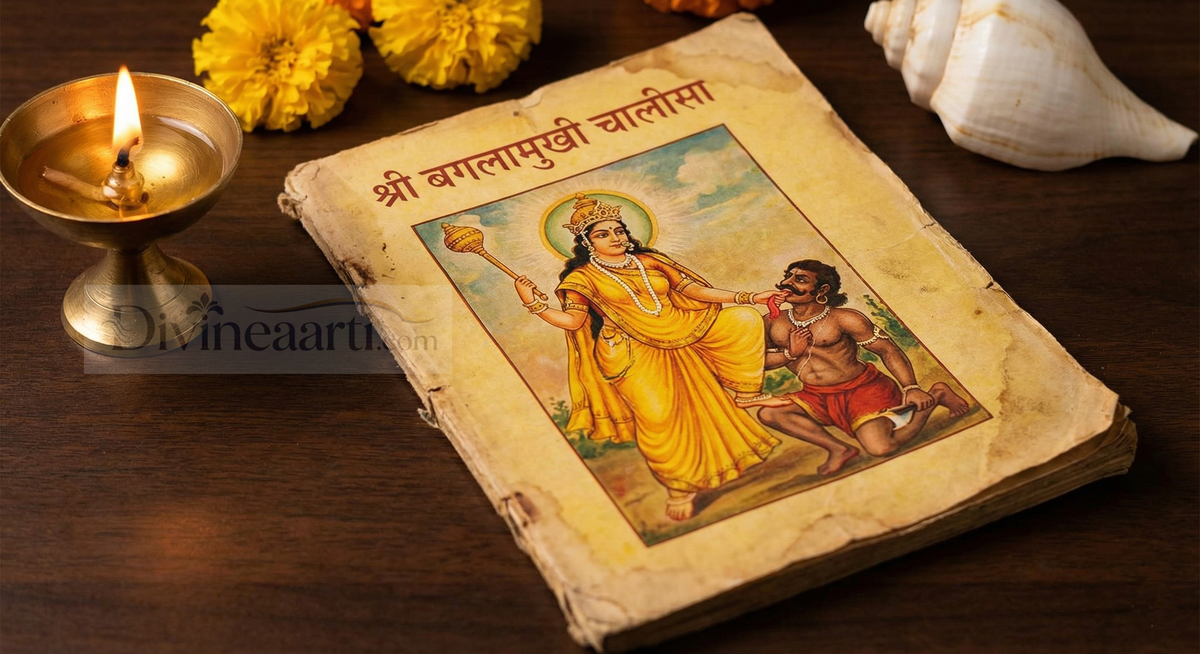
The Shri Baglamukhi Chalisa is a powerful devotional hymn comprising 40 verses dedicated to Goddess Baglamukhi, one of the ten Mahavidyas (great wisdom goddesses) in Hindu tradition. Also known as Pitambara Devi (the goddess dressed in yellow), Baglamukhi is the eighth Mahavidya and is renowned for her ability to paralyze (stambhan) enemies and grant victory in all conflicts.
Goddess Baglamukhi's name derives from "Bagla" (meaning crane or distortion) and "Mukhi" (meaning face), symbolizing her power to distort and confuse the speech and actions of enemies. She is depicted holding a club (gada) in her right hand, striking at a demon, while pulling out his tongue with her left hand, representing the suppression of malicious speech and harmful intentions.
This powerful Chalisa is especially beneficial for those facing legal battles, competitive examinations, business rivalry, or any situation requiring victory over opposing forces. The goddess's blessings are sought for protection from black magic, evil intentions, and unjust persecution.
This comprehensive guide provides insights into each verse's spiritual meaning, the transformative benefits of regular recitation, optimal methods and timing for worship, and the extraordinary power that comes from connecting with Goddess Baglamukhi's protective energy.
Victory & Protection: Understanding Baglamukhi's Divine Power | Baglamukhi Devi Mahima
The Goddess of Stambhan (Paralysis)
Goddess Baglamukhi possesses the unique power of stambhan - the ability to paralyze, freeze, or immobilize enemies. This power extends to silencing malicious speech, stopping harmful actions, and neutralizing negative intentions directed at her devotees. Her worship grants devotees this protective shield.
One of the Das Mahavidyas
As the eighth of the ten Mahavidyas, Baglamukhi represents a specific aspect of the Divine Mother's power. While other Mahavidyas embody knowledge, time, or cosmic energy, Baglamukhi specifically represents the power to overcome opposition and achieve victory through divine intervention.
The Yellow Goddess - Pitambara Devi
Baglamukhi is always worshipped in yellow, from her clothes to the flowers, turmeric, and yellow sweets offered during puja. Yellow represents wisdom, learning, and the power of speech - all domains over which she presides. This color also symbolizes the sun's energy and positive transformation.
Protector in Legal and Competitive Matters
The goddess is particularly invoked by those facing court cases, litigation, competitive examinations, debates, or any situation where victory over opposition is required. Her grace ensures that truth prevails and devotees receive justice.
Shield Against Black Magic and Evil Eye
Baglamukhi worship provides powerful protection against tantric attacks, black magic, evil eye (nazar), and all forms of supernatural harm. Her devotees are shielded from negative energies and malefic planetary influences.
Shri Baglamukhi Chalisa - 40 Sacred Verses | Baglamukhi Chalisa Lyrics Hindi
॥ दोहा ॥
सिर नवाइ बगलामुखी,लिखूँ चालीसा आज।

कृपा करहु मोपर सदा,पूरन हो मम काज॥

॥ चौपाई ॥
जय जय जय श्री बगला माता।आदिशक्ति सब जग की त्राता॥

बगला सम तब आनन माता।एहि ते भयउ नाम विख्याता॥

शशि ललाट कुण्डल छवि न्यारी।अस्तुति करहिं देव नर-नारी॥

पीतवसन तन पर तव राजै।हाथहिं मुद्गर गदा विराजै॥

तीन नयन गल चम्पक माला।अमित तेज प्रकटत है भाला॥

रत्न-जटित सिंहासन सोहै।शोभा निरखि सकल जन मोहै॥

आसन पीतवर्ण महारानी।भक्तन की तुम हो वरदानी॥

पीताभूषण पीतहिं चन्दन।सुर नर नाग करत सब वन्दन॥

एहि विधि ध्यान हृदय में राखै।वेद पुराण सन्त अस भाखै॥

अब पूजा विधि करौं प्रकाशा।जाके किये होत दुख-नाशा॥

प्रथमहिं पीत ध्वजा फहरावै।पीतवसन देवी पहिरावै॥

कुंकुम अक्षत मोदक बेसन।अबिर गुलाल सुपारी चन्दन॥

माल्य हरिद्रा अरु फल पाना।सबहिं चढ़इ धरै उर ध्याना॥

धूप दीप कर्पूर की बाती।प्रेम-सहित तब करै आरती॥

अस्तुति करै हाथ दोउ जोरे।पुरवहु मातु मनोरथ मोरे॥

मातु भगति तब सब सुख खानी।करहु कृपा मोपर जनजानी॥

त्रिविध ताप सब दुःख नशावहु।तिमिर मिटाकर ज्ञान बढ़ावहु॥

बार-बार मैं बिनवउँ तोहीं।अविरल भगति ज्ञान दो मोहीं॥

पूजनान्त में हवन करावै।सो नर मनवांछित फल पावै॥

सर्षप होम करै जो कोई।ताके वश सचराचर होई॥

तिल तण्डुल संग क्षीर मिरावै।भक्ति प्रेम से हवन करावै॥

दुःख दरिद्र व्यापै नहिं सोई।निश्चय सुख-संपति सब होई॥

फूल अशोक हवन जो करई।ताके गृह सुख-सम्पत्ति भरई॥

फल सेमर का होम करीजै।निश्चय वाको रिपु सब छीजै॥

गुग्गुल घृत होमै जो कोई।तेहि के वश में राजा होई॥

गुग्गुल तिल सँग होम करावै।ताको सकल बन्ध कट जावै॥

बीजाक्षर का पाठ जो करहीं।बीजमन्त्र तुम्हरो उच्चरहीं॥

एक मास निशि जो कर जापा।तेहि कर मिटत सकल सन्तापा॥

घर की शुद्ध भूमि जहँ होई।साधक जाप करै तहँ सोई॥

सोइ इच्छित फल निश्चय पावै।जामे नहिं कछु संशय लावै॥

अथवा तीर नदी के जाई।साधक जाप करै मन लाई॥

दस सहस्र जप करै जो कोई।सकल काज तेहि कर सिधि होई॥

जाप करै जो लक्षहिं बारा।ताकर होय सुयश विस्तारा॥

जो तव नाम जपै मन लाई।अल्पकाल महँ रिपुहिं नसाई॥

सप्तरात्रि जो जापहिं नामा।वाको पूरन हो सब कामा॥

नव दिन जाप करे जो कोई।व्याधि रहित ताकर तन होई॥

ध्यान करै जो बन्ध्या नारी।पावै पुत्रादिक फल चारी॥

प्रातः सायं अरु मध्याना।धरे ध्यान होवै कल्याना॥

कहँ लगि महिमा कहौं तिहारी।नाम सदा शुभ मंगलकारी॥

पाठ करै जो नित्य चालीसा।तेहि पर कृपा करहिं गौरीशा॥

॥ दोहा ॥
सन्तशरण को तनय हूँ,कुलपति मिश्र सुनाम।

हरिद्वार मण्डल बसूँ,धाम हरिपुर ग्राम॥

उन्नीस सौ पिचानबे सन् की,श्रावण शुक्ला मास।

चालीसा रचना कियौं,तव चरणन को दास॥
॥ Doha ॥
Sira Navai Bagalamukhi,Likhun Chalisa Aja।

Kripa Karahu Mopara Sada,Purana Ho Mama Kaja॥

॥ Chaupai ॥
Jaya Jaya Jaya Shri Bagala Mata।Adishakti Saba Jaga Ki Trata॥

Bagala Sama Taba Anana Mata।Ehi Te Bhayau Nama Vikhyata॥

Shashi Lalata Kundala Chhavi Nyari।Astuti Karahin Deva Nara-Nari॥

Pitavasana Tana Para Tava Rajai।Hathahin Mudgara Gada Virajai॥

Tina Nayana Gala Champaka Mala।Amita Teja Prakatata Hai Bhala॥

Ratna-Jatita Sinhasana Sohai।Shobha Nirakhi Sakala Jana Mohai॥

Asana Pitavarna Maharani।Bhaktana Ki Tuma Ho Varadani॥

Pitabhushana Pitahin Chandana।Sura Nara Naga Karata Saba Vandana॥

Ehi Vidhi Dhyana Hridaya Mein Rakhai।Veda Purana Santa Asa Bhakhai॥

Aba Puja Vidhi Karaun Prakasha।Jake Kiye Hota Dukha-Nasha॥

Prathamahin Pita Dhvaja Phaharavai।Pitavasana Devi Pahiravai॥

Kumkuma Akshata Modaka Besana।Abira Gulala Supari Chandana॥

Malya Haridra Aru Phala Pana।Sabahin Chadhayi Dharai Ura Dhyana॥

Dhupa Dipa Karpura Ki Bati।Prema-Sahita Taba Karai Arati॥

Astuti Karai Hatha Dou Jore।Puravahu Matu Manoratha More॥

Matu Bhagati Taba Saba Sukha Khani।Karahu Kripa Mopara Janajani॥

Trividha Tapa Saba Duhkha Nashavahu।Timira Mitakara Jnana Badhavahu॥

Bara-Bara Main Binavaun Tohin।Avirala Bhagati Jnana Do Mohin॥

Pujananta Mein Havana Karavai।So Nara Manavanchhita Phala Pavai॥

Sarshapa Homa Karai Jo Koi।Take Vasha Sacharachara Hoi॥

Tila Tandula Sanga Kshira Miravai।Bhakti Prema Se Havana Karavai॥

Duhkha Daridra Vyapai Nahin Soi।Nishchaya Sukha-Sampati Saba Hoi॥

Phula Ashoka Havana Jo Karai।Take Griha Sukha-Sampatti Bharai॥

Phala Semara Ka Homa Karijai।Nishchaya Vako Ripu Saba Chhijai॥

Guggula Ghrita Homai Jo Koi।Tehi Ke Vasha Mein Raja Hoi॥

Guggula Tila Sanga Homa Karavai।Tako Sakala Bandha Kata Javai॥

Bijakshara Ka Patha Jo Karahin।Bijamantra Tumharo Uchcharahin॥

Eka Masa Nishi Jo Kara Japa।Tehi Kara Mitata Sakala Santapa॥

Ghara Ki Shuddha Bhumi Jahan Hoi।Sadhaka Japa Karai Tahan Soi॥

Soi Ichchhita Phala Nishchaya Pavai।Jame Nahin Kachhu Sanshaya Lavai॥

Athava Tira Nadi Ke Jai।Sadhaka Japa Karai Mana Lai॥

Dasa Sahasra Japa Karai Jo Koi।Sakala Kaja Tehi Kara Sidhi Hoi॥

Japa Karai Jo Lakshahin Bara।Takara Hoya Suyasha Vistara॥

Jo Tava Nama Japai Mana Lai।Alpakala Mahan Ripuhin Nasai॥

Saptaratri Jo Japahin Nama।Vako Purana Ho Saba Kama॥

Nava Dina Japa Kare Jo Koi।Vyadhi Rahita Takara Tana Hoi॥

Dhyana Karai Jo Bandhya Nari।Pavai Putradika Phala Chari॥

Pratah Sayan Aru Madhyana।Dhare Dhyana Hovai Kalyana॥

Kahan Lagi Mahima Kahaun Tihari।Nama Sada Shubha Mangalakari॥

Patha Karai Jo Nitya Chalisa।Tehi Para Kripa Karahin Gaurisha॥

॥ Doha ॥
Santasharana Ko Tanaya Hun,Kulapati Mishra Sunama।

Haridvara Mandala Basun,Dhama Haripura Grama॥

Unnisa Sau Pichanabe San Ki,Shravana Shukla Masa।

Chalisa Rachana Kiyaun,Tava Charanana Ko Dasa॥
Detailed Meaning and Translation | Baglamukhi Chalisa Meaning in English
Opening Doha - Seeking Divine Grace
"सिर नवाइ बगलामुखी,लिखूँ चालीसा आज।
कृपा करहु मोपर सदा,पूरन हो मम काज॥"
Translation: "Bowing head to Baglamukhi, I write the Chalisa today. Always show mercy to me, fulfill my tasks."
Meaning: The devotee humbly bows to the goddess and requests her eternal grace to accomplish all purposes.
Verse 1 - Victory to the Supreme Goddess
"जय जय जय श्री बगला माता।आदिशक्ति सब जग की त्राता॥"
Translation: "Victory, victory, victory to Shri Bagla Mata. The primal power, savior of the entire world."
Meaning: The goddess is praised as the ultimate divine power that protects the entire universe.
Verse 2 - Origin of the Name
"बगला सम तब आनन माता।एहि ते भयउ नाम विख्याता॥"
Translation: "Mother's face is like a crane. From this, the name became famous."
Meaning: The goddess's crane-like face, symbolizing her power to distort enemies' speech, gave her the famous name Baglamukhi.
Verse 3 - Divine Beauty
"शशि ललाट कुण्डल छवि न्यारी।अस्तुति करहिं देव नर-नारी॥"
Translation: "Moon on forehead, unique beauty of earrings. Gods, men, and women praise."
Meaning: The goddess's divine beauty with moon-like forehead and unique earrings is praised by all beings.
Verse 4 - Yellow Attire
"पीतवसन तन पर तव राजै।हाथहिं मुद्गर गदा विराजै॥"
Translation: "Yellow clothes shine on your body. Hammer and mace shine in hands."
Meaning: The goddess is adorned in yellow garments and holds weapons symbolizing her power to destroy enemies.
Verse 5 - Three Eyes and Garland
"तीन नयन गल चम्पक माला।अमित तेज प्रकटत है भाला॥"
Translation: "Three eyes, champak garland around neck. Infinite radiance manifests the spear."
Meaning: The three-eyed goddess wears a champak flower garland and radiates infinite power through her spear.
Verse 6 - Jeweled Throne
"रत्न-जटित सिंहासन सोहै।शोभा निरखि सकल जन मोहै॥"
Translation: "Gem-studded throne shines. Seeing the beauty, all people are enchanted."
Meaning: The goddess sits on a jeweled throne, her beauty captivating all who behold her.
Verse 7 - Yellow Seat
"आसन पीतवर्ण महारानी।भक्तन की तुम हो वरदानी॥"
Translation: "Yellow-colored seat, O queen. You are the granter of boons to devotees."
Meaning: Seated on yellow, the queen goddess fulfills the wishes of her devotees.
Verse 8 - Yellow Adornments
"पीताभूषण पीतहिं चन्दन।सुर नर नाग करत सब वन्दन॥"
Translation: "Yellow ornaments, yellow sandalwood. Gods, men, serpents all bow."
Meaning: Adorned in yellow and anointed with yellow sandalwood, the goddess receives worship from all beings.
Verse 9 - Meditative Focus
"एहि विधि ध्यान हृदय में राखै।वेद पुराण सन्त अस भाखै॥"
Translation: "Keep this kind of meditation in heart. Vedas, Puranas, saints say this."
Meaning: This meditative form is described in scriptures and praised by saints.
Verse 10 - Worship Method
"अब पूजा विधि करौं प्रकाशा।जाके किये होत दुख-नाशा॥"
Translation: "Now I reveal the worship method. By which sorrows are destroyed."
Meaning: The proper worship procedure is described, which eliminates all suffering.
Verse 11 - Yellow Flag and Attire
"प्रथमहिं पीत ध्वजा फहरावै।पीतवसन देवी पहिरावै॥"
Translation: "First, hoist yellow flag. Dress the goddess in yellow clothes."
Meaning: Begin worship by raising yellow flag and dressing the deity in yellow garments.
Verse 12 - Yellow Offerings
"कुंकुम अक्षत मोदक बेसन।अबिर गुलाल सुपारी चन्दन॥"
Translation: "Kumkum, rice, sweets, gram flour. Red powder, gulal, betel nut, sandalwood."
Meaning: Various yellow and auspicious items are offered in worship.
Verse 13 - Flower and Fruit Offerings
"माल्य हरिद्रा अरु फल पाना।सबहिं चढ़इ धरै उर ध्याना॥"
Translation: "Garlands, turmeric, fruits, leaves. Offer all, keep meditation in heart."
Meaning: Offer garlands, turmeric, fruits, and leaves while maintaining inner meditation.
Verse 14 - Incense and Aarti
"धूप दीप कर्पूर की बाती।प्रेम-सहित तब करै आरती॥"
Translation: "Incense, lamp, camphor wick. Then perform aarti with love."
Meaning: Light incense, lamps, and perform loving aarti ceremony.
Verse 15 - Prayer with Folded Hands
"अस्तुति करै हाथ दोउ जोरे।पुरवहु मातु मनोरथ मोरे॥"
Translation: "Praise with both hands folded. Fulfill mother, my desires."
Meaning: Pray with folded hands, requesting the goddess to fulfill all wishes.
Verse 16 - Devotion Brings Happiness
"मातु भगति तब सब सुख खानी।करहु कृपा मोपर जनजानी॥"
Translation: "Mother's devotion is then treasure of all happiness. Show mercy to me, O knower of people."
Meaning: Devotion to the mother brings all happiness; the goddess knows and blesses devotees.
Verse 17 - Removal of Suffering
"त्रिविध ताप सब दुःख नशावहु।तिमिर मिटाकर ज्ञान बढ़ावहु॥"
Translation: "Destroy all three types of suffering and sorrows. Remove darkness, increase knowledge."
Meaning: The goddess eliminates physical, mental, and spiritual suffering and grants wisdom.
Verse 18 - Request for Devotion and Knowledge
"बार-बार मैं बिनवउँ तोहीं।अविरल भगति ज्ञान दो मोहीं॥"
Translation: "Again and again I request you. Give me continuous devotion and knowledge."
Meaning: The devotee repeatedly prays for unwavering devotion and spiritual wisdom.
Verse 19 - Havan After Worship
"पूजनान्त में हवन करावै।सो नर मनवांछित फल पावै॥"
Translation: "After worship, perform havan. That person gets desired results."
Meaning: Performing fire sacrifice after worship grants all desired fruits.
Verse 20 - Mustard Seed Havan
"सर्षप होम करै जो कोई।ताके वश सचराचर होई॥"
Translation: "Whoever performs mustard seed homa. Moving and non-moving come under their control."
Meaning: Mustard seed sacrifice brings control over all beings and situations.
Verse 21 - Sesame and Milk Havan
"तिल तण्डुल संग क्षीर मिरावै।भक्ति प्रेम से हवन करावै॥"
Translation: "Mix sesame, rice with milk. Perform havan with devotion and love."
Meaning: Offer sesame and rice mixed with milk in the sacred fire with devotion.
Verse 22 - Freedom from Poverty
"दुःख दरिद्र व्यापै नहिं सोई।निश्चय सुख-संपति सब होई॥"
Translation: "Sorrow and poverty don't touch that person. Certainly all happiness and wealth happens."
Meaning: Such worship ensures freedom from suffering and attainment of prosperity.
Verse 23 - Ashoka Flower Havan
"फूल अशोक हवन जो करई।ताके गृह सुख-सम्पत्ति भरई॥"
Translation: "Whoever performs ashoka flower havan. Their home fills with happiness and wealth."
Meaning: Offering ashoka flowers brings domestic happiness and prosperity.
Verse 24 - Semar Fruit Havan
"फल सेमर का होम करीजै।निश्चय वाको रिपु सब छीजै॥"
Translation: "Perform homa with semar fruit. Certainly all enemies under control disappear."
Meaning: Semar fruit sacrifice ensures complete victory over enemies.
Verse 25 - Guggul and Ghee Havan
"गुग्गुल घृत होमै जो कोई।तेहि के वश में राजा होई॥"
Translation: "Whoever performs guggul ghee homa. Kings come under their control."
Meaning: This sacrifice brings royal authority and control over powerful people.
Verse 26 - Guggul and Sesame Havan
"गुग्गुल तिल सँग होम करावै।ताको सकल बन्ध कट जावै॥"
Translation: "Perform homa with guggul and sesame. All bonds of that person break."
Meaning: This ritual frees one from all kinds of bondage and restrictions.
Verse 27 - Beej Mantra Recitation
"बीजाक्षर का पाठ जो करहीं।बीजमन्त्र तुम्हरो उच्चरहीं॥"
Translation: "Whoever recites the seed letters. Utters your seed mantra."
Meaning: Reciting the goddess's seed syllables and mantras brings her power.
Verse 28 - One Month Japa
"एक मास निशि जो कर जापा।तेहि कर मिटत सकल सन्तापा॥"
Translation: "Whoever does japa for one month at night. All torments of that person vanish."
Meaning: Nightly recitation for a month eliminates all suffering.
Verse 29 - Japa in Pure Place
"घर की शुद्ध भूमि जहँ होई।साधक जाप करै तहँ सोई॥"
Translation: "Where pure ground of the house is. The practitioner does japa there."
Meaning: Perform japa in a clean, sacred space within the home.
Verse 30 - Desired Results
"सोइ इच्छित फल निश्चय पावै।जामे नहिं कछु संशय लावै॥"
Translation: "That person certainly gets desired fruit. Don't entertain any doubt."
Meaning: Such practice guarantees fulfillment of wishes without doubt.
Verse 31 - Japa by River
"अथवा तीर नदी के जाई।साधक जाप करै मन लाई॥"
Translation: "Or go to the river bank. Practitioner does japa with focused mind."
Meaning: Alternatively, perform japa on the river bank with concentrated mind.
Verse 32 - Ten Thousand Japa
"दस सहस्र जप करै जो कोई।सकल काज तेहि कर सिधि होई॥"
Translation: "Whoever does ten thousand japa. All tasks of that person succeed."
Meaning: Completing 10,000 recitations ensures success in all endeavors.
Verse 33 - One Lakh Japa
"जाप करै जो लक्षहिं बारा।ताकर होय सुयश विस्तारा॥"
Translation: "Whoever does japa twelve and a half lakh times. Their good fame spreads."
Meaning: 125,000 recitations bring widespread fame and reputation.
Verse 34 - Enemy Destruction
"जो तव नाम जपै मन लाई।अल्पकाल महँ रिपुहिं नसाई॥"
Translation: "Whoever recites your name with focused mind. Destroys enemies in short time."
Meaning: Devoted recitation quickly neutralizes all enemies.
Verse 35 - Seven Nights Japa
"सप्तरात्रि जो जापहिं नामा।वाको पूरन हो सब कामा॥"
Translation: "Whoever recites name for seven nights. All tasks are fulfilled for them."
Meaning: Seven nights of recitation completes all objectives.
Verse 36 - Nine Days Japa
"नव दिन जाप करे जो कोई।व्याधि रहित ताकर तन होई॥"
Translation: "Whoever does japa for nine days. Their body becomes disease-free."
Meaning: Nine days of japa grants perfect health and freedom from diseases.
Verse 37 - Blessing for Childless Women
"ध्यान करै जो बन्ध्या नारी।पावै पुत्रादिक फल चारी॥"
Translation: "If a barren woman meditates. Gets fourfold fruit like sons."
Meaning: Meditation by childless women brings children and other blessings.
Verse 38 - Daily Meditation
"प्रातः सायं अरु मध्याना।धरे ध्यान होवै कल्याना॥"
Translation: "Morning, evening, and noon. Keeping meditation brings auspiciousness."
Meaning: Regular meditation at these times brings prosperity and well-being.
Verse 39 - Endless Glory
"कहँ लगि महिमा कहौं तिहारी।नाम सदा शुभ मंगलकारी॥"
Translation: "Till when should I describe your glory. Name is always auspicious and prosperity-giving."
Meaning: The goddess's glory is infinite; her name brings eternal auspiciousness.
Verse 40 - Daily Chalisa Recitation
"पाठ करै जो नित्य चालीसा।तेहि पर कृपा करहिं गौरीशा॥"
Translation: "Whoever recites Chalisa daily. Gaurisha shows mercy on them."
Meaning: Daily recitation of the Chalisa brings the goddess's special grace.
Closing Doha - Author's Introduction
"सन्तशरण को तनय हूँ,कुलपति मिश्र सुनाम।
हरिद्वार मण्डल बसूँ,धाम हरिपुर ग्राम॥
उन्नीस सौ पिचानबे सन् की,श्रावण शुक्ला मास।
चालीसा रचना कियौं,तव चरणन को दास॥"
Translation: "I am the son of Santasharan, famous as Kulapati Mishra. I live in Haridwar region, village Haripur. In the year 1899, Shravana Shukla month. I composed the Chalisa, servant of your feet."
Meaning: The author introduces himself as a devotee who composed this Chalisa in 1899 to serve the goddess.
Spiritual Benefits of Baglamukhi Chalisa | Baglamukhi Chalisa Benefits
Victory Over Enemies
- Enemy Defeat: Paralyzes and defeats enemies through divine intervention
- Court Case Victory: Success in legal battles and litigation
- Competition Success: Victory in examinations, debates, and rivalries
- Business Triumph: Overcoming business competitors and rivals
Protection from Negativity
- Black Magic Shield: Complete protection from tantric attacks
- Evil Eye Removal: Neutralizing nazar and jealous intentions
- Psychic Defense: Shield against spiritual attacks
- Negative Energy Clearing: Purifying environment from harmful energies
Speech and Communication Power
- Eloquent Speech: Mastery in debates and arguments
- Silence Enemies: Power to stop malicious gossip and slander
- Persuasion Ability: Convincing power in negotiations
- Truth Revelation: Exposing liars and fraudsters
General Blessings
- Obstacle Removal: Clearing all barriers to success
- Wealth Gain: Financial prosperity through victory
- Health Protection: Shield against diseases and ailments
- Planetary Pacification: Neutralizing malefic planetary effects
How to Recite Baglamukhi Chalisa: Complete Guide | Baglamukhi Chalisa Path Vidhi
Preparation for Chalisa Recitation
- Personal Purification: Take a bath and wear yellow clothes
- Sacred Space Setup: Place Goddess Baglamukhi's image with yellow cloth
- Essential Offerings: Yellow flowers, turmeric, yellow sweets, besan laddu
- Mental Preparation: Focus on specific goals and protection needs
Step-by-Step Recitation Process
- Invocation: Begin with "Om Hleem Baglamukhi Sarva Dushtanaam Vaacham Mukham Padam Stambhaya Jivhaam Keelaya Buddhim Vinashaya Hleem Om Swaha"
- Light Lamp: Use mustard oil or ghee lamp
- Turmeric Application: Apply turmeric to the goddess's image
- Chalisa Recitation: Read all 40 verses with focus on protection
- Personal Prayer: Request specific victory and protection
- Aarti: Conclude with Baglamukhi Aarti
Special Practices for Maximum Effect
- Recite facing north direction
- Use yellow mala (rosary) for counting
- Perform on Tuesdays for enhanced benefits
- Combine with Baglamukhi mantra jaap
Best Times & Occasions for Baglamukhi Chalisa
Baglamukhi Jayanti
The appearance day of Goddess Baglamukhi, observed on Vaishakh Shukla Ashtami, is the most auspicious time for intensive worship. Special pujas, homas (fire rituals), and intensive chalisa recitation on this day multiply benefits exponentially.
Weekly Observances
- Tuesday: Most powerful day for Baglamukhi worship
- Sunday: Good for victory and overcoming obstacles
- Amavasya (New Moon): Powerful for tantric practices
Situational Timing
Before Court Hearings: Recite early morning before court dates
Before Competitions: Practice before exams or competitive events
During Attacks: Immediate recitation when sensing negative energies
Emergency Situations
- When facing sudden enemy action
- During intense legal proceedings
- When experiencing black magic symptoms
- Before important negotiations
Historical Significance and Cultural Impact | Baglamukhi Devi Katha
The Origin Legend
According to Hindu mythology, Goddess Baglamukhi manifested when a great storm threatened to destroy creation. The gods prayed to the Divine Mother, who appeared in her yellow form and stopped the storm through her stambhan (paralyzing) power. This demonstrated her ability to halt any destructive force.
Tantric Tradition
Baglamukhi worship is central to tantric practices, particularly in the tradition of the Das Mahavidyas. Tantric practitioners consider her one of the most powerful goddesses for achieving worldly success while maintaining spiritual progress.
Famous Temples
The most renowned Baglamukhi temples are located in Himachal Pradesh (Kangra), Madhya Pradesh (Datia), and Assam (Kamakhya complex). These temples attract devotees seeking victory in conflicts and protection from enemies.
Royal Patronage
Historically, kings and warriors worshipped Baglamukhi before battles for assured victory. The goddess was considered essential for military success, and her worship was patronized by royal families throughout India.
❓ Frequently Asked Questions About Baglamukhi Chalisa
What is Baglamukhi Chalisa and who is Goddess Baglamukhi?
Baglamukhi Chalisa is a 40-verse devotional hymn dedicated to Goddess Baglamukhi, one of the ten Mahavidyas (great wisdom goddesses) in Hinduism. She is known as the goddess who paralyzes enemies and stops all negative forces. Her name means 'one who seizes the tongue,' and she is worshipped for victory over opponents, legal battles, and protection.
When should one recite Baglamukhi Chalisa?
Baglamukhi Chalisa is best recited on Tuesdays, during Gupt Navaratri, and during the Baglamukhi Jayanti. It is especially powerful when facing legal disputes, competition, or enemies. The ideal time is evening during Sandhya Kaal. During astrological afflictions related to Rahu or enemies, regular recitation provides powerful protection.
What are the benefits of chanting Baglamukhi Chalisa?
Chanting Baglamukhi Chalisa grants victory over enemies and opponents, success in legal matters and court cases, protection from black magic and negative energies, and the power to silence critics and adversaries. It boosts confidence and courage, removes fear of opponents, and provides divine protection during conflicts. It is considered one of the most powerful protective prayers.
Is Baglamukhi worship only for defeating enemies?
While Goddess Baglamukhi is famous for her power to paralyze enemies, her worship has deeper spiritual significance. She represents the power of self-control and mastery over one's own negative tendencies. Chanting her Chalisa also helps overcome internal enemies like anger, jealousy, and ego. She bestows wisdom, speech mastery, and the ability to discern truth from falsehood.
Can anyone recite Baglamukhi Chalisa without Tantric initiation?
Yes, the Baglamukhi Chalisa can be recited by anyone without special Tantric initiation (Diksha). While advanced Baglamukhi Sadhana may require a guru's guidance, the Chalisa is a devotional hymn accessible to all. Recite it with a pure heart, yellow clothing (her preferred color), and sincere devotion for the best results.