
Bhairav Chalisa Lyrics in Hindi | Shri Bhairav Chalisa with Meaning
Introduction to Shri Bhairav Chalisa | Bhairav Chalisa Meaning
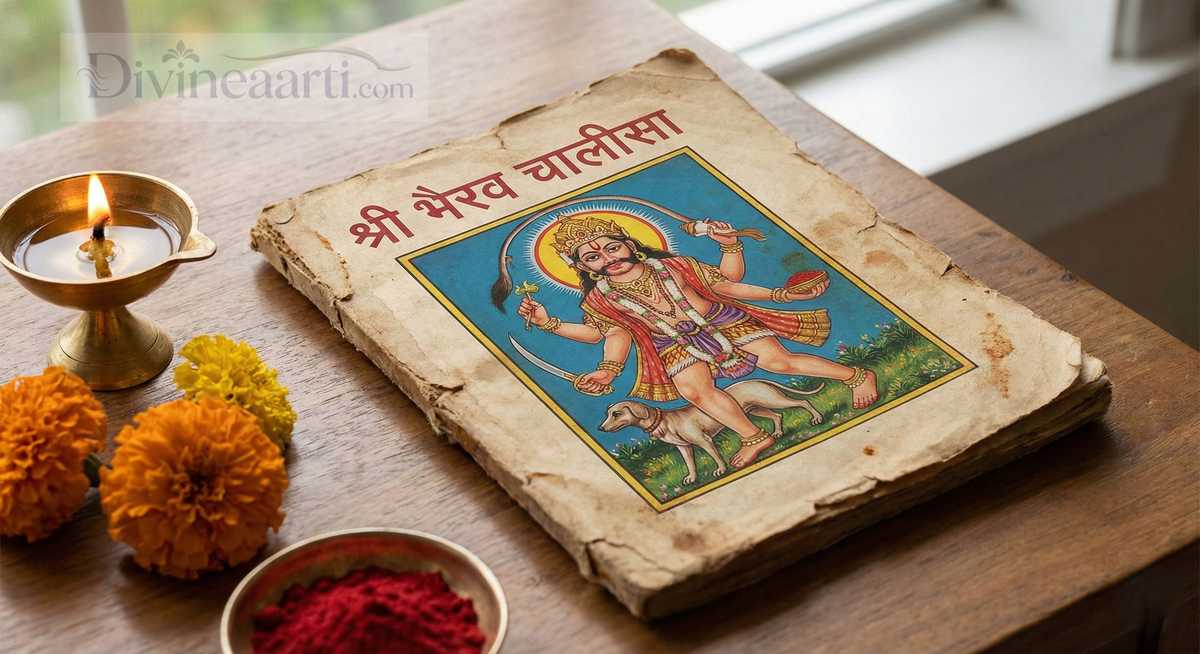
The Shri Bhairav Chalisa is a powerful devotional hymn comprising 40 verses dedicated to Lord Bhairav, the fierce manifestation of Lord Shiva. Known as Kaal Bhairav (the Lord of Time), Bhairav is one of the most powerful and awe-inspiring forms of Shiva, worshipped for protection, fearlessness, and mastery over time itself.
Lord Bhairav's name derives from Sanskrit "Bhaya" meaning fear, and "Rav" meaning destroyer - thus he is the "Destroyer of Fear." His fierce appearance with disheveled hair, garland of skulls, and multiple weapons represents his power to annihilate evil and protect his devotees from all forms of danger.
As the guardian deity of Kashi (Varanasi), Bhairav is considered essential for worship by all devotees visiting this holiest of Hindu cities. His worship is also important for those seeking protection from enemies, legal troubles, supernatural threats, and the negative effects of planetary positions, especially Saturn (Shani).
This comprehensive guide provides insights into each verse's spiritual meaning, the transformative benefits of regular recitation, optimal methods and timing for worship, and the extraordinary protective power that comes from connecting with Lord Bhairav's divine energy.
Time & Protection: Understanding Bhairav's Divine Power | Kaal Bhairav Mahima
Lord of Time - Kaal Bhairav
As Kaal Bhairav, Lord Bhairav presides over time itself. His worship is believed to grant mastery over time, preventing untimely death, ensuring longevity, and helping devotees use their time wisely. This aspect makes his worship essential for those seeking protection from accidents and sudden misfortunes.
Guardian of Kashi
Bhairav serves as the Kotwal (divine guardian) of Kashi, the holiest city in Hinduism. No pilgrimage to Varanasi is considered complete without worshipping Kaal Bhairav. His presence ensures the sanctity of the sacred city and protects all who visit with devotion.
The Eight Bhairavas
Lord Shiva manifests as eight Bhairavas who guard the eight directions of the universe. These Ashta Bhairavas - Asitanga, Ruru, Chanda, Krodha, Unmatta, Kapala, Bhishana, and Samhara Bhairav - collectively protect the cosmos from all forms of evil.
Destroyer of Fear and Evil
Bhairav's fierce form is specifically designed to strike terror into the hearts of evil-doers while simultaneously removing all fears from his devotees. His worship transforms fear into fearlessness, weakness into strength, and vulnerability into invincibility.
Tantric Significance
In tantric traditions, Bhairav worship is considered essential for spiritual advancement. He is the guardian of tantric knowledge and grants siddhis (supernatural powers) to sincere practitioners while protecting them from the dangers associated with intense spiritual practices.
Shri Bhairav Chalisa - 40 Sacred Verses | Bhairav Chalisa Lyrics Hindi
॥ दोहा ॥
श्री भैरव सङ्कट हरन,मंगल करन कृपालु।

करहु दया जि दास पे,निशिदिन दीनदयालु॥

॥ चौपाई ॥
जय डमरूधर नयन विशाला।श्याम वर्ण, वपु महा कराला॥

जय त्रिशूलधर जय डमरूधर।काशी कोतवाल, संकटहर॥

जय गिरिजासुत परमकृपाला।संकटहरण हरहु भ्रमजाला॥

जयति बटुक भैरव भयहारी।जयति काल भैरव बलधारी॥

अष्टरूप तुम्हरे सब गायें।सकल एक ते एक सिवाये॥

शिवस्वरूप शिव के अनुगामी।गणाधीश तुम सबके स्वामी॥

जटाजूट पर मुकुट सुहावै।भालचन्द्र अति शोभा पावै॥

कटि करधनी घुँघरू बाजै।दर्शन करत सकल भय भाजै॥

कर त्रिशूल डमरू अति सुन्दर।मोरपंख को चंवर मनोहर॥

खप्पर खड्ग लिये बलवाना।रूप चतुर्भुज नाथ बखाना॥

वाहन श्वान सदा सुखरासी।तुम अनन्त प्रभु तुम अविनाशी॥

जय जय जय भैरव भय भंजन।जय कृपालु भक्तन मनरंजन॥

नयन विशाल लाल अति भारी।रक्तवर्ण तुम अहहु पुरारी॥

बं बं बं बोलत दिनराती।शिव कहँ भजहु असुर आराती॥

एकरूप तुम शम्भु कहाये।दूजे भैरव रूप बनाये॥

सेवक तुमहिं तुमहिं प्रभु स्वामी।सब जग के तुम अन्तर्यामी॥

रक्तवर्ण वपु अहहि तुम्हारा।श्यामवर्ण कहुं होई प्रचारा॥

श्वेतवर्ण पुनि कहा बखानी।तीनि वर्ण तुम्हरे गुणखानी॥

तीनि नयन प्रभु परम सुहावहिं।सुरनर मुनि सब ध्यान लगावहिं॥

व्याघ्र चर्मधर तुम जग स्वामी।प्रेतनाथ तुम पूर्ण अकामी॥

चक्रनाथ नकुलेश प्रचण्डा।निमिष दिगम्बर कीरति चण्डा॥

क्रोधवत्स भूतेश कालधर।चक्रतुण्ड दशबाहु व्यालधर॥

अहहिं कोटि प्रभु नाम तुम्हारे।जयत सदा मेटत दुःख भारे॥

चौंसठ योगिनी नाचहिं संगा।क्रोधवान तुम अति रणरंगा॥

भूतनाथ तुम परम पुनीता।तुम भविष्य तुम अहहू अतीता॥

वर्तमान तुम्हरो शुचि रूपा।कालजयी तुम परम अनूपा॥

ऐलादी को संकट टार्यो।साद भक्त को कारज सारयो॥

कालीपुत्र कहावहु नाथा।तव चरणन नावहुं नित माथा॥

श्री क्रोधेश कृपा विस्तारहु।दीन जानि मोहि पार उतारहु॥

भवसागर बूढत दिनराती।होहु कृपालु दुष्ट आराती॥

सेवक जानि कृपा प्रभु कीजै।मोहिं भगति अपनी अब दीजै॥

करहुँ सदा भैरव की सेवा।तुम समान दूजो को देवा॥

अश्वनाथ तुम परम मनोहर।दुष्टन कहँ प्रभु अहहु भयंकर॥

तम्हरो दास जहाँ जो होई।ताकहँ संकट परै न कोई॥

हरहु नाथ तुम जन की पीरा।तुम समान प्रभु को बलवीरा॥

सब अपराध क्षमा करि दीजै।दीन जानि आपुन मोहिं कीजै॥

जो यह पाठ करे चालीसा।तापै कृपा करहु जगदीशा॥

॥ दोहा ॥
जय भैरव जय भूतपति,जय जय जय सुखकंद।

करहु कृपा नित दास पे,देहुं सदा आनन्द॥
॥ Doha ॥
Shri Bhairava Sankata Harana,Mangala Karana Kripalu।

Karahu Daya Ji Dasa Pe,Nishidina Dinadayalu॥

॥ Chaupai ॥
Jaya Damarudhara Nayana Vishala।Shyama Varna, Vapu Maha Karala॥

Jaya Trishuladhara Jaya Damarudhara।Kashi Kotavala, Sankatahara॥

Jaya Girijasuta Paramakripala।Sankataharana Harahu Bhramajala॥

Jayati Batuka Bhairava Bhayahari।Jayati Kala Bhairava Baladhari॥

Ashtarupa Tumhare Saba Gayen।Sakala Eka Te Eka Sivaye॥

Shivasvarupa Shiva Ke Anugami।Ganadhisha Tuma Sabake Svami॥

Jatajuta Para Mukuta Suhavai।Bhalachandra Ati Shobha Pavai॥

Kati Karadhani Ghungharu Bajai।Darshana Karata Sakala Bhaya Bhajai॥

Kara Trishula Damaru Ati Sundara।Morapankha Ko Chanvara Manohara॥

Khappara Khadga Liye Balavana।Rupa Chaturbhuja Natha Bakhana॥

Vahana Shvana Sada Sukharasi।Tuma Ananta Prabhu Tuma Avinashi॥

Jaya Jaya Jaya Bhairava Bhaya Bhanjana।Jaya Kripalu Bhaktana Manaranjana॥

Nayana Vishala Lala Ati Bhari।Raktavarna Tuma Ahahu Purari॥

Ban Ban Ban Bolata Dinarati।Shiva Kahan Bhajahu Asura Arati॥

Ekarupa Tuma Shambhu Kahaye।Duje Bhairava Rupa Banaye॥

Sevaka Tumahin Tumahin Prabhu Svami।Saba Jaga Ke Tuma Antaryami॥

Raktavarna Vapu Ahahi Tumhara।Shyamavarna Kahun Hoi Prachara॥

Shvetavarna Puni Kaha Bakhani।Tini Varna Tumhare Gunakhani॥

Tini Nayana Prabhu Parama Suhavahin।Suranara Muni Saba Dhyana Lagavahin॥

Vyaghra Charmadhara Tuma Jaga Svami।Pretanatha Tuma Purna Akami॥

Chakranatha Nakulesha Prachanda।Nimisha Digambara Kirati Chanda॥

Krodhavatsa Bhutesha Kaladhara।Chakratunda Dashabahu Vyaladhara॥

Ahahin Koti Prabhu Nama Tumhare।Jayata Sada Metata Duhkha Bhare॥

Chaunsatha Yogini Nachahin Sanga।Krodhavana Tuma Ati Ranaranga॥

Bhutanatha Tuma Parama Punita।Tuma Bhavishya Tuma Ahahu Atita॥

Vartamana Tumharo Shuchi Rupa।Kalajayi Tuma Parama Anupa॥

Ailadi Ko Sankata Taryo।Sada Bhakta Ko Karaja Sarayo॥

Kaliputra Kahavahu Natha।Tava Charanana Navahun Nita Matha॥

Shri Krodhesha Kripa Vistarahu।Dina Jani Mohi Para Utarahu॥

Bhavasagara Budhata Dinarati।Hohu Kripalu Dushta Arati॥

Sevaka Jani Kripa Prabhu Kijai।Mohin Bhagati Apani Aba Dijai॥

Karahun Sada Bhairava Ki Seva।Tuma Samana Dujo Ko Deva॥

Ashvanatha Tuma Parama Manohara।Dushtana Kahan Prabhu Ahahu Bhayankara॥

Tamharo Dasa Jahan Jo Hoi।Takahan Sankata Parai Na Koi॥

Harahu Natha Tuma Jana Ki Pira।Tuma Samana Prabhu Ko Balavira॥

Saba Aparadha Kshama Kari Dijai।Dina Jani Apuna Mohin Kijai॥

Jo Yaha Patha Kare Chalisa।Tapai Kripa Karahu Jagadisha॥

॥ Doha ॥
Jaya Bhairava Jaya Bhutapati,Jaya Jaya Jaya Sukhakanda।

Karahu Kripa Nita Dasa Pe,Dehun Sada Ananda॥
Detailed Meaning and Translation | Bhairav Chalisa Meaning in English
Opening Doha - Remover of Troubles
"श्री भैरव सङ्कट हरन,मंगल करन कृपालु।
करहु दया जि दास पे,निशिदिन दीनदयालु॥"
Translation: "Shri Bhairav, remover of troubles, auspicious one, compassionate. Show mercy on this servant, day and night, O merciful to the poor."
Meaning: The opening invokes Bhairav as the remover of all difficulties and bestower of auspiciousness, seeking his constant mercy.
Verse 1 - Wide-Eyed Lord
"जय डमरूधर नयन विशाला।श्याम वर्ण, वपु महा कराला॥"
Translation: "Victory to damaru holder with wide eyes. Dark complexion, body extremely fierce."
Meaning: Bhairav is praised for holding the damaru drum, having large eyes, dark body, and terrifying form.
Verse 2 - Kashi's Guardian
"जय त्रिशूलधर जय डमरूधर।काशी कोतवाल, संकटहर॥"
Translation: "Victory to trident holder, victory to damaru holder. Kashi's Kotwal (guardian), trouble remover."
Meaning: Bhairav wields trident and damaru; he is the divine guardian of Kashi who removes all troubles.
Verse 3 - Son of Girija
"जय गिरिजासुत परमकृपाला।संकटहरण हरहु भ्रमजाला॥"
Translation: "Victory to Girija's son, supremely compassionate. Remove troubles, dispel the web of delusion."
Meaning: As Parvati's son, the compassionate Bhairav removes difficulties and clears confusion.
Verse 4 - Batuk and Kaal Bhairav
"जयति बटुक भैरव भयहारी।जयति काल भैरव बलधारी॥"
Translation: "Victory to Batuk Bhairav, fear remover. Victory to Kaal Bhairav, mighty one."
Meaning: Both forms - young Batuk Bhairav who removes fear and powerful Kaal Bhairav - are praised.
Verse 5 - Eight Forms
"अष्टरूप तुम्हरे सब गायें।सकल एक ते एक सिवाये॥"
Translation: "All sing your eight forms. Each one unique, different from another."
Meaning: The eight forms of Bhairav are praised, each with distinct characteristics.
Verse 6 - Shiva's Form
"शिवस्वरूप शिव के अनुगामी।गणाधीश तुम सबके स्वामी॥"
Translation: "Shiva's form, follower of Shiva. Lord of Ganas, you are master of all."
Meaning: Bhairav embodies Shiva, follows Shiva's path, and rules over all divine attendants.
Verse 7 - Divine Adornments
"जटाजूट पर मुकुट सुहावै।भालचन्द्र अति शोभा पावै॥"
Translation: "Crown looks beautiful on matted locks. Moon on forehead gets great splendor."
Meaning: His matted hair is adorned with crown, and the crescent moon on forehead adds divine beauty.
Verse 8 - Fear Dispelling Darshan
"कटि करधनी घुँघरू बाजै।दर्शन करत सकल भय भाजै॥"
Translation: "Bells on waist belt jingle. Getting darshan, all fears flee."
Meaning: His waist bells ring melodiously; merely seeing him dispels all fears.
Verse 9 - Beautiful Weapons
"कर त्रिशूल डमरू अति सुन्दर।मोरपंख को चंवर मनोहर॥"
Translation: "Trident and damaru in hand very beautiful. Peacock feather fan is enchanting."
Meaning: He holds beautiful trident and damaru, with an enchanting peacock feather fan.
Verse 10 - Four-Armed Form
"खप्पर खड्ग लिये बलवाना।रूप चतुर्भुज नाथ बखाना॥"
Translation: "Skull cup and sword held by mighty one. Four-armed form of the lord is described."
Meaning: The powerful lord holds skull cup and sword in his four-armed divine form.
Verse 11 - Dog Vehicle
"वाहन श्वान सदा सुखरासी।तुम अनन्त प्रभु तुम अविनाशी॥"
Translation: "Vehicle is dog, always treasure of happiness. You are infinite lord, you are indestructible."
Meaning: Riding on a dog, Bhairav is the eternal, infinite, and indestructible source of joy.
Verse 12 - Fear Destroyer
"जय जय जय भैरव भय भंजन।जय कृपालु भक्तन मनरंजन॥"
Translation: "Victory, victory, victory to Bhairav fear destroyer. Victory to compassionate one who delights devotees' minds."
Meaning: Triple victory to the fear-destroying Bhairav who compassionately pleases his devotees.
Verse 13 - Red-Eyed Lord
"नयन विशाल लाल अति भारी।रक्तवर्ण तुम अहहु पुरारी॥"
Translation: "Eyes very large and red. You are blood-red colored, O enemy of cities."
Meaning: His large red eyes and blood-red form show his fierce nature as destroyer of evil.
Verse 14 - Bam Bam Chanting
"बं बं बं बोलत दिनराती।शिव कहँ भजहु असुर आराती॥"
Translation: "Bam Bam Bam chants day and night. Worship Shiva, enemy of demons."
Meaning: Constant chanting of "Bam" invokes Shiva's fierce aspect that destroys demonic forces.
Verse 15 - One with Shambhu
"एकरूप तुम शम्भु कहाये।दूजे भैरव रूप बनाये॥"
Translation: "In one form you are called Shambhu. In second, you became Bhairav form."
Meaning: Bhairav is Shiva's manifestation - same essence in different form.
Verse 16 - Inner Controller
"सेवक तुमहिं तुमहिं प्रभु स्वामी।सब जग के तुम अन्तर्यामी॥"
Translation: "Servant you, you are lord and master. You are inner controller of all world."
Meaning: Bhairav is both served and the master; he knows the hearts of all beings.
Verse 17 - Red Body
"रक्तवर्ण वपु अहहि तुम्हारा।श्यामवर्ण कहुं होई प्रचारा॥"
Translation: "Your body is blood-red colored. Sometimes dark color becomes known."
Meaning: Bhairav appears in red and dark colors, showing his different manifestations.
Verse 18 - Three Colors
"श्वेतवर्ण पुनि कहा बखानी।तीनि वर्ण तुम्हरे गुणखानी॥"
Translation: "White color is also described. Three colors are treasure of your qualities."
Meaning: The three colors (red, dark, white) represent Bhairav's different divine qualities.
Verse 19 - Three Eyes
"तीनि नयन प्रभु परम सुहावहिं।सुरनर मुनि सब ध्यान लगावहिं॥"
Translation: "Lord's three eyes are supremely beautiful. Gods, men, sages all meditate."
Meaning: His beautiful three eyes are meditated upon by gods, humans, and sages alike.
Verse 20 - Tiger Skin Wearer
"व्याघ्र चर्मधर तुम जग स्वामी।प्रेतनाथ तुम पूर्ण अकामी॥"
Translation: "You wear tiger skin, world's master. Lord of spirits, you are completely desireless."
Meaning: Wearing tiger skin, he is master of the world and lord of spirits, free from desires.
Verse 21 - Divine Names
"चक्रनाथ नकुलेश प्रचण्डा।निमिष दिगम्बर कीरति चण्डा॥"
Translation: "Chakranath, Nakulesha, fierce one. Instant sky-clad, fame fierce."
Meaning: Bhairav has many names including Chakranath and Nakulesha, showing his fierce glory.
Verse 22 - Ten Arms
"क्रोधवत्स भूतेश कालधर।चक्रतुण्ड दशबाहु व्यालधर॥"
Translation: "Angry child, lord of spirits, time holder. Wheel-faced, ten-armed, serpent holder."
Meaning: The wrathful lord of spirits holds time itself with ten arms adorned with serpents.
Verse 23 - Countless Names
"अहहिं कोटि प्रभु नाम तुम्हारे।जयत सदा मेटत दुःख भारे॥"
Translation: "Lord, you have crores of names. Always victorious, removing heavy sorrows."
Meaning: Bhairav has millions of names; he is ever-victorious in removing devotees' sorrows.
Verse 24 - Sixty-Four Yoginis
"चौंसठ योगिनी नाचहिं संगा।क्रोधवान तुम अति रणरंगा॥"
Translation: "Sixty-four Yoginis dance with you. You are wrathful, very fond of battle."
Meaning: The 64 Yoginis dance with him; he is fierce and loves cosmic battle against evil.
Verse 25 - Beyond Time
"भूतनाथ तुम परम पुनीता।तुम भविष्य तुम अहहू अतीता॥"
Translation: "Lord of spirits, you are supremely pure. You are future, you are past."
Meaning: The pure lord of spirits transcends time - he is both past and future.
Verse 26 - Conqueror of Time
"वर्तमान तुम्हरो शुचि रूपा।कालजयी तुम परम अनूपा॥"
Translation: "Present is your pure form. You are time-conqueror, supremely incomparable."
Meaning: His present form is pure; he conquers time and is uniquely incomparable.
Verse 27 - Saved Ailadi
"ऐलादी को संकट टार्यो।साद भक्त को कारज सारयो॥"
Translation: "Removed Ailadi's trouble. Accomplished true devotee's task."
Meaning: He saved his sister Ailadi from trouble and fulfills tasks of sincere devotees.
Verse 28 - Son of Kali
"कालीपुत्र कहावहु नाथा।तव चरणन नावहुं नित माथा॥"
Translation: "You are called Kali's son, O lord. I bow my head daily at your feet."
Meaning: Known as Kali's son, the devotee bows daily at his sacred feet.
Verse 29 - Expand Your Grace
"श्री क्रोधेश कृपा विस्तारहु।दीन जानि मोहि पार उतारहु॥"
Translation: "Shri Krodhesha, expand your grace. Knowing me humble, take me across."
Meaning: The devotee prays to wrathful lord to extend grace and ferry across worldly ocean.
Verse 30 - Drowning in World Ocean
"भवसागर बूढत दिनराती।होहु कृपालु दुष्ट आराती॥"
Translation: "Drowning in world ocean day and night. Be compassionate, enemy of the wicked."
Meaning: The devotee drowns in worldly ocean, seeking Bhairav's compassion against evil.
Verse 31 - Grant Devotion
"सेवक जानि कृपा प्रभु कीजै।मोहिं भगति अपनी अब दीजै॥"
Translation: "Knowing me servant, lord show mercy. Now give me your devotion."
Meaning: The devotee asks to be accepted as servant and granted true devotion.
Verse 32 - Eternal Service
"करहुँ सदा भैरव की सेवा।तुम समान दूजो को देवा॥"
Translation: "I will always do Bhairav's service. Who is a god equal to you?"
Meaning: The devotee pledges eternal service, acknowledging no god equals Bhairav.
Verse 33 - Enchanting to Good, Fearsome to Evil
"अश्वनाथ तुम परम मनोहर।दुष्टन कहँ प्रभु अहहु भयंकर॥"
Translation: "Ashvanath, you are supremely enchanting. To the wicked, lord, you are terrifying."
Meaning: Bhairav is enchanting to devotees but terrifying to evildoers.
Verse 34 - Protected Servants
"तम्हरो दास जहाँ जो होई।ताकहँ संकट परै न कोई॥"
Translation: "Wherever your servant may be. No trouble falls on them."
Meaning: Bhairav's servants are protected from all troubles wherever they go.
Verse 35 - Remove Devotees' Pain
"हरहु नाथ तुम जन की पीरा।तुम समान प्रभु को बलवीरा॥"
Translation: "Remove, O lord, your devotees' pain. Who is mighty hero like you, lord?"
Meaning: The devotee asks Bhairav to remove pain, acknowledging his unmatched heroism.
Verse 36 - Forgive All Offenses
"सब अपराध क्षमा करि दीजै।दीन जानि आपुन मोहिं कीजै॥"
Translation: "Forgive all offenses. Knowing me humble, make me your own."
Meaning: The devotee seeks forgiveness and wishes to be accepted as Bhairav's own.
Verse 37 - Chalisa Recitation Benefits
"जो यह पाठ करे चालीसा।तापै कृपा करहु जगदीशा॥"
Translation: "Whoever recites this Chalisa. Bless them, O lord of the world."
Meaning: Those who recite this Chalisa receive the world-lord's blessings.
Closing Doha - Eternal Joy
"जय भैरव जय भूतपति,जय जय जय सुखकंद।
करहु कृपा नित दास पे,देहुं सदा आनन्द॥"
Translation: "Victory to Bhairav, victory to lord of spirits, victory, victory, victory, root of happiness. Show mercy daily on servant, give eternal bliss."
Meaning: The closing praises Bhairav as source of happiness, seeking his daily mercy and eternal bliss.
Spiritual Benefits of Bhairav Chalisa | Bhairav Chalisa Benefits
Time Mastery and Protection
- Longevity: Protection from untimely death and accidents
- Time Management: Wisdom to use time effectively
- Punctuality: Divine assistance in meeting deadlines
- Life Extension: Removal of obstacles to longevity
Fearlessness and Courage
- Fear Removal: Elimination of all types of fears
- Mental Strength: Courage to face life's challenges
- Confidence: Self-assurance in difficult situations
- Boldness: Ability to take necessary risks
Protection from Evil
- Ghost Protection: Shield against evil spirits
- Black Magic Defense: Neutralizing tantric attacks
- Enemy Defeat: Victory over opponents
- Legal Success: Favorable outcomes in court cases
Planetary Benefits
- Saturn Pacification: Relief from Shani dasha effects
- Rahu-Ketu Benefits: Protection from nodal afflictions
- Mars Balance: Cooling excessive Mars energy
- Overall Chart Improvement: General planetary harmonization
How to Recite Bhairav Chalisa: Complete Guide | Bhairav Chalisa Path Vidhi
Preparation for Chalisa Recitation
- Personal Purification: Take a bath and wear clean, preferably black or dark clothes
- Sacred Space Setup: Place Bhairav's image facing south
- Essential Offerings: Black sesame, mustard oil, flowers, liquor (in some traditions)
- Mental Preparation: Cultivate feelings of devotion and fearlessness
Step-by-Step Recitation Process
- Invocation: Begin with "Om Kaal Bhairavaya Namaha"
- Light Lamp: Use mustard oil lamp for maximum benefit
- Offer Black Items: Black sesame, black cloth, etc.
- Chalisa Recitation: Read all 40 verses with concentration
- Personal Prayer: Request specific protection and blessings
- Aarti: Conclude with Bhairav Aarti
Special Practices
- Recite facing south direction
- Perform on Saturdays and Sundays for enhanced benefits
- Continue for 40 days for major issues
- Visit Kaal Bhairav temple in Varanasi if possible
Best Times & Occasions for Bhairav Chalisa
Kaal Bhairav Ashtami
The most auspicious day for Bhairav worship is Kaal Bhairav Ashtami, observed on the eighth day (Ashtami) of the waning moon (Krishna Paksha) in Margashirsha month (November-December). On this day, intensive worship brings immense blessings and protection.
Weekly Observances
- Saturday: Most powerful day for Bhairav worship
- Sunday: Good for general protection and strength
- Tuesday: Excellent for courage and victory
- Ashtami Days: Monthly ashtami is auspicious for worship
Daily Practice Times
Midnight (Nishita): Most powerful time, especially during Rahu Kaal
Evening (Pradosh): During sunset for Shiva-related worship
Morning: After sunrise for daily protection
Special Occasions
- Before visiting Varanasi (Kashi)
- When facing enemies or legal troubles
- During Saturn dasha or transit
- When experiencing supernatural disturbances
Historical Significance and Cultural Impact | Kaal Bhairav Katha
The Origin of Bhairav
According to Hindu mythology, Lord Bhairav emerged from Shiva's third eye when Brahma, in a moment of arrogance, claimed to be superior. Shiva created Bhairav to cut off Brahma's fifth head, thus establishing cosmic order. For this act, Bhairav carried Brahma's skull (kapala) as penance, eventually finding liberation in Kashi.
Guardian of Kashi
Lord Bhairav was appointed by Shiva as the Kotwal (guardian) of Kashi. It is believed that anyone who dies in Kashi without proper devotion must answer to Kaal Bhairav before liberation. His temple in Varanasi is one of the most important pilgrimage sites.
The Ashta Bhairavas
The eight manifestations of Bhairav guard the eight directions and eight cremation grounds. Each has specific qualities and worship methods, with Kaal Bhairav being the supreme form who controls time and death.
Tantric Traditions
Bhairav holds a central position in tantric worship, particularly in Kashmir Shaivism and Shakta traditions. His worship is considered essential for those on the tantric path, as he protects practitioners and grants siddhis.
❓ Frequently Asked Questions About Bhairav Chalisa
What is Bhairav Chalisa and who is Lord Bhairav?
Bhairav Chalisa is a 40-verse devotional hymn dedicated to Lord Bhairav (Kaal Bhairav), a fierce manifestation of Lord Shiva. He is the guardian deity of sacred sites, the destroyer of fear, and the lord of time (Kaal). The Chalisa describes his eight forms (Ashta Bhairav), his role as the Kotwal (protector) of Kashi, and his divine powers.
When should one recite Bhairav Chalisa?
The best times are during Rahu Kaal, on Kaal Bhairav Ashtami, on Sundays and Tuesdays, and at midnight. Bhairav worship is especially powerful during Shivratri, Kaal Ratri (7th night of Navaratri), and on Amavasya (new moon). Evening and night recitations are traditionally preferred for Bhairav worship as he is the lord of the dark.
What are the benefits of chanting Bhairav Chalisa?
Chanting Bhairav Chalisa provides powerful protection from enemies, evil spirits, and negative planetary influences. It removes the effects of Rahu and Ketu doshas, guards against untimely death, and destroys all fears. Lord Bhairav's blessings bring fearlessness, justice, and swift resolution of problems. It is especially beneficial for those facing legal issues or powerful adversaries.
What is the difference between Bhairav and Batuk Bhairav?
Bhairav (Kaal Bhairav) is the fierce adult form of Lord Shiva who destroys evil and guards sacred places. Batuk Bhairav is his child (Batuk) form, which is more approachable and gentle while retaining immense power. Both forms are worshipped with great devotion, but Batuk Bhairav is considered more accessible for general worship and household protection.
Can Bhairav Chalisa help with Rahu-related problems?
Yes, Lord Bhairav is considered the ruler and controller of Rahu in Vedic astrology. Reciting Bhairav Chalisa during Rahu Kaal is one of the most effective remedies for Rahu-related challenges such as confusion, deception, sudden setbacks, and mental disturbances. Regular worship of Bhairav significantly reduces the malefic effects of Rahu in one's horoscope.