
Brahma Chalisa Lyrics in Hindi | Shri Brahma Chalisa with Meaning
Introduction to Shri Brahma Chalisa | Brahma Chalisa Meaning
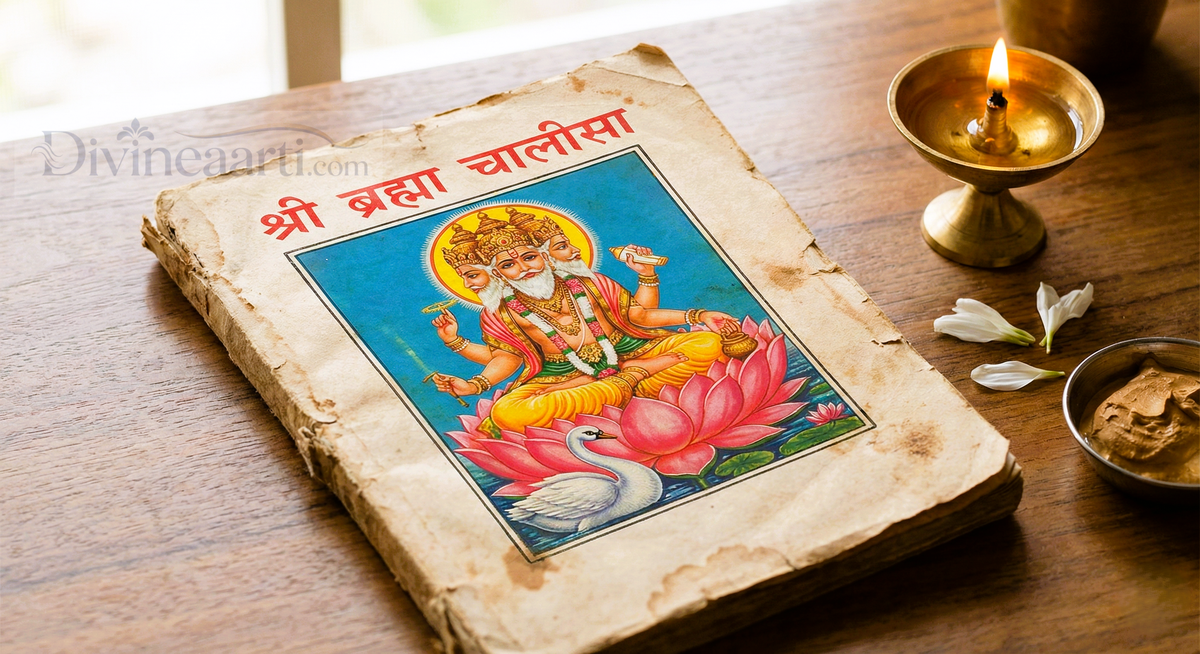
The Shri Brahma Chalisa is a rare and powerful devotional hymn comprising 40 verses dedicated to Lord Brahma, the creator deity of the Hindu Trimurti. Unlike Vishnu and Shiva who have numerous temples and widespread worship, Brahma worship is relatively uncommon, making this Chalisa a precious spiritual resource.
Lord Brahma, also known as Pitamaha (Grandfather) and Prajapati (Lord of Creatures), is the cosmic creator responsible for generating the universe from the primordial void. He created the Vedas, time, space, the celestial bodies, and all living beings. His four heads represent the four Vedas and the four directions of the cosmos.
Brahma's consort is Goddess Saraswati, the deity of knowledge, arts, and wisdom. Together, they represent the creative and intellectual aspects of divinity. Worshipping Brahma is particularly beneficial for those seeking creativity, knowledge, new beginnings, and success in scholarly or artistic pursuits.
This comprehensive guide provides insights into each verse's spiritual meaning, the transformative benefits of regular recitation, optimal methods and timing for worship, and the profound creative energy that comes from connecting with Lord Brahma's divine essence.
Creation & Knowledge: Understanding Brahma's Divine Role | Brahma Dev Mahima
The Creator of the Universe
According to Hindu cosmology, Brahma emerged from the cosmic golden egg (Hiranyagarbha) or from a lotus arising from Lord Vishnu's navel. He then created the universe through divine thought (sankalpa), giving form to formless energy and manifesting the material world.
The Four Vedas
Brahma is credited with creating the four Vedas - Rig, Yajur, Sama, and Atharva - from his four mouths. These ancient scriptures contain the accumulated wisdom of the cosmos and form the foundation of Hindu philosophy, ritual, and spiritual practice.
The Trimurti - Divine Trinity
Brahma forms the creative aspect of the Trimurti, alongside Vishnu (preservation) and Shiva (transformation). While Vishnu maintains cosmic order and Shiva transforms existence, Brahma initiates creation cycles. Together, they govern the cosmic processes of creation, maintenance, and dissolution.
Symbol of Creativity and Knowledge
Brahma holds the Vedas, a kamandalu (water pot representing creation), prayer beads (representing time), and a lotus (representing purity and creation). His vehicle is the swan (hamsa), symbolizing discrimination between truth and illusion.
Why Brahma Is Rarely Worshipped
According to mythology, Brahma was cursed by Shiva not to be worshipped on earth, which explains the scarcity of Brahma temples. However, the Pushkar temple in Rajasthan and a few others remain as important pilgrimage sites for Brahma devotees.
Shri Brahma Chalisa - 40 Sacred Verses | Brahma Chalisa Lyrics Hindi
॥ दोहा ॥
जय ब्रह्मा जय स्वयम्भू,चतुरानन सुखमूल।

करहु कृपा निज दास पै,रहहु सदा अनुकूल॥

तुम सृजक ब्रह्माण्ड के,अज विधि घाता नाम।

विश्वविधाता कीजिये,जन पै कृपा ललाम॥

॥ चौपाई ॥
जय जय कमलासान जगमूला।रहहु सदा जनपै अनुकूला॥

रुप चतुर्भुज परम सुहावन।तुम्हें अहैं चतुर्दिक आनन॥

रक्तवर्ण तव सुभग शरीरा।मस्तक जटाजुट गंभीरा॥

ताके ऊपर मुकुट बिराजै।दाढ़ी श्वेत महाछवि छाजै॥

श्वेतवस्त्र धारे तुम सुन्दर।है यज्ञोपवीत अति मनहर॥

कानन कुण्डल सुभग बिराजहिं।गल मोतिन की माला राजहिं॥

चारिहु वेद तुम्हीं प्रगटाये।दिव्य ज्ञान त्रिभुवनहिं सिखाये॥

ब्रह्मलोक शुभ धाम तुम्हारा।अखिल भुवन महँ यश बिस्तारा॥

अर्द्धांगिनि तव है सावित्री।अपर नाम हिये गायत्री॥

सरस्वती तब सुता मनोहर।वीणा वादिनि सब विधि मुन्दर॥

कमलासन पर रहे बिराजे।तुम हरिभक्ति साज सब साजे॥

क्षीर सिन्धु सोवत सुरभूपा।नाभि कमल भो प्रगट अनूपा॥

तेहि पर तुम आसीन कृपाला।सदा करहु सन्तन प्रतिपाला॥

एक बार की कथा प्रचारी।तुम कहँ मोह भयेउ मन भारी॥

कमलासन लखि कीन्ह बिचारा।और न कोउ अहै संसारा॥

तब तुम कमलनाल गहि लीन्हा।अन्त बिलोकन कर प्रण कीन्हा॥

कोटिक वर्ष गये यहि भांती।भ्रमत भ्रमत बीते दिन राती॥

पै तुम ताकर अन्त न पाये।ह्वै निराश अतिशय दुःखियाये॥

पुनि बिचार मन महँ यह कीन्हा।महापघ यह अति प्राचीन॥

याको जन्म भयो को कारन।तबहीं मोहि करयो यह धारन॥

अखिल भुवन महँ कहँ कोई नाहीं।सब कुछ अहै निहित मो माहीं॥

यह निश्चय करि गरब बढ़ायो।निज कहँ ब्रह्म मानि सुखपाये॥

गगन गिरा तब भई गंभीरा।ब्रह्मा वचन सुनहु धरि धीरा॥

सकल सृष्टि कर स्वामी जोई।ब्रह्म अनादि अलख है सोई॥

निज इच्छा इन सब निरमाये।ब्रह्मा विष्णु महेश बनाये॥

सृष्टि लागि प्रगटे त्रयदेवा।सब जग इनकी करिहै सेवा॥

महापघ जो तुम्हरो आसन।ता पै अहै विष्णु को शासन॥

विष्णु नाभितें प्रगट्यो आई।तुम कहँ सत्य दीन्ह समुझाई॥

भ्ौटहु जाई विष्णु हितमानी।यह कहि बन्द भई नभवानी॥

ताहि श्रवण कहि अचरज माना।पुनि चतुरानन कीन्ह पयाना॥

कमल नाल धरि नीचे आवा।तहां विष्णु के दर्शन पावा॥

शयन करत देखे सुरभूपा।श्यायमवर्ण तनु परम अनूपा॥

सोहत चतुर्भुजा अतिसुन्दर।क्रीटमुकट राजत मस्तक पर॥

गल बैजन्ती माल बिराजै।कोटि सूर्य की शोभा लाजै॥

शंख चक्र अरु गदा मनोहर।शेष नाग शय्या अति मनहर॥

दिव्यरुप लखि कीन्ह प्रणामू।हर्षित भे श्रीपति सुख धामू॥

बहु विधि विनय कीन्ह चतुरानन।तब लक्ष्मी पति कहेउ मुदित मन॥

ब्रह्मा दूरि करहु अभिमाना।ब्रह्मारुप हम दोउ समाना॥

तीजे श्री शिवशंकर आहीं।ब्रह्मरुप सब त्रिभुवन मांही॥

तुम सों होई सृष्टि विस्तारा।हम पालन करिहैं संसारा॥

शिव संहार करहिं सब केरा।हम तीनहुं कहँ काज धनेरा॥

अगुणरुप श्री ब्रह्मा बखानहु।निराकार तिनकहँ तुम जानहु॥

हम साकार रुप त्रयदेवा।करिहैं सदा ब्रह्म की सेवा॥

यह सुनि ब्रह्मा परम सिहाये।परब्रह्म के यश अति गाये॥

सो सब विदित वेद के नामा।मुक्ति रुप सो परम ललामा॥

यहि विधि प्रभु भो जनम तुम्हारा।पुनि तुम प्रगट कीन्ह संसारा॥

नाम पितामह सुन्दर पायेउ।जड़ चेतन सब कहँ निरमायेउ॥

लीन्ह अनेक बार अवतारा।सुन्दर सुयश जगत विस्तारा॥

देवदनुज सब तुम कहँ ध्यावहिं।मनवांछित तुम सन सब पावहिं॥

जो कोउ ध्यान धरै नर नारी।ताकी आस पुजावहु सारी॥

पुष्कर तीर्थ परम सुखदाई।तहँ तुम बसहु सदा सुरराई॥

कुण्ड नहाइ करहि जो पूजन।ता कर दूर होई सब दूषण॥
॥ Doha ॥
Jaya Brahma Jaya Svayambhu,Chaturanana Sukhamula।

Karahu Kripa Nija Dasa Pai,Rahahu Sada Anukula॥

Tuma Srijaka Brahmanda Ke,Aja Vidhi Ghata Nama।

Vishvavidhata Kijiye,Jana Pai Kripa Lalama॥

॥ Chaupai ॥
Jaya Jaya Kamalasana Jagamula।Rahahu Sada Janapai Anukula॥

Rupa Chaturbhuja Parama Suhavana।Tumhein Ahain Chaturdika Anana॥

Raktavarna Tava Subhaga Sharira।Mastaka Jatajuta Gambhira॥

Take Upara Mukuta Birajai।Dadhi Shveta Mahachhavi Chhajai॥

Shvetavastra Dhare Tuma Sundara।Hai Yajnyopavita Ati Manahara॥

Kanana Kundala Subhaga Birajahin।Gala Motina Ki Mala Rajahin॥

Charihu Veda Tumhin Pragataye।Divya Jnana Tribhuvanahin Sikhaye॥

Brahmaloka Shubha Dhama Tumhara।Akhila Bhuvana Mahan Yasha Bistara॥

Arddhangini Tava Hai Savitri।Apara Nama Hiye Gayatri॥

Sarasvati Taba Suta Manohara।Vina Vadini Saba Vidhi Mundara॥

Kamalasana Para Rahe Biraje।Tuma Haribhakti Saja Saba Saje॥

Kshira Sindhu Sovata Surabhupa।Nabhi Kamala Bho Pragata Anupa॥

Tehi Para Tuma Asina Kripala।Sada Karahu Santana Pratipala॥

Eka Bara Ki Katha Prachari।Tuma Kahan Moha Bhayeu Mana Bhari॥

Kamalasana Lakhi Kinha Bichara।Aura Na Kou Ahai Sansara॥

Taba Tuma Kamalanala Gahi Linha।Anta Bilokana Kara Prana Kinha॥

Kotika Varsha Gaye Yahi Bhanti।Bhramata Bhramata Bite Dina Rati॥

Pai Tuma Takara Anta Na Paye।Hvai Nirasha Atishaya Duhkhiyaye॥

Puni Bichara Mana Mahan Yaha Kinha।Mahapagha Yaha Ati Prachina॥

Yako Janma Bhayo Ko Karana।Tabahin Mohi Karayo Yaha Dharana॥

Akhila Bhuvana Mahan Kahan Koi Nahin।Saba Kuchha Ahai Nihita Mo Mahin॥

Yaha Nishchaya Kari Garaba Badhayo।Nija Kahan Brahma Mani Sukhapaye॥

Gagana Gira Taba Bhai Gambhira।Brahma Vachana Sunahu Dhari Dhira॥

Sakala Srishti Kara Svami Joi।Brahma Anadi Alakha Hai Soi॥

Nija Ichchha Ina Saba Niramaye।Brahma Vishnu Mahesha Banaye॥

Srishti Lagi Pragate Trayadeva।Saba Jaga Inaki Karihai Seva॥

Mahapagha Jo Tumharo Asana।Ta Pai Ahai Vishnu Ko Shasana॥

Vishnu Nabhitein Pragatyo Ai।Tuma Kahan Satya Dinha Samujhai॥

Bhautahu Jai Vishnu Hitamani।Yaha Kahi Banda Bhai Nabhavani॥

Tahi Shravana Kahi Acharaja Mana।Puni Chaturanana Kinha Payana॥

Kamala Nala Dhari Niche Ava।Tahan Vishnu Ke Darshana Pava॥

Shayana Karata Dekhe Surabhupa।Shyayamavarna Tanu Parama Anupa॥

Sohata Chaturbhuja Atisundara।Kritamukata Rajata Mastaka Para॥

Gala Baijanti Mala Birajai।Koti Surya Ki Shobha Lajai॥

Shankha Chakra Aru Gada Manohara।Shesha Naga Shayya Ati Manahara॥

Divyarupa Lakhi Kinha Pranamu।Harshita Bhe Shripati Sukha Dhamu॥

Bahu Vidhi Vinaya Kinha Chaturanana।Taba Lakshmi Pati Kaheu Mudita Mana॥

Brahma Duri Karahu Abhimana।Brahmarupa Hama Dou Samana॥

Tije Shri Shivashankara Ahin।Brahmarupa Saba Tribhuvana Manhi॥

Tuma Son Hoi Srishti Vistara।Hama Palana Karihain Sansara॥

Shiva Sanhara Karahin Saba Kera।Hama Tinahun Kahan Kaja Dhanera॥

Agunarupa Shri Brahma Bakhanahu।Nirakara Tinakahan Tuma Janahu॥

Hama Sakara Rupa Trayadeva।Karihain Sada Brahma Ki Seva॥

Yaha Suni Brahma Parama Sihaye।Parabrahma Ke Yasha Ati Gaye॥

So Saba Vidita Veda Ke Nama।Mukti Rupa So Parama Lalama॥

Yahi Vidhi Prabhu Bho Janama Tumhara।Puni Tuma Pragata Kinha Sansara॥

Nama Pitamaha Sundara Payeu।Jada Chetana Saba Kahan Niramayeu॥

Linha Aneka Bara Avatara।Sundara Suyasha Jagata Vistara॥

Devadanuja Saba Tuma Kahan Dhyavahin।Manavanchhita Tuma Sana Saba Pavahin॥

Jo Kou Dhyana Dharai Nara Nari।Taki Asa Pujavahu Sari॥

Pushkara Tirtha Parama Sukhadai।Tahan Tuma Basahu Sada Surarai॥

Kunda Nahai Karahi Jo Pujana।Ta Kara Dura Hoi Saba Dushana॥
Detailed Meaning and Translation | Brahma Chalisa Meaning in English
Opening Doha - Invoking the Self-Born
"जय ब्रह्मा जय स्वयम्भू,चतुरानन सुखमूल।
करहु कृपा निज दास पै,रहहु सदा अनुकूल॥"
Translation: "Victory to Brahma, victory to self-born, four-faced root of happiness. Show mercy on this servant, always remain favorable."
Meaning: Brahma is praised as the self-born deity with four faces, the source of all happiness, seeking his constant favor.
Opening Doha - Creator of Universe
"तुम सृजक ब्रह्माण्ड के,अज विधि घाता नाम।
विश्वविधाता कीजिये,जन पै कृपा ललाम॥"
Translation: "You are creator of the universe, Aja, Vidhi, Ghata are your names. O World-creator, bestow grace upon your devotee."
Meaning: Brahma is known by many names as the unborn creator; devotees seek his graceful blessings.
Verse 1 - Lotus-Seated Origin
"जय जय कमलासान जगमूला।रहहु सदा जनपै अनुकूला॥"
Translation: "Victory, victory to lotus-seated one, root of the world. Always remain favorable to devotees."
Meaning: Brahma sits on a lotus and is the origin of the world, always blessing devotees.
Verse 2 - Four-Armed Four-Faced
"रुप चतुर्भुज परम सुहावन।तुम्हें अहैं चतुर्दिक आनन॥"
Translation: "Four-armed form supremely beautiful. You have faces in four directions."
Meaning: Brahma has four arms and four faces looking in all directions, signifying his omniscience.
Verse 3 - Divine Appearance
"रक्तवर्ण तव सुभग शरीरा।मस्तक जटाजुट गंभीरा॥"
Translation: "Your beautiful body is reddish-colored. Head has profound matted locks."
Meaning: Brahma has a reddish complexion with deep matted hair symbolizing ancient wisdom.
Verse 4 - Crown and White Beard
"ताके ऊपर मुकुट बिराजै।दाढ़ी श्वेत महाछवि छाजै॥"
Translation: "Crown sits upon that. White beard adds great splendor."
Meaning: Brahma wears a crown and has a white beard representing his ancient, eternal nature.
Verse 5 - White Garments
"श्वेतवस्त्र धारे तुम सुन्दर।है यज्ञोपवीत अति मनहर॥"
Translation: "You wear beautiful white clothes. Sacred thread is very enchanting."
Meaning: Brahma wears white garments symbolizing purity, with the sacred thread indicating his role as spiritual guide.
Verse 6 - Ornaments and Garland
"कानन कुण्डल सुभग बिराजहिं।गल मोतिन की माला राजहिं॥"
Translation: "Beautiful earrings shine in ears. Pearl garland adorns the neck."
Meaning: Brahma is adorned with earrings and pearl necklaces showing divine beauty.
Verse 7 - Revealer of Vedas
"चारिहु वेद तुम्हीं प्रगटाये।दिव्य ज्ञान त्रिभुवनहिं सिखाये॥"
Translation: "You revealed all four Vedas. Taught divine knowledge to the three worlds."
Meaning: Brahma manifested the four Vedas and spread divine wisdom throughout the universe.
Verse 8 - Brahmalok
"ब्रह्मलोक शुभ धाम तुम्हारा।अखिल भुवन महँ यश बिस्तारा॥"
Translation: "Brahmalok is your auspicious abode. Fame spread throughout all worlds."
Meaning: Brahma resides in Brahmalok, and his glory pervades all creation.
Verse 9 - Consort Savitri/Gayatri
"अर्द्धांगिनि तव है सावित्री।अपर नाम हिये गायत्री॥"
Translation: "Your consort is Savitri. Another name in heart is Gayatri."
Meaning: Brahma's wife is Savitri, also known as Gayatri, the goddess of sacred mantras.
Verse 10 - Daughter Saraswati
"सरस्वती तब सुता मनोहर।वीणा वादिनि सब विधि मुन्दर॥"
Translation: "Saraswati then is your enchanting daughter. Veena player, beautiful in all ways."
Meaning: Saraswati, the beautiful goddess of knowledge who plays veena, is Brahma's daughter.
Verse 11 - Seated on Lotus
"कमलासन पर रहे बिराजे।तुम हरिभक्ति साज सब साजे॥"
Translation: "Seated on lotus throne. You arranged all tools for Hari's devotion."
Meaning: From his lotus seat, Brahma established all means of devotion to Lord Vishnu.
Verse 12 - Birth from Vishnu's Navel
"क्षीर सिन्धु सोवत सुरभूपा।नाभि कमल भो प्रगट अनूपा॥"
Translation: "Lord of gods sleeping in milk ocean. From navel lotus, incomparable one appeared."
Meaning: When Vishnu slept on the cosmic ocean, Brahma emerged from his navel lotus.
Verse 13 - Protector of Saints
"तेहि पर तुम आसीन कृपाला।सदा करहु सन्तन प्रतिपाला॥"
Translation: "On that you are seated, compassionate one. Always protect the saints."
Meaning: The compassionate Brahma seated on the lotus always protects holy people.
Verse 14 - Story of Delusion
"एक बार की कथा प्रचारी।तुम कहँ मोह भयेउ मन भारी॥"
Translation: "Once upon a time this story spread. Heavy delusion arose in your mind."
Meaning: A famous story tells how Brahma once became deluded by pride.
Verse 15 - Thought of Uniqueness
"कमलासन लखि कीन्ह बिचारा।और न कोउ अहै संसारा॥"
Translation: "Seeing the lotus seat, thought: No one else exists in the world."
Meaning: Brahma on his lotus thought he was the only being in existence.
Verse 16 - Searching the Lotus Stem
"तब तुम कमलनाल गहि लीन्हा।अन्त बिलोकन कर प्रण कीन्हा॥"
Translation: "Then you held the lotus stem. Made vow to see its end."
Meaning: Brahma grasped the lotus stem and vowed to find its origin.
Verse 17 - Millions of Years
"कोटिक वर्ष गये यहि भांती।भ्रमत भ्रमत बीते दिन राती॥"
Translation: "Millions of years passed this way. Wandering and wandering, days and nights went by."
Meaning: Brahma searched for millions of years but couldn't find the stem's end.
Verse 18 - Endless Search
"पै तुम ताकर अन्त न पाये।ह्वै निराश अतिशय दुःखियाये॥"
Translation: "But you didn't find its end. Became hopeless and extremely sorrowful."
Meaning: Despite endless searching, Brahma couldn't find the source and became deeply sad.
Verse 19 - Ancient Mystery
"पुनि बिचार मन महँ यह कीन्हा।महापघ यह अति प्राचीन॥"
Translation: "Then thought in mind: This great lotus is extremely ancient."
Meaning: Brahma contemplated that this lotus is from beginningless time.
Verse 20 - Self-Centered Thought
"याको जन्म भयो को कारन।तबहीं मोहि करयो यह धारन॥"
Translation: "Who caused its birth? Then I assumed this role for myself."
Meaning: Brahma wondered about the cause and assumed he was the sole creator.
Verse 21 - False Pride
"अखिल भुवन महँ कहँ कोई नाहीं।सब कुछ अहै निहित मो माहीं॥"
Translation: "In all worlds, there is no one else. Everything exists contained in me."
Meaning: Brahma falsely believed everything was within him alone.
Verse 22 - Arrogance Grew
"यह निश्चय करि गरब बढ़ायो।निज कहँ ब्रह्म मानि सुखपाये॥"
Translation: "Making this conclusion, pride increased. Considering himself Brahman, felt happy."
Meaning: Brahma's pride grew as he considered himself the Supreme Being.
Verse 23 - Divine Voice
"गगन गिरा तब भई गंभीरा।ब्रह्मा वचन सुनहु धरि धीरा॥"
Translation: "Then a profound voice came from sky. Brahma, listen to these words with patience."
Meaning: A divine voice spoke from the heavens, correcting Brahma's misconception.
Verse 24 - The True Lord
"सकल सृष्टि कर स्वामी जोई।ब्रह्म अनादि अलख है सोई॥"
Translation: "The master of all creation. That Brahman is beginningless and invisible."
Meaning: The voice revealed the true formless, eternal Supreme Being.
Verse 25 - Trinity Created
"निज इच्छा इन सब निरमाये।ब्रह्मा विष्णु महेश बनाये॥"
Translation: "By his own will, created all this. Made Brahma, Vishnu, Mahesh."
Meaning: The Supreme created the trinity of Brahma, Vishnu, and Shiva by his will.
Verse 26 - Three Gods for Creation
"सृष्टि लागि प्रगटे त्रयदेवा।सब जग इनकी करिहै सेवा॥"
Translation: "Three gods appeared for creation. All world will serve them."
Meaning: The trinity manifested to manage creation, and the world worships them.
Verse 27 - Vishnu's Governance
"महापघ जो तुम्हरो आसन।ता पै अहै विष्णु को शासन॥"
Translation: "The great lotus which is your seat. On that is Vishnu's governance."
Meaning: Brahma's lotus seat itself comes from Vishnu's body.
Verse 28 - Born from Vishnu
"विष्णु नाभितें प्रगट्यो आई।तुम कहँ सत्य दीन्ह समुझाई॥"
Translation: "From Vishnu's navel you appeared. This truth was explained to you."
Meaning: The voice revealed that Brahma emerged from Vishnu's navel.
Verse 29 - Go Worship Vishnu
"भ्ौटहु जाई विष्णु हितमानी।यह कहि बन्द भई नभवानी॥"
Translation: "Go worship Vishnu the benefactor. Saying this, the sky voice stopped."
Meaning: The divine voice instructed Brahma to worship Vishnu and then fell silent.
Verse 30 - Amazement
"ताहि श्रवण कहि अचरज माना।पुनि चतुरानन कीन्ह पयाना॥"
Translation: "Hearing that, felt amazement. Then four-faced one began journey."
Meaning: Amazed by the revelation, Brahma started his journey to find Vishnu.
Verse 31 - Descended the Stem
"कमल नाल धरि नीचे आवा।तहां विष्णु के दर्शन पावा॥"
Translation: "Holding lotus stem, came down. There received Vishnu's darshan."
Meaning: Brahma descended the lotus stem and found Lord Vishnu.
Verse 32 - Vishnu's Form
"शयन करत देखे सुरभूपा।श्यायमवर्ण तनु परम अनूपा॥"
Translation: "Saw lord of gods sleeping. Dark-colored body supremely incomparable."
Meaning: Brahma saw Vishnu sleeping, with his beautiful dark-blue form.
Verse 33 - Four-Armed Beauty
"सोहत चतुर्भुजा अतिसुन्दर।क्रीटमुकट राजत मस्तक पर॥"
Translation: "Four arms look extremely beautiful. Crown shines on head."
Meaning: Vishnu's four-armed form with crown was supremely beautiful.
Verse 34 - Divine Ornaments
"गल बैजन्ती माल बिराजै।कोटि सूर्य की शोभा लाजै॥"
Translation: "Vaijayanti garland adorns neck. Puts millions of suns to shame."
Meaning: Vishnu's garland outshines the brilliance of countless suns.
Verse 35 - Weapons and Bed
"शंख चक्र अरु गदा मनोहर।शेष नाग शय्या अति मनहर॥"
Translation: "Conch, disc and mace enchanting. Shesha serpent bed very beautiful."
Meaning: Vishnu holds his divine weapons while reclining on Shesha serpent.
Verse 36 - Brahma's Obeisance
"दिव्यरुप लखि कीन्ह प्रणामू।हर्षित भे श्रीपति सुख धामू॥"
Translation: "Seeing divine form, bowed down. Lakshmi's lord, abode of happiness, became pleased."
Meaning: Brahma bowed to Vishnu's divine form, and Vishnu was pleased.
Verse 37 - Brahma's Prayers
"बहु विधि विनय कीन्ह चतुरानन।तब लक्ष्मी पति कहेउ मुदित मन॥"
Translation: "Four-faced one made many prayers. Then Lakshmi's lord spoke with happy mind."
Meaning: After Brahma's prayers, Vishnu happily responded.
Verse 38 - Remove Pride
"ब्रह्मा दूरि करहु अभिमाना।ब्रह्मारुप हम दोउ समाना॥"
Translation: "Brahma, remove your pride. In Brahman form, we two are equal."
Meaning: Vishnu told Brahma to abandon pride as both are equal manifestations of Supreme.
Verse 39 - Trinity Equality
"तीजे श्री शिवशंकर आहीं।ब्रह्मरुप सब त्रिभुवन मांही॥"
Translation: "Third is Shri Shivshankara. Brahman form pervades all three worlds."
Meaning: Shiva is the third of the trinity; the Supreme pervades all worlds through them.
Verse 40 - Roles Assigned
"तुम सों होई सृष्टि विस्तारा।हम पालन करिहैं संसारा॥"
Translation: "From you, creation will expand. We will preserve the world."
Meaning: Brahma creates, Vishnu preserves - their cosmic roles are defined.
Verse 41 - Shiva's Role
"शिव संहार करहिं सब केरा।हम तीनहुं कहँ काज धनेरा॥"
Translation: "Shiva will destroy everything. We three have much work."
Meaning: Shiva handles dissolution; all three have important cosmic duties.
Verse 42 - Formless Brahman
"अगुणरुप श्री ब्रह्मा बखानहु।निराकार तिनकहँ तुम जानहु॥"
Translation: "Describe Shri Brahman as without qualities. Know that one as formless."
Meaning: The Supreme Brahman is beyond qualities and form.
Verse 43 - Three Gods Serve Brahman
"हम साकार रुप त्रयदेवा।करिहैं सदा ब्रह्म की सेवा॥"
Translation: "We are formed trinity gods. Will always serve Brahman."
Meaning: The three gods with forms serve the formless Supreme eternally.
Verse 44 - Brahma's Joy
"यह सुनि ब्रह्मा परम सिहाये।परब्रह्म के यश अति गाये॥"
Translation: "Hearing this, Brahma became supremely pleased. Sang praises of Supreme Brahman."
Meaning: Enlightened, Brahma joyfully praised the Supreme Being.
Verse 45 - Vedic Knowledge
"सो सब विदित वेद के नामा।मुक्ति रुप सो परम ललामा॥"
Translation: "All that is known by Veda's names. That liberation form is supreme beauty."
Meaning: The Vedas reveal that Supreme truth which grants liberation.
Verse 46 - Your Birth
"यहि विधि प्रभु भो जनम तुम्हारा।पुनि तुम प्रगट कीन्ह संसारा॥"
Translation: "In this way, lord, was your birth. Then you manifested the world."
Meaning: Thus Brahma was born and then created the universe.
Verse 47 - Name Pitamaha
"नाम पितामह सुन्दर पायेउ।जड़ चेतन सब कहँ निरमायेउ॥"
Translation: "Received beautiful name Pitamaha (grandfather). Created all animate and inanimate."
Meaning: Brahma earned the title "Grandfather" by creating all living and non-living things.
Verse 48 - Many Incarnations
"लीन्ह अनेक बार अवतारा।सुन्दर सुयश जगत विस्तारा॥"
Translation: "Took many incarnations. Beautiful fame spread in the world."
Meaning: Brahma incarnated many times, spreading his glory throughout creation.
Verse 49 - Gods and Demons Worship
"देवदनुज सब तुम कहँ ध्यावहिं।मनवांछित तुम सन सब पावहिं॥"
Translation: "Gods and demons all meditate on you. All get desired wishes from you."
Meaning: Both gods and demons worship Brahma and receive their desires.
Verse 50 - Fulfilling Wishes
"जो कोउ ध्यान धरै नर नारी।ताकी आस पुजावहु सारी॥"
Translation: "Whoever meditates, man or woman. You fulfill all their hopes."
Meaning: Anyone who meditates on Brahma has all wishes fulfilled.
Verse 51 - Pushkar Tirtha
"पुष्कर तीर्थ परम सुखदाई।तहँ तुम बसहु सदा सुरराई॥"
Translation: "Pushkar pilgrimage gives supreme happiness. There you always reside, O king of gods."
Meaning: Brahma eternally resides at Pushkar, the sacred pilgrimage site.
Verse 52 - Bathing and Worship Benefits
"कुण्ड नहाइ करहि जो पूजन।ता कर दूर होई सब दूषण॥"
Translation: "Whoever bathes in the kund and worships. All their faults are removed."
Meaning: Bathing and worshipping at Pushkar removes all sins and defects.
Spiritual Benefits of Brahma Chalisa | Brahma Chalisa Benefits
Knowledge and Wisdom
- Academic Success: Enhanced learning and memory retention
- Vedic Knowledge: Deep understanding of scriptures
- Intellectual Growth: Sharpened analytical abilities
- Teaching Ability: Skill in transmitting knowledge
Creativity and Innovation
- Creative Vision: Enhanced artistic and creative abilities
- Problem Solving: Innovative solutions to challenges
- New Ideas: Flow of original thoughts and concepts
- Entrepreneurship: Success in new ventures
New Beginnings
- Fresh Starts: Blessings for new projects and endeavors
- Career Changes: Smooth transitions in professional life
- Business Launch: Success in starting new businesses
- Life Phases: Positive new chapters in life
Spiritual Development
- Higher Consciousness: Elevation of awareness
- Meditation Depth: Enhanced contemplative experiences
- Cosmic Understanding: Insight into universal truths
- Self-Creation: Power to recreate oneself spiritually
How to Recite Brahma Chalisa: Complete Guide | Brahma Chalisa Path Vidhi
Preparation for Chalisa Recitation
- Personal Purification: Take a bath and wear clean, preferably white or yellow clothes
- Sacred Space Setup: Place Brahma's image facing east
- Essential Offerings: Lotus flowers, white sandalwood, ghee lamp, fruits
- Mental Preparation: Cultivate feelings of reverence for creation and knowledge
Step-by-Step Recitation Process
- Invocation: Begin with "Om Brahmane Namaha"
- Light Lamp: Use ghee lamp for traditional worship
- Offer Lotus: Lotus flowers are especially dear to Brahma
- Chalisa Recitation: Read all 40 verses with concentration
- Personal Prayer: Request specific creative and intellectual blessings
- Gayatri Mantra: Conclude with Gayatri Mantra recitation
Special Practices
- Recite facing east direction
- Perform during brahma muhurta (pre-dawn hours)
- Combine with Saraswati worship for enhanced benefits
- Visit Pushkar temple for major life decisions
Best Times & Occasions for Brahma Chalisa
Kartik Purnima - Brahma's Day
The full moon day of Kartik month (October-November) is considered most auspicious for Brahma worship. On this day, the famous Pushkar Fair is held at the only major Brahma temple in India. Pilgrims take holy dips in Pushkar Lake and offer prayers to the creator.
Weekly Observances
- Thursday: Associated with Guru and wisdom energies
- Wednesday: Good for intellectual pursuits
- Full Moon Days: Enhanced creative energies
- New Moon Days: Good for new beginnings
Daily Practice Times
Brahma Muhurta: 4:00 AM - 6:00 AM, most powerful for Brahma worship
Sunrise: Beginning of the day represents new creation
Before Study: Ideal before educational or creative work
Special Occasions
- Starting new educational courses
- Launching creative projects
- Beginning new businesses
- Before important examinations
Historical Significance and Cultural Impact | Brahma Dev Katha
The Creation Myth
According to the Puranas, at the beginning of creation, there was only the cosmic ocean. From Lord Vishnu's navel emerged a lotus, and upon that lotus was born Brahma. He then created the universe through his divine will, establishing time, space, the celestial bodies, and all forms of life.
The Curse of Shiva
Hindu mythology explains the rarity of Brahma temples through the story of Shiva's curse. When Brahma claimed to have found the top of Shiva's infinite pillar of light (Jyotirlinga) by lying, Shiva cursed him never to be worshipped on earth. This is why there are very few Brahma temples worldwide.
The Pushkar Temple
The Brahma Temple at Pushkar, Rajasthan, is one of the few temples dedicated to Brahma. According to legend, Brahma performed a yajna (fire sacrifice) here, and the lotus he used fell at this spot. The temple and Pushkar Lake remain important pilgrimage destinations.
Brahma in World Traditions
The concept of Brahma as creator has parallels in many world traditions. His role as the cosmic grandfather (Pitamaha) and originator of knowledge represents the universal human quest to understand creation and the source of wisdom.
❓ Frequently Asked Questions About Brahma Chalisa
What is Brahma Chalisa and who is Lord Brahma?
Brahma Chalisa is a 40-verse devotional hymn dedicated to Lord Brahma, the creator deity in the Hindu trinity (Trimurti). Lord Brahma is the creator of the universe, the Vedas, and all living beings. The Chalisa praises his four-headed form, his consort Saraswati, his vehicle the swan (Hamsa), and his supreme creative power.
Why are there very few Brahma temples compared to Vishnu and Shiva?
According to Hindu mythology, Lord Brahma was cursed by either Shiva or Saraswati (different versions exist) to not be widely worshipped on Earth. The most famous Brahma temple is in Pushkar, Rajasthan. Despite fewer temples, Brahma is deeply revered in scriptures and the Brahma Chalisa honors his supreme position as the creator of all existence.
When should one recite Brahma Chalisa?
Brahma Chalisa is best recited on Kartik Purnima (Brahma's sacred day), during Brahma Muhurta (early morning 4-6 AM, named after him), and when embarking on creative endeavors or new beginnings. It can be recited daily as part of morning prayers. Visiting Pushkar and reciting it there is considered especially auspicious.
What are the benefits of reciting Brahma Chalisa?
Reciting Brahma Chalisa bestows creative intelligence, the ability to initiate and complete new projects, wisdom of the Vedas, and clarity of purpose. It is beneficial for scientists, creators, innovators, and anyone beginning a new chapter in life. Lord Brahma's blessings bring the power of creation, knowledge, and the vision to manifest one's aspirations.
Can anyone recite Brahma Chalisa without restrictions?
Yes, Brahma Chalisa can be recited by anyone without any special initiation or restrictions. Lord Brahma, as the creator of all beings, is equally accessible to all his creation. Sincere devotion and a pure heart are the only requirements. It is a beautiful prayer for those seeking divine guidance in creative and intellectual pursuits.