
Parshuram Chalisa Lyrics in Hindi | Shri Parshuram Chalisa with Meaning
Introduction to Shri Parshuram Chalisa | Parshuram Chalisa Meaning
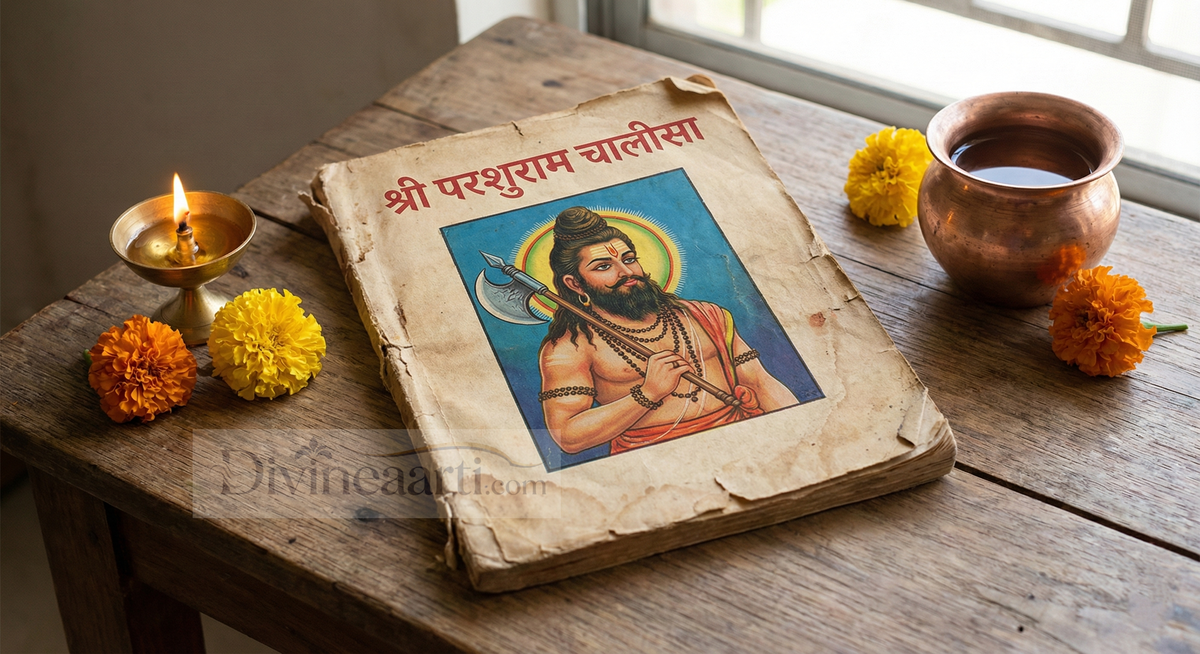
The Shri Parshuram Chalisa is a devotional hymn of 40 verses dedicated to Lord Parshuram (Parashurama), the sixth avatar of Lord Vishnu. He is unique among avatars as a Brahmin who mastered the art of warfare and wielded the divine axe (Parshu) given by Lord Shiva.
Born to sage Jamadagni and Renuka, Parshuram is known for his fierce temperament and unwavering commitment to dharma. When the corrupt king Kartavirya Arjuna killed his father, Parshuram vowed to rid the earth of all corrupt Kshatriyas and did so 21 times.
He is one of the seven Chiranjeevis (immortals) and is believed to still be alive, meditating in the Mahendra mountains. He taught warfare to Bhishma, Drona, and Karna in the Mahabharata era.
The Warrior Sage | Parshuram Mahima
Divine Axe (Parshu)
Lord Shiva gave Parshuram the divine axe after he pleased Shiva with his intense tapasya. This parshu (axe) could destroy any enemy and gave him the name Parshuram (Rama with the axe).
Guru of Warriors
Despite being a Brahmin, Parshuram was the greatest warrior of his time. He taught martial arts to Bhishma Pitamah, Dronacharya, and even Karna (though unknowingly, as Karna posed as a Brahmin).
Creator of Konkan
According to legend, Parshuram created the Konkan coast by throwing his axe into the sea, commanding it to recede. This region is called Parshuram Kshetra.
Shri Parshuram Chalisa - 40 Sacred Verses | Parshuram Chalisa Lyrics Hindi
॥ दोहा ॥
श्री गुरु चरण सरोज छवि,निज मन मन्दिर धारि।

सुमरि गजानन शारदा,गहि आशिष त्रिपुरारि॥

बुद्धिहीन जन जानिये,अवगुणों का भण्डार।

बरणों परशुराम सुयश,निज मति के अनुसार॥

॥ चौपाई ॥
जय प्रभु परशुराम सुख सागर।जय मुनीश गुण ज्ञान दिवाकर॥

भृगुकुल मुकुट विकट रणधीरा।क्षत्रिय तेज मुख संत शरीरा॥

जमदग्नी सुत रेणुका जाया।तेज प्रताप सकल जग छाया॥

मास बैसाख सित पच्छ उदारा।तृतीया पुनर्वसु मनुहारा॥

प्रहर प्रथम निशा शीत न घामा।तिथि प्रदोष व्यापि सुखधामा॥

तब ऋषि कुटीर रूदन शिशु कीन्हा।रेणुका कोखि जनम हरि लीन्हा॥

निज घर उच्च ग्रह छः ठाढ़े।मिथुन राशि राहु सुख गाढ़े॥

तेज-ज्ञान मिल नर तनु धारा।जमदग्नी घर ब्रह्म अवतारा॥

धरा राम शिशु पावन नामा।नाम जपत जग लह विश्रामा॥

भाल त्रिपुण्ड जटा सिर सुन्दर।कांधे मुंज जनेऊ मनहर॥

मंजु मेखला कटि मृगछाला।रूद्र माला बर वक्ष विशाला॥

पीत बसन सुन्दर तनु सोहें।कंध तुणीर धनुष मन मोहें॥

वेद-पुराण-श्रुति-स्मृति ज्ञाता।क्रोध रूप तुम जग विख्याता॥

दायें हाथ श्रीपरशु उठावा।वेद-संहिता बायें सुहावा॥

विद्यावान गुण ज्ञान अपारा।शास्त्र-शस्त्र दोउ पर अधिकारा॥

भुवन चारिदस अरु नवखंडा।चहुं दिशि सुयश प्रताप प्रचंडा॥

एक बार गणपति के संगा।जूझे भृगुकुल कमल पतंगा॥

दांत तोड़ रण कीन्ह विरामा।एक दंत गणपति भयो नामा॥

कार्तवीर्य अर्जुन भूपाला।सहस्रबाहु दुर्जन विकराला॥

सुरगऊ लखि जमदग्नी पांहीं।रखिहहुं निज घर ठानि मन मांहीं॥

मिली न मांगि तब कीन्ह लड़ाई।भयो पराजित जगत हंसाई॥

तन खल हृदय भई रिस गाढ़ी।रिपुता मुनि सौं अतिसय बाढ़ी॥

ऋषिवर रहे ध्यान लवलीना।तिन्ह पर शक्तिघात नृप कीन्हा॥

लगत शक्ति जमदग्नी निपाता।मनहुं क्षत्रिकुल बाम विधाता॥

पितु-बध मातु-रूदन सुनि भारा।भा अति क्रोध मन शोक अपारा॥

कर गहि तीक्षण परशु कराला।दुष्ट हनन कीन्हेउ तत्काला॥

क्षत्रिय रुधिर पितु तर्पण कीन्हा।पितु-बध प्रतिशोध सुत लीन्हा॥

इक्कीस बार भू क्षत्रिय बिहीनी।छीन धरा बिप्रन्ह कहँ दीनी॥

जुग त्रेता कर चरित सुहाई।शिव-धनु भंग कीन्ह रघुराई॥

गुरु धनु भंजक रिपु करि जाना।तब समूल नाश ताहि ठाना॥

कर जोरि तब राम रघुराई।बिनय कीन्ही पुनि शक्ति दिखाई॥

भीष्म द्रोण कर्ण बलवन्ता।भये शिष्या द्वापर महँ अनन्ता॥

शास्त्र विद्या देह सुयश कमावा।गुरु प्रताप दिगन्त फिरावा॥

चारों युग तव महिमा गाई।सुर मुनि मनुज दनुज समुदाई॥

दे कश्यप सों संपदा भाई।तप कीन्हा महेन्द्र गिरि जाई॥

अब लौं लीन समाधि नाथा।सकल लोक नावइ नित माथा॥

चारों वर्ण एक सम जाना।समदर्शी प्रभु तुम भगवाना॥

ललहिं चारि फल शरण तुम्हारी।देव दनुज नर भूप भिखारी॥

जो यह पढ़ै श्री परशु चालीसा।तिन्ह अनुकूल सदा गौरीसा॥

पृर्णेन्दु निसि बासर स्वामी।बसहु हृदय प्रभु अन्तरयामी॥

॥ दोहा ॥
परशुराम को चारू चरित,मेटत सकल अज्ञान।

शरण पड़े को देत प्रभु,सदा सुयश सम्मान॥

॥ श्लोक ॥
भृगुदेव कुलं भानुं,सहस्रबाहुर्मर्दनम्।

रेणुका नयना नंदं,परशुंवन्दे विप्रधनम्॥
॥ Doha ॥
Shri Guru Charana Saroja Chhavi,Nija Mana Mandira Dhari।

Sumari Gajanana Sharada,Gahi Ashisha Tripurari॥

Buddhihina Jana Janiye,Avagunon Ka Bhandara।

Baranon Parashurama Suyasha,Nija Mati Ke Anusara॥

॥ Chaupai ॥
Jaya Prabhu Parashurama Sukha Sagara।Jaya Munisha Guna Jnana Divakara॥

Bhrigukula Mukuta Vikata Ranadhira।Kshatriya Teja Mukha Santa Sharira॥

Jamadagni Suta Renuka Jaya।Teja Pratapa Sakala Jaga Chhaya॥

Masa Baisakha Sita Pachchha Udara।Tritiya Punarvasu Manuhara॥

Prahara Prathama Nisha Shita Na Ghama।Tithi Pradosha Vyapi Sukhadhama॥

Taba Rishi Kutira Rudana Shishu Kinha।Renuka Kokhi Janama Hari Linha॥

Nija Ghara Uchcha Graha Chhah Thadhe।Mithuna Rashi Rahu Sukha Gadhe॥

Teja-Jnana Mila Nara Tanu Dhara।Jamadagni Ghara Brahma Avatara॥

Dhara Rama Shishu Pavana Nama।Nama Japata Jaga Laha Vishrama॥

Bhala Tripunda Jata Sira Sundara।Kandhe Munja Janeu Manahara॥

Manju Mekhala Kati Mrigachhala।Rudra Mala Bara Vaksha Vishala॥

Pita Basana Sundara Tanu Sohein।Kandha Tunira Dhanusha Mana Mohein॥

Veda-Purana-Shruti-Smriti Jnata।Krodha Rupa Tuma Jaga Vikhyata॥

Dayein Hatha Shriparashu Uthava।Veda-Sanhita Bayein Suhava॥

Vidyavana Guna Jnana Apara।Shastra-Shastra Dou Para Adhikara॥

Bhuvana Charidasa Aru Navakhanda।Chahun Dishi Suyasha Pratapa Prachanda॥

Eka Bara Ganapati Ke Sanga।Jujhe Bhrigukula Kamala Patanga॥

Danta Toda Rana Kinha Virama।Eka Danta Ganapati Bhayo Nama॥

Kartavirya Arjuna Bhupala।Sahasrabahu Durjana Vikarala॥

Suragau Lakhi Jamadagni Panhin।Rakhihahun Nija Ghara Thani Mana Manhin॥

Mili Na Mangi Taba Kinha Ladai।Bhayo Parajita Jagata Hansai॥

Tana Khala Hridaya Bhai Risa Gadhi।Riputa Muni Saun Atisaya Badhi॥

Rishivara Rahe Dhyana Lavalina।Tinha Para Shaktighata Nripa Kinha॥

Lagata Shakti Jamadagni Nipata।Manahun Kshatrikula Bama Vidhata॥

Pitu-Badha Matu-Rudana Suni Bhara।Bha Ati Krodha Mana Shoka Apara॥

Kara Gahi Tikshana Parashu Karala।Dushta Hanana Kinheu Tatkala॥

Kshatriya Rudhira Pitu Tarpana Kinha।Pitu-Badha Pratishodha Suta Linha॥

Ikkisa Bara Bhu Kshatriya Bihini।Chhina Dhara Bipranha Kahan Dini॥

Juga Treta Kara Charita Suhai।Shiva-Dhanu Bhanga Kinha Raghurai॥

Guru Dhanu Bhanjaka Ripu Kari Jana।Taba Samula Nasha Tahi Thana॥

Kara Jori Taba Rama Raghurai।Binaya Kinhi Puni Shakti Dikhai॥

Bhishma Drona Karna Balavanta।Bhaye Shishya Dvapara Mahan Ananta॥

Shastra Vidya Deha Suyasha Kamava।Guru Pratapa Diganta Phirava॥

Charon Yuga Tava Mahima Gai।Sura Muni Manuja Danuja Samudai॥

De Kashyapa Son Sampada Bhai।Tapa Kinha Mahendra Giri Jai॥

Aba Laun Lina Samadhi Natha।Sakala Loka Navai Nita Matha॥

Charon Varna Eka Sama Jana।Samadarshi Prabhu Tuma Bhagavana॥

Lalahin Chari Phala Sharana Tumhari।Deva Danuja Nara Bhupa Bhikhari॥

Jo Yaha Padhai Shri Parashu Chalisa।Tinha Anukula Sada Gaurisa॥

Prirnendu Nisi Basara Svami।Basahu Hridaya Prabhu Antarayami॥

॥ Doha ॥
Parashurama Ko Charu Charita,Metata Sakala Ajnana।

Sharana Pade Ko Deta Prabhu,Sada Suyasha Sammana॥

॥ Shloka ॥
Bhrigudeva Kulam Bhanum,Sahasrabahurmardanam।

Renuka Nayana Nandam,Parashumvande Vipradhanam॥
Detailed Meaning and Translation | Parshuram Chalisa Meaning in English
Opening Doha - Invocation to Guru and Deities
"श्री गुरु चरण सरोज छवि,निज मन मन्दिर धारि।
सुमरि गजानन शारदा,गहि आशिष त्रिपुरारि॥"
Translation: "Shri Guru's lotus feet image, in own mind temple holding. Remembering Gajanana Sharada, taking blessings Tripurari."
Meaning: Holding the image of Shri Guru's lotus feet in my mind temple. Remembering Lord Ganesha and Goddess Saraswati, taking blessings from Lord Shiva (Tripurari).
Opening Doha - Humble Poet
"बुद्धिहीन जन जानिये,अवगुणों का भण्डार।
बरणों परशुराम सुयश,निज मति के अनुसार॥"
Translation: "Know me as intellect-less person, storehouse of bad qualities. Describing Parshuram's good fame, according to own intellect."
Meaning: Know me as an intellect-less person, a storehouse of bad qualities. I am describing Parshuram's good fame according to my own limited intellect.
Verse 1 - Victory to Parshuram
"जय प्रभु परशुराम सुख सागर।जय मुनीश गुण ज्ञान दिवाकर॥"
Translation: "Victory Lord Parshuram happiness ocean. Victory sage lord qualities knowledge sun."
Meaning: Victory to Lord Parshuram, ocean of happiness. Victory to the lord of sages, sun of qualities and knowledge.
Verse 2 - Warrior Sage
"भृगुकुल मुकुट विकट रणधीरा।क्षत्रिय तेज मुख संत शरीरा॥"
Translation: "Bhrigu clan crown fierce warrior. Kshatriya valor face saint body."
Meaning: Crown of Bhrigu clan, fierce warrior. Kshatriya valor in face, saint's body.
Verse 3 - Divine Birth
"जमदग्नी सुत रेणुका जाया।तेज प्रताप सकल जग छाया॥"
Translation: "Jamadagni son Renuka wife. Power glory all world shade."
Meaning: Son of Jamadagni, wife Renuka. Power and glory that shades the entire world.
Verse 4 - Auspicious Birth Time
"मास बैसाख सित पच्छ उदारा।तृतीया पुनर्वसु मनुहारा॥"
Translation: "Month Vaishakh bright fortnight generous. Third Punarvasu enchanting."
Meaning: Month of Vaishakh, bright fortnight, generous. Third day, Punarvasu nakshatra, enchanting.
Verse 5 - Divine Birth Moment
"प्रहर प्रथम निशा शीत न घामा।तिथि प्रदोष व्यापि सुखधामा॥"
Translation: "First prahara night cool not heat. Date Pradosh pervading happiness abode."
Meaning: First prahara of night, cool not hot. Pradosh date, pervading abode of happiness.
Verse 6 - Divine Incarnation
"तब ऋषि कुटीर रूदन शिशु कीन्हा।रेणुका कोखि जनम हरि लीन्हा॥"
Translation: "Then sage hermitage crying child did. Renuka womb birth Hari took."
Meaning: Then in the sage's hermitage, the child cried. Hari (Vishnu) took birth in Renuka's womb.
Verse 7 - Auspicious Planetary Position
"निज घर उच्च ग्रह छः ठाढ़े।मिथुन राशि राहु सुख गाढ़े॥"
Translation: "Own house exalted planets six standing. Gemini sign Rahu happiness deep."
Meaning: Six exalted planets standing in own house. Gemini sign, Rahu, deep happiness.
Verse 8 - Divine Manifestation
"तेज-ज्ञान मिल नर तनु धारा।जमदग्नी घर ब्रह्म अवतारा॥"
Translation: "Power-knowledge united human body form. Jamadagni house Brahma incarnation."
Meaning: Power and knowledge united in human body form. Brahma's incarnation in Jamadagni's house.
Verse 9 - Purifier of Earth
"धरा राम शिशु पावन नामा।नाम जपत जग लह विश्रामा॥"
Translation: "Earth Rama child purifying named. Name chanting world gets peace."
Meaning: Earth Rama, child with purifying name. By chanting the name, the world gets peace.
Verse 10 - Divine Appearance
"भाल त्रिपुण्ड जटा सिर सुन्दर।कांधे मुंज जनेऊ मनहर॥"
Translation: "Forehead tripundra matted hair head beautiful. Shoulders munja sacred thread charming."
Meaning: Tripundra on forehead, beautiful matted hair on head. Munja grass and sacred thread on shoulders, charming.
Verse 11 - Sacred Adornments
"मंजु मेखला कटि मृगछाला।रूद्र माला बर वक्ष विशाला॥"
Translation: "Beautiful belt waist deer skin. Rudraksha garland excellent chest broad."
Meaning: Beautiful belt at waist, deer skin. Rudraksha garland, excellent broad chest.
Verse 12 - Warrior Attire
"पीत बसन सुन्दर तनु सोहें।कंध तुणीर धनुष मन मोहें॥"
Translation: "Yellow clothes beautiful body adorn. Shoulder quiver bow mind captivates."
Meaning: Yellow clothes adorn the beautiful body. Quiver and bow on shoulder captivate the mind.
Verse 13 - Knowledge and Wrath
"वेद-पुराण-श्रुति-स्मृति ज्ञाता।क्रोध रूप तुम जग विख्याता॥"
Translation: "Vedas Puranas Shruti Smriti knower. Wrath form you world famous."
Meaning: Knower of Vedas, Puranas, Shruti, Smriti. You are famous in the world in the form of wrath.
Verse 14 - Divine Weapons
"दायें हाथ श्रीपरशु उठावा।वेद-संहिता बायें सुहावा॥"
Translation: "Right hand Shri Parashu raised. Veda compilation left beautiful."
Meaning: Shri Parashu (divine axe) raised in right hand. Beautiful Veda compilation in left hand.
Verse 15 - Master of Knowledge and Weapons
"विद्यावान गुण ज्ञान अपारा।शास्त्र-शस्त्र दोउ पर अधिकारा॥"
Translation: "Knowledgeable qualities knowledge infinite. Scriptures weapons both on authority."
Meaning: Knowledgeable, infinite qualities and knowledge. Authority over both scriptures and weapons.
Verse 16 - Universal Fame
"भुवन चारिदस अरु नवखंडा।चहुं दिशि सुयश प्रताप प्रचंडा॥"
Translation: "World fourteen and nine divisions. All directions good fame power fierce."
Meaning: In the fourteen worlds and nine divisions. Good fame and fierce power in all directions.
Verse 17 - Battle with Ganesha
"एक बार गणपति के संगा।जूझे भृगुकुल कमल पतंगा॥"
Translation: "One time Ganesha with. Fought Bhrigu clan lotus bee."
Meaning: Once with Ganesha. The bee of Bhrigu clan (Parshuram) fought.
Verse 18 - Breaking Ganesha's Tusk
"दांत तोड़ रण कीन्ह विरामा।एक दंत गणपति भयो नामा॥"
Translation: "Tusk broke battle did stop. One tusk Ganesha became name."
Meaning: Broke the tusk, stopped the battle. Ganesha became known as Ekadanta (one-tusked).
Verse 19 - King Kartavirya
"कार्तवीर्य अर्जुन भूपाला।सहस्रबाहु दुर्जन विकराला॥"
Translation: "Kartavirya Arjuna king. Thousand-armed wicked terrible."
Meaning: King Kartavirya Arjuna. Thousand-armed, wicked, terrible.
Verse 20 - Divine Cow Theft
"सुरगऊ लखि जमदग्नी पांहीं।रखिहहुं निज घर ठानि मन मांहीं॥"
Translation: "Divine cow seeing Jamadagni feet. Will keep own house deciding mind in."
Meaning: Seeing the divine cow at Jamadagni's feet. Decided in mind to keep it in own house.
Verse 21 - Battle with King
"मिली न मांगि तब कीन्ह लड़ाई।भयो पराजित जगत हंसाई॥"
Translation: "Not got without asking then did battle. Became defeated world laughed."
Meaning: When it wasn't given without asking, then did battle. Became defeated, world laughed.
Verse 22 - Growing Enmity
"तन खल हृदय भई रिस गाढ़ी।रिपुता मुनि सौं अतिसय बाढ़ी॥"
Translation: "Body wicked heart became anger deep. Enmity sage with extremely increased."
Meaning: Wicked body, deep anger in heart. Enmity with the sage extremely increased.
Verse 23 - Father's Death
"ऋषिवर रहे ध्यान लवलीना।तिन्ह पर शक्तिघात नृप कीन्हा॥"
Translation: "Sage remained meditation absorbed. On them weapon-attack king did."
Meaning: The great sage remained absorbed in meditation. The king attacked them with weapons.
Verse 24 - Father's Beheading
"लगत शक्ति जमदग्नी निपाता।मनहुं क्षत्रिकुल बाम विधाता॥"
Translation: "Hitting weapon Jamadagni fell. As if Kshatriya clan bad fate-maker."
Meaning: The weapon hit, Jamadagni fell. As if bad fate-maker for Kshatriya clan.
Verse 25 - Mother's Grief
"पितु-बध मातु-रूदन सुनि भारा।भा अति क्रोध मन शोक अपारा॥"
Translation: "Father-killing mother-crying hearing heavy. Became extreme anger mind sorrow infinite."
Meaning: Hearing father's killing and mother's heavy crying. Became extremely angry, infinite sorrow in mind.
Verse 26 - Taking Vengeance
"कर गहि तीक्षण परशु कराला।दुष्ट हनन कीन्हेउ तत्काला॥"
Translation: "Hand taking sharp axe terrible. Wicked killing did immediately."
Meaning: Taking the sharp terrible axe in hand. Killed the wicked immediately.
Verse 27 - Blood Sacrifice
"क्षत्रिय रुधिर पितु तर्पण कीन्हा।पितु-बध प्रतिशोध सुत लीन्हा॥"
Translation: "Kshatriya blood father satisfaction did. Father-killing revenge son took."
Meaning: Did satisfaction of father with Kshatriya blood. Son took revenge for father's killing.
Verse 28 - Earth Cleansing
"इक्कीस बार भू क्षत्रिय बिहीनी।छीन धरा बिप्रन्ह कहँ दीनी॥"
Translation: "Twenty-one times earth Kshatriya devoid. Snatched earth Brahmins to gave."
Meaning: Twenty-one times made earth devoid of Kshatriyas. Snatched earth and gave to Brahmins.
Verse 29 - Breaking Shiva's Bow
"जुग त्रेता कर चरित सुहाई।शिव-धनु भंग कीन्ह रघुराई॥"
Translation: "Era Treta doing character beautiful. Shiva-bow breaking did Raghurai."
Meaning: In Treta Yuga, doing beautiful character. Raghurai (Rama) broke Shiva's bow.
Verse 30 - Recognizing Rama
"गुरु धनु भंजक रिपु करि जाना।तब समूल नाश ताहि ठाना॥"
Translation: "Guru bow breaker enemy considering known. Then complete destruction him decided."
Meaning: Knowing the bow-breaker as enemy of guru. Then decided complete destruction of him.
Verse 31 - Rama's Humility
"कर जोरि तब राम रघुराई।बिनय कीन्ही पुनि शक्ति दिखाई॥"
Translation: "Hands folding then Rama Raghurai. Humility did again power showed."
Meaning: Then Rama Raghurai folded hands. Did humility, again showed power.
Verse 32 - Teaching Warriors
"भीष्म द्रोण कर्ण बलवन्ता।भये शिष्या द्वापर महँ अनन्ता॥"
Translation: "Bhishma Drona Karna powerful. Became disciples Dwapara in infinite."
Meaning: Bhishma, Drona, Karna became powerful. Became infinite disciples in Dwapara Yuga.
Verse 33 - Guru's Fame
"शास्त्र विद्या देह सुयश कमावा।गुरु प्रताप दिगन्त फिरावा॥"
Translation: "Scripture knowledge giving good fame earned. Guru power directions spread."
Meaning: Earned good fame by giving scripture knowledge. Guru's power spread in all directions.
Verse 34 - Eternal Glory
"चारों युग तव महिमा गाई।सुर मुनि मनुज दनुज समुदाई॥"
Translation: "All four eras your glory sung. Gods sages humans demons assembly."
Meaning: Your glory sung in all four eras. By assembly of gods, sages, humans, demons.
Verse 35 - Wealth to Kashyapa
"दे कश्यप सों संपदा भाई।तप कीन्हा महेन्द्र गिरि जाई॥"
Translation: "Gave Kashyapa to wealth brother. Austerity did Mahendra mountain going."
Meaning: Gave wealth to brother Kashyapa. Going to Mahendra mountain, did austerity.
Verse 36 - Eternal Meditation
"अब लौं लीन समाधि नाथा।सकल लोक नावइ नित माथा॥"
Translation: "Now then absorbed samadhi lord. All worlds bow always head."
Meaning: Now absorbed in samadhi, O lord. All worlds always bow their heads.
Verse 37 - Equal Vision
"चारों वर्ण एक सम जाना।समदर्शी प्रभु तुम भगवाना॥"
Translation: "All four varnas one equal known. Equal-seer lord you Bhagavan."
Meaning: Known all four varnas as one equal. You are the equal-seer lord, Bhagavan.
Verse 38 - Refuge Benefits
"ललहिं चारि फल शरण तुम्हारी।देव दनुज नर भूप भिखारी॥"
Translation: "Get four fruits refuge your. Gods demons humans kings beggars."
Meaning: Gods, demons, humans, kings, beggars get four fruits in your refuge.
Verse 39 - Chalisa Benefits
"जो यह पढ़ै श्री परशु चालीसा।तिन्ह अनुकूल सदा गौरीसा॥"
Translation: "Whoever this reads Shri Parashu Chalisa. Those favorable always Gaurisa."
Meaning: Whoever reads this Shri Parashu Chalisa. Gaurisa (Shiva) is always favorable to them.
Verse 40 - Inner Dwelling
"पृर्णेन्दु निसि बासर स्वामी।बसहु हृदय प्रभु अन्तरयामी॥"
Translation: "Full moon night day lord. Live heart lord inner-dweller."
Meaning: Lord of full moon, night, day. Live in heart, O lord who dwells within.
Closing Doha - Beautiful Character
"परशुराम को चारू चरित,मेटत सकल अज्ञान।
शरण पड़े को देत प्रभु,सदा सुयश सम्मान॥"
Translation: "Parshuram's beautiful character, destroys all ignorance. Refuge fallen to gives lord, always good fame honor."
Meaning: Parshuram's beautiful character destroys all ignorance. The lord gives good fame and honor to those who take refuge.
Sacred Shloka - Salutation to Parshuram
"भृगुदेव कुलं भानुं,सहस्रबाहुर्मर्दनम्।
रेणुका नयना नंदं,परशुंवन्दे विप्रधनम्॥"
Translation: "Bhrigu deva clan sun, thousand-armed destroyer. Renuka eye delight, Parashu salute Brahmin wealth."
Meaning: Sun of Bhrigu deva's clan, destroyer of thousand-armed. Delight of Renuka's eyes, I salute Parashu, wealth of Brahmins.
Spiritual Benefits of Parshuram Chalisa | Parshuram Chalisa Benefits
Strength and Courage
- Physical Strength: Bodily power
- Courage: Fearlessness in adversity
- Victory: Success over enemies
- Protection: Shield from harm
Dharmic Benefits
- Justice: Righteous outcomes
- Knowledge: Martial and spiritual wisdom
- Discipline: Self-control
- Respect: Honor and dignity
How to Recite Parshuram Chalisa | Parshuram Chalisa Path Vidhi
Preparation
- Take a bath and wear clean clothes
- Place Parshuram image on altar
- Offer red flowers
- Light lamp and incense
Special Offerings
- Red flowers and sandalwood
- Rice and fruits
- Ghee lamp
- Panchamrit
Best Times - Parshuram Jayanti
Parshuram Jayanti
Parshuram Jayanti falls on Tritiya of Shukla Paksha in Vaishakh month (April-May). This is the most auspicious day for Parshuram worship.
Other Auspicious Times
- Akshaya Tritiya: Often coincides with Parshuram Jayanti
- Wednesday: Good for worship
- Ekadashi: Vishnu avatar worship
- Before Important Tasks: For strength and success
The Immortal Being | Chiranjeevi
Parshuram is one of the seven Chiranjeevis - beings blessed with immortality. He is believed to still be alive, meditating in the Mahendra mountains. According to scriptures, he will emerge at the end of Kali Yuga to train Kalki, the final avatar of Vishnu, in warfare.
❓ Frequently Asked Questions About Parshuram Chalisa
What is Parshuram Chalisa and who is Lord Parshuram?
Parshuram Chalisa is a 40-verse devotional hymn dedicated to Lord Parashurama, the sixth avatar of Lord Vishnu. He is a Brahmin warrior sage known for wielding the divine axe (Parashu) given by Lord Shiva. He is one of the seven Chiranjeevis (immortals) who still lives. The Chalisa celebrates his martial prowess, his devotion to Shiva, and his role in protecting Dharma.
When should one recite Parshuram Chalisa?
Parshuram Chalisa is best recited on Akshaya Tritiya (Parshuram Jayanti), on Tuesdays, and during Guru Purnima. It is also auspicious during Shravan month and when seeking strength to fight injustice. Those in military, law enforcement, or any protective service find special benefit in regular recitation for courage and righteous power.
What are the benefits of chanting Parshuram Chalisa?
Chanting Parshuram Chalisa bestows warrior courage, righteous anger against injustice, physical strength, and martial skills. It helps overcome powerful enemies and oppressors, grants protection through divine warrior energy, and blesses devotees with the balance of knowledge (Brahmin qualities) and strength (Kshatriya qualities). It is especially powerful for those fighting against injustice.
Why is Parshuram considered a Chiranjeevi (Immortal)?
Lord Parshuram is one of the seven Chiranjeevis in Hindu tradition who are believed to be still alive. According to scriptures, he will appear again in the next Yuga (Kalki Avatar's era) to train the final avatar of Vishnu in warfare. His immortality signifies the eternal nature of Dharmic warrior spirit and the perpetual fight against Adharma (unrighteousness).
Can anyone recite Parshuram Chalisa?
Yes, Parshuram Chalisa can be recited by anyone seeking strength, courage, and justice. Lord Parshuram, despite being a Brahmin-Kshatriya, represents universal values of righteousness and protection of the weak. His Chalisa is open to all devotees. It is particularly recommended for students, warriors, protectors, and anyone facing oppression or injustice.