
Parvati Chalisa Lyrics in Hindi | Shri Parvati Chalisa with Meaning
Introduction to Shri Parvati Chalisa | Parvati Chalisa Meaning
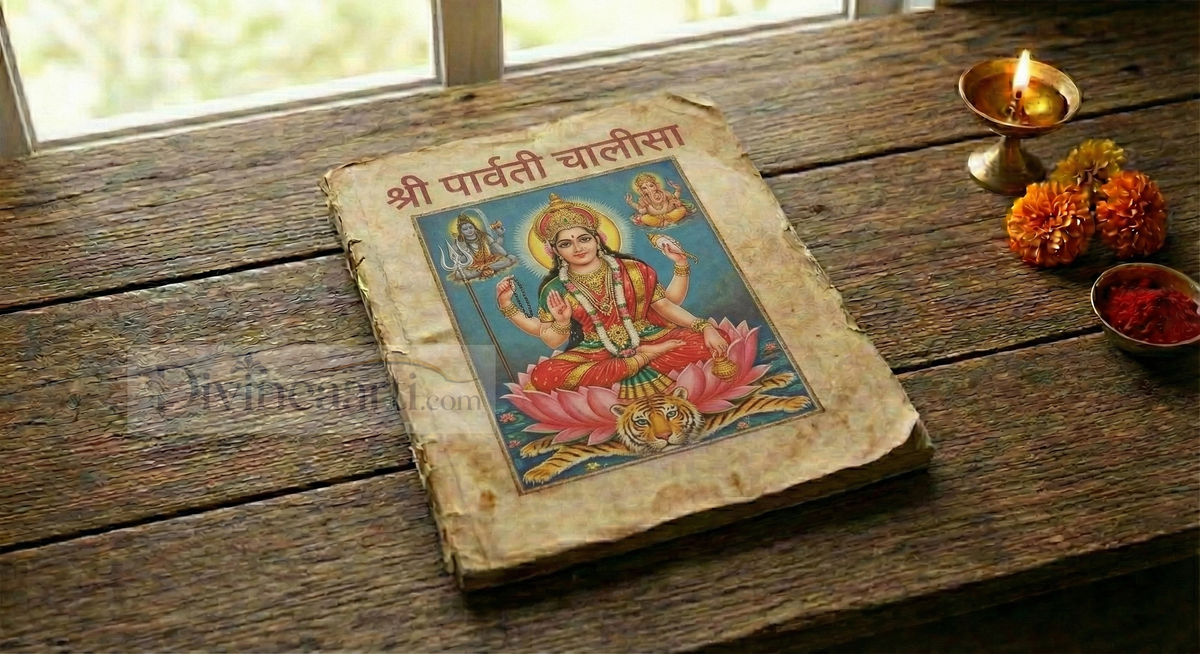
The Shri Parvati Chalisa is a devotional hymn of 40 verses dedicated to Goddess Parvati, the divine consort of Lord Shiva. She is the mother of Lord Ganesha and Kartikeya, and represents the perfect embodiment of devotion, love, and feminine power (Shakti).
Parvati is the daughter of Himavan (the Himalaya mountain king) and Queen Mena. She performed intense tapasya to win Lord Shiva as her husband after he was in deep meditation following Sati's self-immolation. Her devotion and determination are legendary.
She is worshipped by various names - Gauri (the fair one), Uma (light), Aparna (one who fasted without even leaves), Haimavati (daughter of Himavan), and Shivaa (auspicious). She is gentle yet powerful, representing both nurturing motherhood and fierce protection.
Divine Consort of Shiva | Parvati Mahima
Ardhanarishvara
Shiva and Parvati together form Ardhanarishvara - half male, half female - representing the inseparable union of masculine and feminine energies that create and sustain the universe.
Mother of Ganesha and Kartikeya
Parvati created Ganesha from her own body and is the devoted mother of both Ganesha (remover of obstacles) and Kartikeya (commander of divine armies).
Symbol of Devotion
Her unwavering tapasya to win Shiva's love is the ultimate example of devotion (bhakti). She teaches that sincere devotion can achieve anything.
Shri Parvati Chalisa - 40 Sacred Verses | Parvati Chalisa Lyrics Hindi
॥ दोहा ॥
जय गिरी तनये दक्षजे,शम्भु प्रिये गुणखानि।

गणपति जननी पार्वती,अम्बे! शक्ति! भवानि॥

॥ चौपाई ॥
ब्रह्मा भेद न तुम्हरो पावे।पंच बदन नित तुमको ध्यावे॥

षड्मुख कहि न सकत यश तेरो।सहसबदन श्रम करत घनेरो॥

तेऊ पार न पावत माता।स्थित रक्षा लय हित सजाता॥

अधर प्रवाल सदृश अरुणारे।अति कमनीय नयन कजरारे॥

ललित ललाट विलेपित केशर।कुंकुम अक्षत शोभा मनहर॥

कनक बसन कंचुकी सजाए।कटी मेखला दिव्य लहराए॥

कण्ठ मदार हार की शोभा।जाहि देखि सहजहि मन लोभा॥

बालारुण अनन्त छबि धारी।आभूषण की शोभा प्यारी॥

नाना रत्न जटित सिंहासन।तापर राजति हरि चतुरानन॥

इन्द्रादिक परिवार पूजित।जग मृग नाग यक्ष रव कूजित॥

गिर कैलास निवासिनी जय जय।कोटिक प्रभा विकासिन जय जय॥

त्रिभुवन सकल कुटुम्ब तिहारी।अणु अणु महं तुम्हारी उजियारी॥

हैं महेश प्राणेश! तुम्हारे।त्रिभुवन के जो नित रखवारे॥

उनसो पति तुम प्राप्त कीन्ह जब।सुकृत पुरातन उदित भए तब॥

बूढ़ा बैल सवारी जिनकी।महिमा का गावे कोउ तिनकी॥

सदा श्मशान बिहारी शंकर।आभूषण हैं भुजंग भयंकर॥

कण्ठ हलाहल को छबि छायी।नीलकण्ठ की पदवी पायी॥

देव मगन के हित अस कीन्हों।विष लै आपु तिनहि अमि दीन्हों॥

ताकी तुम पत्नी छवि धारिणि।दूरित विदारिणी मंगल कारिणि॥

देखि परम सौन्दर्य तिहारो।त्रिभुवन चकित बनावन हारो॥

भय भीता सो माता गंगा।लज्जा मय है सलिल तरंगा॥

सौत समान शम्भु पहआयी।विष्णु पदाब्ज छोड़ि सो धायी॥

तेहिकों कमल बदन मुरझायो।लखि सत्वर शिव शीश चढ़ायो॥

नित्यानन्द करी बरदायिनी।अभय भक्त कर नित अनपायिनी॥

अखिल पाप त्रयताप निकन्दिनि।माहेश्वरी हिमालय नन्दिनि॥

काशी पुरी सदा मन भायी।सिद्ध पीठ तेहि आपु बनायी॥

भगवती प्रतिदिन भिक्षा दात्री।कृपा प्रमोद सनेह विधात्री॥

रिपुक्षय कारिणि जय जय अम्बे।वाचा सिद्ध करि अवलम्बे॥

गौरी उमा शंकरी काली।अन्नपूर्णा जग प्रतिपाली॥

सब जन की ईश्वरी भगवती।पतिप्राणा परमेश्वरी सती॥

तुमने कठिन तपस्या कीनी।नारद सों जब शिक्षा लीनी॥

अन्न न नीर न वायु अहारा।अस्थि मात्रतन भयउ तुम्हारा॥

पत्र घास को खाद्य न भायउ।उमा नाम तब तुमने पायउ॥

तप बिलोकि रिषि सात पधारे।लगे डिगावन डिगी न हारे॥

तब तव जय जय जय उच्चारेउ।सप्तरिषि निज गेह सिधारेउ॥

सुर विधि विष्णु पास तब आए।वर देने के वचन सुनाए॥

मांगे उमा वर पति तुम तिनसों।चाहत जग त्रिभुवन निधि जिनसों॥

एवमस्तु कहि ते दोऊ गए।सुफल मनोरथ तुमने लए॥

करि विवाह शिव सों हे भामा।पुनः कहाई हर की बामा॥

जो पढ़िहै जन यह चालीसा।धन जन सुख देइहै तेहि ईसा॥

॥ दोहा ॥
कूट चन्द्रिका सुभग शिर,जयति जयति सुख खानि।

पार्वती निज भक्त हित,रहहु सदा वरदानि॥
॥ Doha ॥
Jaya Giri Tanaye Dakshaje,Shambhu Priye Gunakhani।

Ganapati Janani Parvati,Ambe! Shakti! Bhavani॥

॥ Chaupai ॥
Brahma Bheda Na Tumharo Pave।Pancha Badana Nita Tumako Dhyave॥

Shadmukha Kahi Na Sakata Yasha Tero।Sahasabadana Shrama Karata Ghanero॥

Teu Para Na Pavata Mata।Sthita Raksha Laya Hita Sajata॥

Adhara Pravala Sadrisha Arunare।Ati Kamaniya Nayana Kajarare॥

Lalita Lalata Vilepita Keshara।Kunkuma Akshata Shobha Manahara॥

Kanaka Basana Kanchuki Sajaye।Kati Mekhala Divya Laharaye॥

Kantha Madara Hara Ki Shobha।Jahi Dekhi Sahajahi Mana Lobha॥

Balaruna Ananta Chhabi Dhari।Abhushana Ki Shobha Pyari॥

Nana Ratna Jatita Sinhasana।Tapara Rajati Hari Chaturanana॥

Indradika Parivara Pujita।Jaga Mriga Naga Yaksha Rava Kujita॥

Gira Kailasa Nivasini Jaya Jaya।Kotika Prabha Vikasina Jaya Jaya॥

Tribhuvana Sakala Kutumba Tihari।Anu Anu Mahan Tumhari Ujiyari॥

Hain Mahesha Pranesha! Tumhare।Tribhuvana Ke Jo Nita Rakhavare॥

Unaso Pati Tuma Prapta Kinha Jaba।Sukrita Puratana Udita Bhae Taba॥

Budha Baila Savari Jinaki।Mahima Ka Gave Kou Tinaki॥

Sada Shmashana Bihari Shankara।Abhushana Hain Bhujanga Bhayankara॥

Kantha Halahala Ko Chhabi Chhayi।Nilakantha Ki Padavi Payi॥

Deva Magana Ke Hita Asa Kinhon।Visha Lai Apu Tinahi Ami Dinhon॥

Taki Tuma Patni Chhavi Dharini।Durita Vidarini Mangala Karini॥

Dekhi Parama Saundarya Tiharo।Tribhuvana Chakita Banavana Haro॥

Bhaya Bhita So Mata Ganga।Lajja Maya Hai Salila Taranga॥

Sauta Samana Shambhu Pahaayi।Vishnu Padabja Chhodi So Dhayi॥

Tehikon Kamala Badana Murajhayo।Lakhi Satvara Shiva Shisha Chadhayo॥

Nityananda Kari Baradayini।Abhaya Bhakta Kara Nita Anapayini॥

Akhila Papa Trayatapa Nikandini।Maheshvari Himalaya Nandini॥

Kashi Puri Sada Mana Bhayi।Siddha Pitha Tehi Apu Banayi॥

Bhagavati Pratidina Bhiksha Datri।Kripa Pramoda Saneha Vidhatri॥

Ripukshaya Karini Jaya Jaya Ambe।Vacha Siddha Kari Avalambe॥

Gauri Uma Shankari Kali।Annapurna Jaga Pratipali॥

Saba Jana Ki Ishvari Bhagavati।Patiprana Parameshvari Sati॥

Tumane Kathina Tapasya Kini।Narada Son Jaba Shiksha Lini॥

Anna Na Nira Na Vayu Ahara।Asthi Matratana Bhayau Tumhara॥

Patra Ghasa Ko Khadya Na Bhayau।Uma Nama Taba Tumane Payau॥

Tapa Biloki Rishi Sata Padhare।Lage Digavana Digi Na Hare॥

Taba Tava Jaya Jaya Jaya Uchchareu।Saptarishi Nija Geha Sidhareu॥

Sura Vidhi Vishnu Pasa Taba Aye।Vara Dene Ke Vachana Sunaye॥

Mange Uma Vara Pati Tuma Tinason।Chahata Jaga Tribhuvana Nidhi Jinason॥

Evamastu Kahi Te Dou Gaye।Suphala Manoratha Tumane Laye॥

Kari Vivaha Shiva Son He Bhama।Punah Kahai Hara Ki Bama॥

Jo Padhihai Jana Yaha Chalisa।Dhana Jana Sukha Deihai Tehi Isa॥

॥ Doha ॥
Kuta Chandrika Subhaga Shira,Jayati Jayati Sukha Khani।

Parvati Nija Bhakta Hita,Rahahu Sada Varadani॥
Detailed Meaning and Translation | Parvati Chalisa Meaning in English
Opening Doha - Victory to Parvati
"जय गिरी तनये दक्षजे,शम्भु प्रिये गुणखानि।
गणपति जननी पार्वती,अम्बे! शक्ति! भवानि॥"
Translation: "Victory mountain daughter Daksha daughter, Shambhu beloved qualities mine. Ganesha mother Parvati, mother! Shakti! Bhavani!"
Meaning: Victory to the daughter of the mountain (Himalaya), daughter of Daksha, beloved of Shambhu (Shiva), mine of qualities. Mother of Ganesha, Parvati, O mother! O Shakti! O Bhavani!
Verse 1 - Beyond Brahma's Understanding
"ब्रह्मा भेद न तुम्हरो पावे।पंच बदन नित तुमको ध्यावे॥"
Translation: "Brahma mystery not your gets. Five faces always you meditate."
Meaning: Even Brahma cannot understand your mystery. The five-faced Shiva always meditates on you.
Verse 2 - Kartikeya Cannot Describe
"षड्मुख कहि न सकत यश तेरो।सहसबदन श्रम करत घनेरो॥"
Translation: "Six-faced cannot say fame your. Thousand-faced tired doing futile."
Meaning: Even six-faced Kartikeya cannot describe your fame. Thousand-faced Brahma tires himself in vain.
Verse 3 - Creator of Creation
"तेऊ पार न पावत माता।स्थित रक्षा लय हित सजाता॥"
Translation: "They also limit not get mother. Creation protection dissolution for creates."
Meaning: Even they cannot find your limits, O mother. You create for creation, protection, and dissolution.
Verse 4 - Divine Beauty
"अधर प्रवाल सदृश अरुणारे।अति कमनीय नयन कजरारे॥"
Translation: "Lips coral similar red. Very charming eyes with collyrium."
Meaning: Lips like coral, red. Very charming eyes adorned with collyrium.
Verse 5 - Beautiful Forehead
"ललित ललाट विलेपित केशर।कुंकुम अक्षत शोभा मनहर॥"
Translation: "Graceful forehead smeared saffron. Vermilion rice beauty captivating."
Meaning: Graceful forehead smeared with saffron. Vermilion and rice make the beauty captivating.
Verse 6 - Golden Attire
"कनक बसन कंचुकी सजाए।कटी मेखला दिव्य लहराए॥"
Translation: "Golden clothes blouse adorned. Waist belt divine waves."
Meaning: Adorned in golden clothes and blouse. Divine belt waves at the waist.
Verse 7 - Necklace Beauty
"कण्ठ मदार हार की शोभा।जाहि देखि सहजहि मन लोभा॥"
Translation: "Neck intoxicating necklace beauty. Which seeing naturally mind greed."
Meaning: The beauty of the intoxicating necklace on the neck. Seeing which the mind naturally becomes greedy.
Verse 8 - Eternal Youth
"बालारुण अनन्त छबि धारी।आभूषण की शोभा प्यारी॥"
Translation: "Child-red infinite beauty holding. Ornaments beauty dear."
Meaning: Holding infinite beauty like a child-red. The beauty of ornaments is dear.
Verse 9 - Divine Throne
"नाना रत्न जटित सिंहासन।तापर राजति हरि चतुरानन॥"
Translation: "Various gems studded throne. Golden shines Vishnu four-faced."
Meaning: Throne studded with various gems. Golden throne where Vishnu and four-faced Brahma shine.
Verse 10 - Universal Worship
"इन्द्रादिक परिवार पूजित।जग मृग नाग यक्ष रव कूजित॥"
Translation: "Indra etc. family worshipped. World deer serpents yakshas sun resounded."
Meaning: Worshipped by Indra and family. The world resounded with deer, serpents, yakshas, sun.
Verse 11 - Kailash Resident
"गिर कैलास निवासिनी जय जय।कोटिक प्रभा विकासिन जय जय॥"
Translation: "Mountain Kailash resident victory victory. Crores light developer victory victory."
Meaning: Resident of Kailash mountain, victory victory. Developer of crores of lights, victory victory.
Verse 12 - Universal Family
"त्रिभुवन सकल कुटुम्ब तिहारी।अणु अणु महं तुम्हारी उजियारी॥"
Translation: "Three worlds all family yours. Atom atom I your light."
Meaning: All families of the three worlds are yours. In every atom, I am your light.
Verse 13 - Shiva's Life
"हैं महेश प्राणेश! तुम्हारे।त्रिभुवन के जो नित रखवारे॥"
Translation: "Are Mahesh Pranesh! your. Three worlds who always protectors."
Meaning: Mahesh (Shiva) and Pranesh (Ganesha) are yours. Who are the eternal protectors of the three worlds.
Verse 14 - Ancient Merit
"उनसो पति तुम प्राप्त कीन्ह जब।सुकृत पुरातन उदित भए तब॥"
Translation: "From them husband you obtained when. Good deeds ancient manifested then."
Meaning: When you obtained husband from them. Then ancient good deeds manifested.
Verse 15 - Shiva's Glory
"बूढ़ा बैल सवारी जिनकी।महिमा का गावे कोउ तिनकी॥"
Translation: "Old bull vehicle whose. Glory who can sing those."
Meaning: Whose vehicle is an old bull. Who can sing the glory of those.
Verse 16 - Crematorium Dweller
"सदा श्मशान बिहारी शंकर।आभूषण हैं भुजंग भयंकर॥"
Translation: "Always crematorium wanderer Shankar. Ornaments are serpents terrible."
Meaning: Shankar who always wanders crematoriums. Whose ornaments are terrible serpents.
Verse 17 - Poison Consumer
"कण्ठ हलाहल को छबि छायी।नीलकण्ठ की पदवी पायी॥"
Translation: "Neck poison beauty spread. Blue-throated position obtained."
Meaning: The beauty of poison spread on the neck. Obtained the position of Nilakantha (blue-throated).
Verse 18 - Sacrifice for Gods
"देव मगन के हित अस कीन्हों।विष लै आपु तिनहि अमि दीन्हों॥"
Translation: "Gods intoxicated for benefit thus did. Poison taking yourself gave nectar."
Meaning: For the benefit of intoxicated gods, did thus. Taking poison yourself, gave nectar to them.
Verse 19 - Auspicious Wife
"ताकी तुम पत्नी छवि धारिणि।दूरित विदारिणी मंगल कारिणि॥"
Translation: "Therefore you wife beauty holder. Evils destroyer auspicious doer."
Meaning: Therefore you hold the beauty of wife. Destroyer of evils, doer of auspiciousness.
Verse 20 - Universal Beauty
"देखि परम सौन्दर्य तिहारो।त्रिभुवन चकित बनावन हारो॥"
Translation: "Seeing supreme beauty your. Three worlds amazed forest garland."
Meaning: Seeing your supreme beauty. The three worlds are amazed, forest garland.
Verse 21 - Ganga's Fear
"भय भीता सो माता गंगा।लज्जा मय है सलिल तरंगा॥"
Translation: "Fear afraid that mother Ganga. Modesty full is water waves."
Meaning: That mother Ganga is afraid with fear. The water waves are full of modesty.
Verse 22 - Shiva's Co-Wife
"सौत समान शम्भु पहआयी।विष्णु पदाब्ज छोड़ि सो धायी॥"
Translation: "Co-wife like Shambhu appeared. Vishnu lotus-feet leaving she ran."
Meaning: Appeared like a co-wife to Shambhu. Leaving Vishnu's lotus feet, she ran.
Verse 23 - Brahma's Withered Lotus
"तेहिकों कमल बदन मुरझायो।लखि सत्वर शिव शीश चढ़ायो॥"
Translation: "To him lotus face withered. Seeing quickly Shiva head placed."
Meaning: His lotus face withered. Seeing this, quickly placed on Shiva's head.
Verse 24 - Eternal Bliss Giver
"नित्यानन्द करी बरदायिनी।अभय भक्त कर नित अनपायिनी॥"
Translation: "Eternal bliss doer boon-giver. Fearless devotee hand always not-leaver."
Meaning: Doer of eternal bliss, giver of boons. Always fearless, never leaving devotee's hand.
Verse 25 - Destroyer of Sins
"अखिल पाप त्रयताप निकन्दिनि।माहेश्वरी हिमालय नन्दिनि॥"
Translation: "All sins three sufferings destroyer. Maheshwari Himalaya daughter."
Meaning: Destroyer of all sins and three sufferings. Maheshwari, daughter of Himalaya.
Verse 26 - Kashi's Beloved
"काशी पुरी सदा मन भायी।सिद्ध पीठ तेहि आपु बनायी॥"
Translation: "Kashi city always mind pleased. Siddha seat that herself made."
Meaning: Kashi city always pleased the mind. She herself made it a siddha seat.
Verse 27 - Daily Alms Giver
"भगवती प्रतिदिन भिक्षा दात्री।कृपा प्रमोद सनेह विधात्री॥"
Translation: "Bhagavati daily alms giver. Grace joy affection creator."
Meaning: Bhagavati who gives alms daily. Creator of grace, joy, and affection.
Verse 28 - Enemy Destroyer
"रिपुक्षय कारिणि जय जय अम्बे।वाचा सिद्ध करि अवलम्बे॥"
Translation: "Enemy destruction doer victory victory mother. Speech fulfilled taking support."
Meaning: Doer of enemy destruction, victory victory mother. Taking support, fulfilling speech.
Verse 29 - Divine Names
"गौरी उमा शंकरी काली।अन्नपूर्णा जग प्रतिपाली॥"
Translation: "Gauri Uma Shankari Kali. Annapurna world nourisher."
Meaning: Gauri, Uma, Shankari, Kali. Annapurna, nourisher of the world.
Verse 30 - Universal Goddess
"सब जन की ईश्वरी भगवती।पतिप्राणा परमेश्वरी सती॥"
Translation: "All people goddess Bhagavati. Husband-life Parameshwari Sati."
Meaning: Goddess of all people, Bhagavati. Whose life is husband, Parameshwari, Sati.
Verse 31 - Intense Tapasya
"तुमने कठिन तपस्या कीनी।नारद सों जब शिक्षा लीनी॥"
Translation: "You difficult austerity did. Narada from when teaching taken."
Meaning: You did difficult austerity. When you took teaching from Narada.
Verse 32 - Aparna Vrata
"अन्न न नीर न वायु अहारा।अस्थि मात्रतन भयउ तुम्हारा॥"
Translation: "Food not water not air food. Bone only body became your."
Meaning: No food, no water, no air as food. Your body became only bones.
Verse 33 - Uma Name
"पत्र घास को खाद्य न भायउ।उमा नाम तब तुमने पायउ॥"
Translation: "Leaf grass food not liked. Uma name then you obtained."
Meaning: Leaf and grass were not liked as food. Then you obtained the name Uma.
Verse 34 - Seven Sages
"तप बिलोकि रिषि सात पधारे।लगे डिगावन डिगी न हारे॥"
Translation: "Austerity seeing sages seven arrived. Started shaking not shaken not defeated."
Meaning: Seeing the austerity, seven sages arrived. Started shaking, but you were not shaken or defeated.
Verse 35 - Victory Chants
"तब तव जय जय जय उच्चारेउ।सप्तरिषि निज गेह सिधारेउ॥"
Translation: "Then your victory victory victory chanted. Seven sages own home went."
Meaning: Then chanted your victory victory victory. Seven sages went to their own homes.
Verse 36 - Trinity's Visit
"सुर विधि विष्णु पास तब आए।वर देने के वचन सुनाए॥"
Translation: "Gods Brahma Vishnu near then came. Boon giving words made."
Meaning: Gods Brahma and Vishnu came near then. Made words about giving boons.
Verse 37 - Desired Boon
"मांगे उमा वर पति तुम तिनसों।चाहत जग त्रिभुवन निधि जिनसों॥"
Translation: "Asked Uma boon husband you three. Want world three worlds treasure whose."
Meaning: Uma asked for boon of husband from you three. Who wants the treasure of the world and three worlds.
Verse 38 - Boon Granted
"एवमस्तु कहि ते दोऊ गए।सुफल मनोरथ तुमने लए॥"
Translation: "So be it saying those two went. Successful desires you took."
Meaning: Saying "So be it", those two went. You took successful desires.
Verse 39 - Divine Marriage
"करि विवाह शिव सों हे भामा।पुनः कहाई हर की बामा॥"
Translation: "Doing marriage Shiva with O Bhama. Again called Hara's left."
Meaning: Doing marriage with Shiva, O Bhama. Again called as Hara's left (beloved).
Verse 40 - Chalisa Benefits
"जो पढ़िहै जन यह चालीसा।धन जन सुख देइहै तेहि ईसा॥"
Translation: "Whoever will read person this Chalisa. Wealth children happiness will give that God."
Meaning: Whoever reads this Chalisa. God will give wealth, children, happiness to that person.
Closing Doha - Eternal Blessings
"कूट चन्द्रिका सुभग शिर,जयति जयति सुख खानि।
पार्वती निज भक्त हित,रहहु सदा वरदानि॥"
Translation: "False moonlight auspicious head, victorious victorious happiness mine. Parvati own devotee benefit, remain always boon-giver."
Meaning: Like false moonlight on auspicious head, victorious victorious, mine of happiness. Parvati, for own devotee's benefit, remain always the boon-giver.
Spiritual Benefits of Parvati Chalisa | Parvati Chalisa Benefits
Marital Blessings
- Good Husband: Blesses unmarried girls with ideal spouse
- Marital Harmony: Peace in married life
- Fertility: Blessings for children
- Family Happiness: Overall domestic bliss
Spiritual Growth
- Devotion: Strengthens bhakti
- Shakti: Inner strength and power
- Protection: Shield from negativity
- Grace: Divine feminine blessings
How to Recite Parvati Chalisa | Parvati Chalisa Path Vidhi
Preparation
- Take a bath and wear clean clothes (red or green preferred)
- Place Parvati or Shiva-Parvati image on altar
- Offer red flowers and sindoor
- Light ghee lamp and incense
Special Offerings
- Red flowers and kumkum
- Sindoor and bangles
- Sweets and fruits
- Mehndi (henna)
Best Times & Occasions for Parvati Chalisa
Teej Festival
Hariyali Teej and Hartalika Teej are dedicated to Goddess Parvati. Married women fast and worship her for their husbands' long life, while unmarried girls pray for a good husband.
Other Auspicious Times
- Monday: Shiva-Parvati's day
- Friday: Goddess worship day
- Navaratri: Nine nights of Devi worship
- Gauri Tritiya: Special day for Gauri
Divine Forms of Parvati | Parvati Swaroop
Parvati manifests in both gentle (Saumya) and fierce (Ugra) forms. Her gentle forms include Gauri, Uma, and Lalita. Her fierce forms include Durga, Kali, and Chandi - manifested to destroy evil. All these are aspects of the same divine mother, appearing as needed to protect her devotees.
❓ Frequently Asked Questions About Parvati Chalisa
What is Parvati Chalisa and who is Goddess Parvati?
Parvati Chalisa is a 40-verse devotional hymn dedicated to Goddess Parvati, the divine consort of Lord Shiva and the mother of Ganesha and Kartikeya. She is the supreme goddess of love, devotion, fertility, and marital harmony. The Chalisa celebrates her divine marriage with Shiva, her various forms (Uma, Gauri, Hemavati), and her role as the ideal wife and mother.
When should one recite Parvati Chalisa?
Parvati Chalisa is best recited on Mondays (Shiva-Parvati day), during Gauri Tritiya, Hartalika Teej, and Navaratri. It is especially powerful for married women seeking harmony, for unmarried individuals seeking a good spouse, and during the months of Shravan and Kartik. Morning and evening Sandhya times are ideal for recitation.
What are the benefits of chanting Parvati Chalisa?
Chanting Parvati Chalisa brings marital harmony, blesses with a loving spouse, grants fertility and healthy children, and ensures family peace and prosperity. Goddess Parvati's grace strengthens the bond between partners, removes obstacles in marriage, and blesses women with the strength and grace to nurture their families. She also grants devotees the power of steadfast devotion.
Can unmarried people recite Parvati Chalisa?
Yes, absolutely. Parvati Chalisa is highly recommended for unmarried individuals seeking a suitable life partner. Goddess Parvati herself performed intense penance (tapasya) to win Lord Shiva as her husband. Her Chalisa invokes her blessings for a devoted, loving, and compatible spouse. Many families recite it for their children's marriage prospects.
What is the connection between Parvati and Navaratri?
Goddess Parvati is intimately connected to Navaratri as she manifests in nine forms (Navadurga) during these nine sacred nights. Each night celebrates a different aspect of the Divine Mother — from the gentle Shailputri to the fierce Kaalratri. Reciting Parvati Chalisa during Navaratri honors the original form of the goddess from whom all Navadurga forms emerge.