
Annamayya Keertanalu అన్నమయ్య కీర్తనలు
Introduction to Annamayya Keertanalu
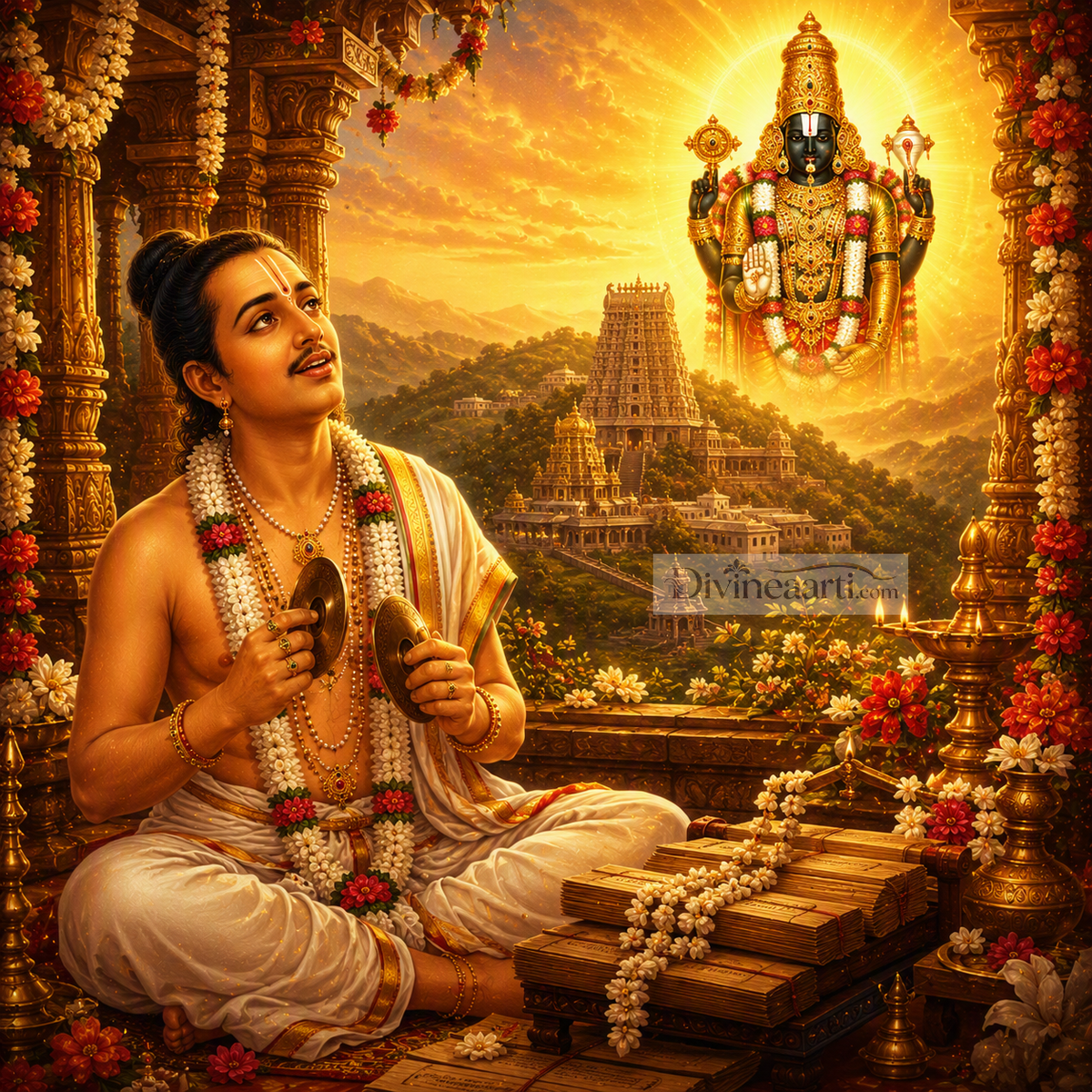
Tallapaka Annamacharya (అన్నమయ్య, 1408–1503) was the first and greatest of the Telugu padakavita pitamaha — the "grandfather of Telugu song." Born at Tallapaka in Andhra Pradesh, he is believed to have composed 32,000 keertanas in praise of Lord Venkateswara of Tirumala, engraving them on copper plates that are treasured to this day.
His sankeertanas are the very soul of Telugu devotional music — simple, tender and profound, sung in every Telugu home and at the Tirumala temple. This page brings together three of his most beloved keertanas in Telugu script with English transliteration.
They include Adivo Alladivo (pointing to the sacred abode of Sri Hari on the seven hills), Kondalalo Nelakonna (the Lord of the Koneru who dwells in the hills), and the timeless Brahmam Okkate — Annamayya’s revolutionary song declaring that the one Supreme Brahman dwells equally in all beings, high and low alike.
Annamayya Keertanas: Telugu & English Lyrics
॥ అదివో అల్లదివో ॥
(Raga: Madhyamavati)

అదివో అల్లదివో శ్రీహరివాసము
పదివేల శేషుల పడగలమయము॥

అదె వేంకటాచల మఖిలోన్నతము
అదివో బ్రహ్మాదుల కపురూపము
అదివో నిత్యనివాస మఖిలమునులకు
అదె చూడుడదె మ్రొక్కుడానందమయము॥

చెంగట నల్లదివో శేషాచలము
నింగి నున్నదేవతల నిజవాసము
ముంగిట నల్లదివో మూలనున్నధనము
బంగారు శిఖరాల బహు బ్రహ్మమయము॥

కైవల్యపదము వేంకటనగమదివో
శ్రీ వేంకటపతికి సిరులైనవి
భావింప సకలసంపదరూపమదివో
పావనములకెల్ల పావనమయము॥

──────────────────────────────

॥ కొండలలో నెలకొన్న ॥
(Raga: Hindolam)

కొండలలో నెలకొన్న కోనేటి రాయడు వాడు
కొండలంత వరములు గుప్పెడువాడు

కుమ్మర దాసుడైన కురువరతినంబి
యిమ్మన్న వరములెల్ల నిచ్చినవాడు
దొమ్ములు సేసినయట్టి తొండమాం చక్కురవర్తి
రమ్మన్న చోటికి వచ్చి నమ్మినవాడు

అచ్చపు వేడుకతో ననంతాళువారికి
ముచ్చిలి వెట్టికి మన్ను మోచినవాడు
మచ్చిక దొలక దిరుమలనంబి తోడుత
నిచ్చనిచ్చ మాటలాడి నొచ్చినవాడు

కంచిలోన నుండ దిరుకచ్చినంబి మీద
కరుణించి తనయెడకు రప్పించిన వాడు
ఎంచి యెక్కుడైన వేంకటేశుడు మనలకు
మంచివాడై కరుణ బాలించినవాడు

──────────────────────────────

॥ బ్రహ్మమొక్కటే (తందనాన) ॥

ప||
తందనాన ఆహి తందనాన పురె |
తందనాన భళా తందనాన ||
చ||
బ్రహ్మ మొకటే పరబ్రహ్మ మొకటే |
పరబ్రహ్మ మొకటే పరబ్రహ్మ మొకటే ||

చ||
కందువగు హీనాధికము లిందు లేవు |
అందరికి శ్రీహరే అంతరాత్మ |
ఇందులో జంతుకులమింతా నొకటే |
అందరికి శ్రీహరే అంతరాత్మ ||

చ||
నిండార రాజు నిద్రించు నిద్రయు నొకటే |
అండనే బంటునిద్ర అదియు నొకటే |
మెండైన బ్రాహ్మణుడు మెట్టుభూమి యొకటే |
చండాలు డుండేటి సరిభూమి యొకటే ||

చ||
అనుగుదేవతలకును అలకామ సుఖమొకటే |
ఘనకీట పశువులకు కామ సుఖమొకటే |
దినమహో రాత్రములు తెగి ధనాఢ్యునకొకటే |
వొనర నిరుపేదకును వొక్కటే అవియు ||

చ||
కొరలి శిష్టాన్నములు గొను నాకలొకటే |
తిరుగు దుష్టాన్నములు తిను నాకలొకటే |
పరగ దుర్గంధములపై వాయువొకటే |
వరుస బరిమళముపై వాయువొకటే ||

చ||
కడగి యేనుగు మీద గాయు యెండొకటే |
పుడమి శునకము మీద బొలయు నెండొకటే |
కడు బుణ్యులను బాప కర్ములను సరిగావ |
జడియు శ్రీ వేంకటేశ్వర నామమొకటే ||
|| Adivo Alladivo ||
(Raga: Madhyamavati)

Adivo Alladivo Shriharivasamu
Padivela Sheshula Padagalamayamu||

Ade Venkatachala Makhilonnatamu
Adivo Brahmadula Kapurupamu
Adivo Nityanivasa Makhilamunulaku
Ade Chududade Mrokkudanandamayamu||

Chengata Nalladivo Sheshachalamu
Ningi Nunnadevatala Nijavasamu
Mungita Nalladivo Mulanunnadhanamu
Bangaru Shikharala Bahu Brahmamayamu||

Kaivalyapadamu Venkatanagamadivo
Shri Venkatapatiki Sirulainavi
Bhavimpa Sakalasampadarupamadivo
Pavanamulakella Pavanamayamu||

──────────────────────────────

|| Kondalalo Nelakonna ||
(Raga: Hindolam)

Kondalalo Nelakonna Koneti Rayadu Vadu
Kondalanta Varamulu Guppeduvadu

Kummara Dasudaina Kuruvaratinambi
Yimmanna Varamulella Nichchinavadu
Dommulu Sesinayatti Tondamam Chakkuravarti
Rammanna Chotiki Vachchi Namminavadu

Achchapu Vedukato Nanantaluvariki
Muchchili Vettiki Mannu Mochinavadu
Machchika Dolaka Dirumalanambi Toduta
Nichchanichcha Mataladi Nochchinavadu

Kanchilona Nunda Dirukachchinambi Mida
Karuninchi Tanayedaku Rappinchina Vadu
Enchi Yekkudaina Venkateshudu Manalaku
Manchivadai Karuna Balinchinavadu

──────────────────────────────

|| Brahmam Okkate (Tandanana) ||

Pa||
Tandanana Ahi Tandanana Pure |
Tandanana Bhala Tandanana ||
Cha||
Brahma Mokate Parabrahma Mokate |
Parabrahma Mokate Parabrahma Mokate ||

Cha||
Kanduvagu Hinadhikamu Lindu Levu |
Andariki Shrihare Antaratma |
Indulo Jantukulaminta Nokate |
Andariki Shrihare Antaratma ||

Cha||
Nindara Raju Nidrinchu Nidrayu Nokate |
Andane Bantunidra Adiyu Nokate |
Mendaina Brahmanudu Mettubhumi Yokate |
Chandalu Dundeti Saribhumi Yokate ||

Cha||
Anugudevatalakunu Alakama Sukhamokate |
Ghanakita Pashuvulaku Kama Sukhamokate |
Dinamaho Ratramulu Tegi Dhanadhyunakokate |
Vonara Nirupedakunu Vokkate Aviyu ||

Cha||
Korali Shishtannamulu Gonu Nakalokate |
Tirugu Dushtannamulu Tinu Nakalokate |
Paraga Durgandhamulapai Vayuvokate |
Varusa Barimalamupai Vayuvokate ||

Cha||
Kadagi Yenugu Mida Gayu Yendokate |
Pudami Shunakamu Mida Bolayu Nendokate |
Kadu Bunyulanu Bapa Karmulanu Sarigava |
Jadiyu Shri Venkateshvara Namamokate ||
About Annamacharya and His Keertanas
Annamacharya’s keertanas fall into two streams — adhyatma (spiritual) songs on surrender and devotion to God, and sringara songs celebrating the divine love of Lord Venkateswara and Goddess Alamelu Manga. Composed five centuries ago, they remain the foundation of the Telugu keertana tradition.
Brahmam Okkate stands among the earliest and most powerful songs of social equality in Indian devotional literature — declaring that the same Sri Hari is the inner soul of every being, and that distinctions of high and low have no place before the one Brahman.
Benefits of Singing Annamayya Keertanas
- Devotion to Venkateswara: Fills the heart with love for Lord Balaji of Tirumala
- Cultural Heritage: Connects Telugu devotees with 600 years of their own tradition
- Peace and Joy: The gentle melodies bring calm, contentment and bhakti
- Message of Equality: Brahmam Okkate reminds us of the one divine soul in all beings
- Easy to Learn: Simple, memorable lines suited to daily singing at home
How to Sing Annamayya Keertanas
- These are keertanas — meant to be sung with melody and feeling, not merely read
- Sing before an image of Lord Venkateswara, ideally in the morning or evening
- Beginners may follow the English transliteration and learn the tune gradually
- They may be sung any day; especially joyful on Saturdays and during Dhanurmasa
- Sing with a calm, devoted heart — Annamayya’s songs are prayers of pure love
❓ Frequently Asked Questions
Who was Annamacharya (Annamayya)?
Tallapaka Annamacharya (1408–1503) was a Telugu saint-poet of Tirumala, revered as the "Pada Kavita Pitamaha" (grandfather of song-poetry). He is believed to have composed around 32,000 keertanas in praise of Lord Venkateswara, making him the earliest known composer of Telugu devotional songs.
What is the meaning of Brahmam Okkate?
Brahmam Okkate (also sung as "Tandanana Ahi") declares that there is only one Supreme Brahman, and that the same Sri Hari dwells as the inner soul of every being. It is a powerful message of spiritual equality — that distinctions of high and low have no reality before the one God.
Which Annamayya keertanas are on this page?
This page presents three of Annamacharya’s most famous keertanas: Adivo Alladivo (on the sacred abode of Sri Hari on the seven hills), Kondalalo Nelakonna (on the Lord who dwells in the hills), and Brahmam Okkate / Tandanana (on the one Brahman in all beings) — each in Telugu script with English transliteration.
Are Annamayya keertanas available in Telugu script?
Yes. This page presents each keertana in Telugu script (తెలుగు) along with English transliteration, so Telugu readers and beginners alike can read and sing them easily.