
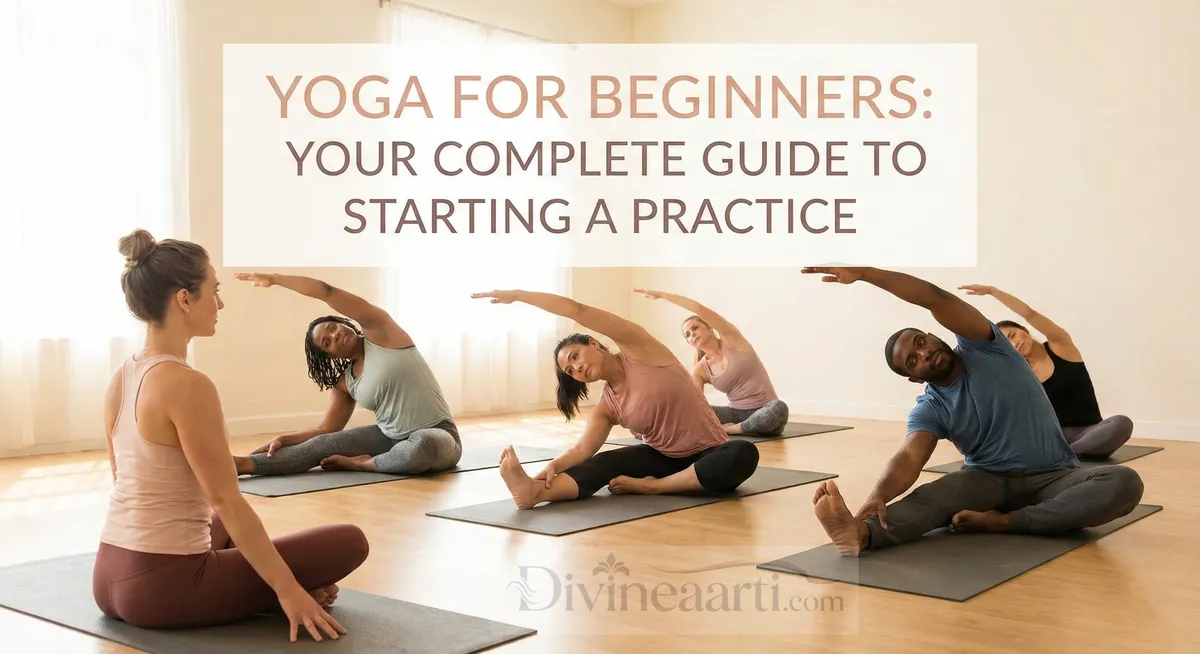
You've seen those Instagram photos. People twisted into impossible shapes, effortlessly balancing on one hand, flowing gracefully from pose to pose. That's not where yoga starts. If you're wondering "Can I do yoga?" because you can't touch your toes, haven't exercised in years, or think you're "too stiff"—this guide is for you.
Yoga isn't about flexibility or perfect poses. It's about connecting with your body, calming your mind, and building strength from where you are right now. If you can breathe, you can do yoga. This complete beginner's guide will teach you everything: what to expect, 20 essential poses with step-by-step instructions, proper breathing, and a 30-day plan to build confidence.
🎯 What You'll Learn:
- ✅ 20 fundamental poses (safe for absolute beginners)
- ✅ Proper breathing technique (the foundation of yoga)
- ✅ 3 complete beginner sequences (10-20 minutes)
- ✅ 30-day progressive practice plan
- ✅ Common mistakes and how to avoid injury
- ✅ What equipment you actually need (spoiler: very little)
🤔 What Exactly IS Yoga? (Beyond the Poses)
Yoga is 5,000+ years old, originating in ancient India. The word "yoga" means "union"—connecting body, mind, and spirit. While Western yoga focuses on physical poses (asanas), traditional yoga includes:
- Asanas: Physical postures (what most people think of as "yoga")
- Pranayama: Breath control techniques
- Meditation: Mental focus and stillness
- Philosophy: Ethical guidelines for living
For beginners: Focus on asanas and breathing. Everything else comes naturally with practice.
🧘 Types of Yoga (Which One for Beginners?)
| Style | Best For | Beginner-Friendly? |
|---|---|---|
| Hatha | Absolute beginners, slow pace, foundational | ✅ Best for beginners |
| Vinyasa/Flow | Dynamic movement, cardio element | ⚠️ After 4-6 weeks practice |
| Yin | Deep stretching, flexibility, relaxation | ✅ Yes, very gentle |
| Restorative | Stress relief, uses props, very gentle | ✅ Perfect for beginners |
| Iyengar | Precise alignment, uses props extensively | ✅ Excellent for learning proper form |
| Ashtanga | Rigorous, set sequence, athletic | ❌ Too advanced for beginners |
| Bikram/Hot | Heated room (105°F), intense | ❌ Start elsewhere first |
Recommendation: Start with Hatha or Restorative. Build foundation for 4-6 weeks before trying Vinyasa.
🛍️ What You Actually Need to Start
Essential (Must-Have):
- Yoga Mat: $15-30 for quality beginner mat (4-6mm thick). Brands: Gaiam, Amazon Basics, Manduka
- Comfortable Clothing: Stretchy leggings/shorts, fitted top (loose shirts fall over your head in inversions)
- Water Bottle: Stay hydrated
Helpful (Nice to Have):
- 2 Yoga Blocks: $10-20. Cork or foam. Essential if you can't touch floor
- Yoga Strap: $8-15. For poses requiring flexibility you don't have yet
- Blanket/Bolster: For support in restorative poses
Don't Need (Save Your Money):
- ❌ Expensive yoga clothes (regular athletic wear works fine)
- ❌ Yoga socks/gloves (bare feet = better grip)
- ❌ Multiple mats, fancy props, meditation cushions (not yet)
🌬️ Yoga Breathing 101 (This Changes Everything)
Before poses, master breathing. Proper breath = yoga's secret weapon.
Ujjayi Breath (Ocean Breath) - The Foundation:
How to do it:
- Inhale slowly through nose (4-5 seconds)
- Slightly constrict back of throat (like fogging mirror)
- Exhale through nose with same constriction (creates ocean/Darth Vader sound)
- Make inhalation and exhalation equal length
Why it matters: Heats body, calms nervous system, keeps you present. Use this breath throughout your practice.
Practice: Do 10 rounds sitting comfortably before your first yoga session.
🧘♀️ 20 Essential Beginner Yoga Poses
Master these and you have everything you need. Each includes: proper form, benefits, modifications, and common mistakes.
1. Mountain Pose (Tadasana)
How to: Stand feet hip-width apart, arms at sides. Ground through all four corners of feet. Engage thighs, lengthen spine, shoulders back. Gaze forward.
Benefits: Foundation for all standing poses. Improves posture and body awareness.
Common Mistake: Locking knees. Keep slight softness.
Hold: 5-10 breaths
2. Downward-Facing Dog (Adho Mukha Svanasana)
How to: Start on hands and knees. Hands shoulder-width, knees hip-width. Tuck toes, lift hips up and back. Straighten legs (bend knees if needed). Press hands firmly, heels toward floor.
Benefits: Full-body stretch. Strengthens arms/shoulders. Calms mind.
Modification: Keep knees bent if hamstrings tight. Perfectly fine for beginners.
Common Mistake: Rounding back to get heels down. Better: straight spine, bent knees.
Hold: 5-10 breaths
3. Child's Pose (Balasana)
How to: Knees wide, big toes touching. Sit hips back toward heels. Extend arms forward or rest at sides. Forehead on mat.
Benefits: Resting pose. Stretches back. Calms nervous system.
Modification: Place folded blanket under knees or between hips and heels.
Use anytime: You can return to this pose whenever you need rest during practice.
Hold: 10+ breaths (as long as comfortable)
4. Cat-Cow Pose (Marjaryasana-Bitilasana)
How to: Hands and knees (tabletop). Cow: Inhale, drop belly, lift chest and tailbone, gaze up. Cat: Exhale, round spine, tuck chin, draw navel to spine. Flow between them.
Benefits: Warms spine. Improves flexibility. Coordinates breath with movement.
Perfect for: Beginning every practice. Relieving back pain.
Repeat: 10 rounds
5. Warrior I (Virabhadrasana I)
How to: Step right foot forward into lunge. Back foot 45° angle. Front knee over ankle (not past toes). Raise arms overhead. Hips face forward. Repeat other side.
Benefits: Strengthens legs, opens hips and chest, builds focus.
Modification: Shorten stance if uncomfortable.
Common Mistake: Front knee collapsing inward. Push knee out over second toe.
Hold: 5 breaths each side
6. Warrior II (Virabhadrasana II)
How to: Similar to Warrior I, but hips face side. Front knee bent, back leg straight. Arms extend parallel to floor (front arm forward, back arm back). Gaze over front hand.
Benefits: Leg strength, hip opening, endurance, focus.
Hold: 5 breaths each side
7. Triangle Pose (Trikonasana)
How to: Wide stance, front foot forward, back foot 90°. Extend over front leg, lower front hand to shin/block/floor. Top arm reaches up. Gaze at top hand.
Benefits: Side body stretch, strengthens legs, improves balance.
Modification: Use block under bottom hand. Don't force hand to floor.
Hold: 5 breaths each side
8. Forward Fold (Uttanasana)
How to: From standing, hinge at hips, fold forward. Let head hang. Hands on floor/shins/thighs—wherever they reach.
Benefits: Hamstring stretch, calms mind, relieves stress.
Modification: Bend knees generously. Focus on lengthening spine, not straightening legs.
Hold: 5-10 breaths
9. Plank Pose
How to: From downward dog, shift forward. Shoulders over wrists. Body straight line from head to heels. Core engaged.
Benefits: Core strength, arm strength, full-body engagement.
Modification: Drop to knees (still keep hips in line with shoulders).
Hold: 3-5 breaths (work up to 10)
10. Cobra Pose (Bhujangasana)
How to: Lie on belly. Hands under shoulders. Press into hands, lift chest. Keep elbows bent (low cobra) or straighten arms (full cobra). Shoulders down, gaze forward.
Benefits: Strengthens back, opens chest, improves posture.
Modification: Keep elbows bent, forearms on mat (Sphinx Pose).
Hold: 3-5 breaths
11. Bridge Pose (Setu Bandha Sarvangasana)
How to: Lie on back, knees bent, feet hip-width. Press into feet, lift hips. Clasp hands under back or keep arms at sides. Chin away from chest.
Benefits: Strengthens back/glutes/legs. Opens chest. Mild inversion.
Hold: 5-8 breaths
12. Seated Forward Bend (Paschimottanasana)
How to: Sit, legs extended. Inhale lengthen spine. Exhale fold forward from hips. Hands reach for feet/shins/thighs.
Benefits: Hamstring stretch, calms mind.
Modification: Sit on folded blanket. Bend knees. Use strap around feet.
Hold: 8-10 breaths
13. Pigeon Pose (Eka Pada Rajakapotasana)
How to: From downward dog, bring right knee forward behind right wrist. Right foot angled left. Extend left leg straight back. Lower hips, fold forward over front leg.
Benefits: Deep hip opener. Releases stored tension.
Modification: Place block/blanket under right hip for support.
Hold: 10+ breaths each side
14. Seated Spinal Twist (Ardha Matsyendrasana)
How to: Sit, legs extended. Bend right knee, place right foot outside left thigh. Left elbow outside right knee, right hand behind. Twist right, gaze over right shoulder.
Benefits: Spinal mobility, aids digestion, detoxifying.
Hold: 5 breaths each side
15. Tree Pose (Vrksasana)
How to: Stand on left leg. Place right foot on inner left thigh (or calf—never knee). Hands at heart or overhead. Find focal point. Repeat other side.
Benefits: Balance, focus, leg strength.
Modification: Foot on ankle, toes on floor. Use wall for support.
Hold: 5-10 breaths each side
16. Low Lunge (Anjaneyasana)
How to: Right foot forward, left knee on mat. Lower hips, lift chest. Arms overhead or hands on front thigh.
Benefits: Hip flexor stretch, quad stretch, opens chest.
Hold: 5 breaths each side
17. Legs-Up-The-Wall (Viparita Karani)
How to: Sit sideways against wall. Swing legs up wall as you lower back to floor. Hips close to wall, legs extended up.
Benefits: Mild inversion, reduces swelling in legs, deeply relaxing.
Perfect for: Evening practice, after long day.
Hold: 5-15 minutes
18. Supine Twist (Supta Matsyendrasana)
How to: Lie on back. Hug right knee to chest, guide it across body to left. Right arm extends right. Gaze right. Repeat other side.
Benefits: Gentle spinal twist, hip opener, relaxing.
Hold: 10 breaths each side
19. Happy Baby (Ananda Balasana)
How to: Lie on back. Hug knees to chest. Grab outside edges of feet, pull knees toward armpits. Tailbone grounded.
Benefits: Hip opener, lower back release, calming.
Modification: Hold behind thighs instead of feet.
Hold: 5-10 breaths
20. Corpse Pose (Savasana)
How to: Lie on back. Legs extended, feet falling open. Arms at sides, palms up. Close eyes. Release all effort.
Benefits: Integration of practice, deep relaxation, stress relief.
Critical: NEVER skip this. Most important pose. Allows nervous system to integrate practice.
Hold: 5-15 minutes (end of every practice)
📋 3 Complete Beginner Sequences
🌅 Sequence 1: Gentle Morning Flow (10 minutes)
- Mountain Pose (5 breaths)
- Cat-Cow (10 rounds)
- Downward Dog (5 breaths)
- Child's Pose (5 breaths)
- Cobra Pose (3x, 3 breaths each)
- Child's Pose (5 breaths)
- Downward Dog (5 breaths)
- Forward Fold (5 breaths)
- Mountain Pose (5 breaths)
- Savasana (2-3 minutes)
💪 Sequence 2: Strength Builder (15 minutes)
- Cat-Cow (10 rounds)
- Downward Dog (5 breaths)
- Plank (3-5 breaths) → Cobra → Child's Pose (repeat 3x)
- Warrior I (right) → Warrior II (right) → Triangle (right) - 5 breaths each
- Repeat left side
- Downward Dog (5 breaths)
- Bridge Pose (3x, 5 breaths each)
- Happy Baby (10 breaths)
- Supine Twist (both sides)
- Savasana (5 minutes)
🌙 Sequence 3: Evening Relaxation (20 minutes)
- Child's Pose (2 minutes)
- Cat-Cow (10 rounds, slow)
- Pigeon Pose (both sides, 2 minutes each)
- Seated Forward Bend (2 minutes)
- Seated Spinal Twist (both sides, 1 minute each)
- Bridge Pose (3x, 5 breaths)
- Happy Baby (1 minute)
- Supine Twist (both sides, 1 minute each)
- Legs-Up-The-Wall (5 minutes)
- Savasana (5-10 minutes)
📅 Your 30-Day Beginner Yoga Plan
| Week | Focus | Practice | Duration |
|---|---|---|---|
| Week 1 | Learn foundational poses & breathing | Sequence 1 (Morning Flow) daily | 10 min |
| Week 2 | Build consistency & confidence | Alternate Sequence 1 & 2 | 10-15 min |
| Week 3 | Strength & flexibility | Sequence 2 (Strength) 4x/week Sequence 3 (Evening) 3x/week | 15-20 min |
| Week 4 | Integration & personal practice | Choose sequences based on what you need daily | 15-20 min |
After 30 Days: You're no longer a beginner! Ready for intermediate poses, longer flows, studio classes, or online programs.
⚠️ Common Beginner Mistakes (Avoid These!)
| Mistake | Why It's Bad | Fix |
|---|---|---|
| Holding breath | Creates tension, defeats purpose | Breathe continuously. If you can't breathe, ease out of pose |
| Skipping warmup | Injury risk, stiff practice | Always start with Cat-Cow, gentle stretches |
| Pushing too hard | Injury, burnout, missing the point | Work at 70-80% effort. Yoga isn't competition |
| Comparing to others | Discouragement, ego issues | Your body is unique. Focus on YOUR progress |
| Skipping Savasana | Misses integration, stress relief | ALWAYS end with 5+ minutes Savasana. Non-negotiable |
| Practicing on full stomach | Nausea, discomfort, sluggishness | Wait 2-3 hours after big meal, 1 hour after snack |
| Locking joints | Joint damage over time | Keep "micro-bend" in knees, elbows |
| Bouncing in stretches | Can tear muscles | Hold steady, breathe into stretch |
❓ Beginner Yoga FAQ
How often should beginners practice yoga?
3-5 times per week is ideal. Daily practice builds fastest progress, but 3x/week shows improvement. More important than frequency: consistency. Better to do 10 minutes daily than 90 minutes once a week.
Do I need to be flexible to start yoga?
Absolutely not. This is like saying "I need to be strong before I can lift weights." Flexibility comes FROM yoga, not before. You'll improve dramatically in first month.
Best time to practice yoga?
Morning: Body stiffer but mind clearer. Sets tone for day.
Evening: Body more flexible but mind busier. Great for stress relief.
Best time: Whatever time you'll actually do it consistently.
Should I eat before yoga?
Empty stomach is best. Wait 2-3 hours after meal, 1 hour after light snack. Morning practice before breakfast is ideal. Drink water 30 minutes before, not during.
Can yoga help with weight loss?
Yes, indirectly. Vinyasa/Power yoga burns 200-400 calories/hour. More importantly: reduces stress eating, increases body awareness, improves metabolism, builds lean muscle. Combined with healthy eating, very effective.
Is yoga religious? I'm [different faith], can I practice?
Yoga is spiritual, not religious. Physical yoga (asanas) can be practiced by anyone. You can view it as pure exercise or incorporate your own spiritual beliefs. No need to chant "Om" or subscribe to any belief system.
What if I can't do a pose?
Use modifications! Every pose has easier versions. Use props (blocks, straps). Stop if sharp pain. Some poses take months/years. That's normal and fine.
Yoga mat necessary or can I use towel?
Mat is worth the $20 investment. Provides grip (safety), cushioning (joint protection), defined space. Towel slips dangerously in standing poses. Yoga mat is only real "must-have" equipment.
🚨 When to Stop or Modify
⚠️ Stop Immediately If:
- Sharp pain: Dull stretch = okay. Sharp/shooting pain = stop
- Dizziness: Come to Child's Pose, rest
- Can't breathe: Back out of pose
- Joint pain: Modify or skip pose
Consult doctor before starting if you have: Recent surgery, pregnancy, herniated discs, severe osteoporosis, uncontrolled blood pressure, eye conditions (glaucoma), or significant injuries.
📚 Free Resources to Continue Learning
🎥 Best YouTube Channels:
- Yoga With Adriene: #1 beginner channel. 30-day challenges. Warm, encouraging teaching.
- Yoga With Tim: Excellent alignment cues. Technical but beginner-friendly.
- Boho Beautiful: Beautiful locations, flowy style, intermediate-beginner.
- SarahBethYoga: Clear instruction, good for absolute beginners.
📱 Apps Worth Trying:
- Down Dog (Free trial): Customizable practices, great for home practice
- Daily Yoga (Free version): Structured programs
- Yoga for Beginners (Free): Step-by-step pose library
🎯 Your First Practice: Do This Today
✨ Right Now Action Plan:
- Roll out mat (or clear space)
- Set timer for 10 minutes
- Do Sequence 1 (Gentle Morning Flow)
- Don't judge yourself
- Notice how you feel after
"The pose begins when you want to leave it." Your yoga journey starts with one breath, one movement, one decision to begin. Today is that day.
Namaste 🙏 (The light in me honors the light in you)