
Ganga Chalisa Lyrics in Hindi | Shri Ganga Chalisa with Meaning
Introduction to Shri Ganga Chalisa | Ganga Chalisa Meaning
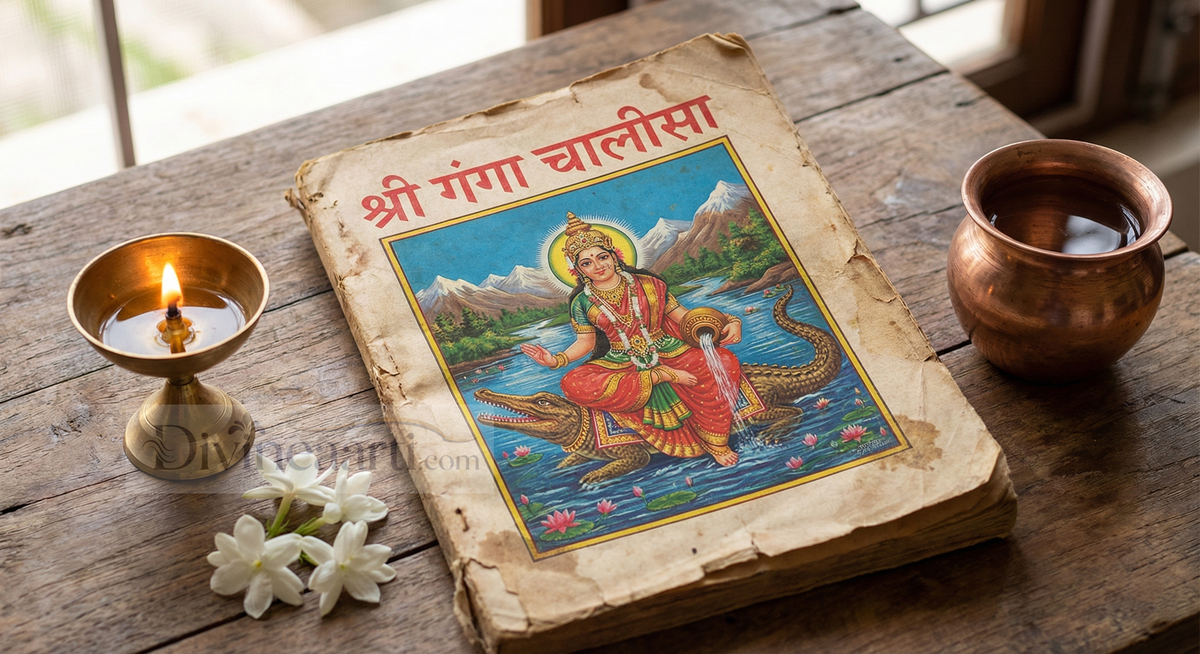
The Shri Ganga Chalisa is a profoundly sacred devotional hymn comprising 40 verses dedicated to Mother Ganga (Goddess Ganga), the divine personification of the holy Ganges River. As the most sacred river in Hinduism, Ganga is worshipped as a goddess who descended from heaven to purify the earth and grant liberation (moksha) to all who come in contact with her waters.
Mother Ganga, also known as Ganga Maiya, Bhagirathi, and Jahnavi, is revered as the daughter of the Himalayas and the consort of Lord Shiva in whose matted locks she resides. Her descent from heaven to earth is one of the most celebrated stories in Hindu mythology, representing divine compassion for humanity.
The Ganges River flows for over 2,500 kilometers from the Gangotri glacier in the Himalayas to the Bay of Bengal, passing through sacred cities like Haridwar, Prayagraj, Varanasi, and Kolkata. Millions of devotees perform rituals, take holy baths, and immerse the ashes of their departed along her banks, believing that Ganga's waters can wash away sins and ensure salvation.
This comprehensive guide provides insights into each verse's spiritual meaning, the transformative benefits of regular recitation, optimal methods and timing for worship, and the extraordinary purifying power that comes from connecting with Mother Ganga's divine essence.
Purification & Liberation: Understanding Ganga's Divine Power | Ganga Maiya Mahima
The Power of Purification
Ganga is unique among rivers in her ability to purify all who touch her waters. Hindu scriptures state that merely remembering, seeing, touching, or bathing in Ganga destroys accumulated sins from many lifetimes. Even the breeze that touches her waters carries purifying power.
Gateway to Moksha
Dying on the banks of Ganga or having one's ashes immersed in her waters is believed to guarantee liberation (moksha) from the cycle of birth and death. This is why Varanasi, situated on Ganga's banks, is considered the ideal place for Hindus to spend their final days.
The Descent from Heaven
Ganga originally flowed only in heaven. King Bhagiratha performed intense austerities for thousands of years to bring her to earth to liberate his ancestors' souls. Lord Shiva received her descent in his matted locks to prevent the earth's destruction from her powerful flow. This is why she is called Bhagirathi (brought by Bhagiratha) and Shiva-Jata-Vasini (dweller in Shiva's locks).
Mother of All
Ganga is called "Maiya" (Mother) because she nurtures all life along her banks without discrimination. She provides water for drinking, agriculture, and spiritual purification to millions, embodying the unconditional love of a mother for her children.
Scientific and Spiritual Properties
Modern scientists have noted unique properties in Ganga's waters, including resistance to putrefaction and antibacterial qualities. Devotees attribute these to her divine nature, believing her waters contain healing and purifying properties beyond scientific explanation.
Shri Ganga Chalisa - 40 Sacred Verses | Ganga Chalisa Lyrics Hindi
॥ दोहा ॥
जय जय जय जग पावनी,जयति देवसरि गंग।

जय शिव जटा निवासिनी,अनुपम तुंग तरंग॥

॥ चौपाई ॥
जय जय जननी हराना अघखानी।आनंद करनी गंगा महारानी॥

जय भगीरथी सुरसरि माता।कलिमल मूल डालिनी विख्याता॥

जय जय जहानु सुता अघ हनानी।भीष्म की माता जगा जननी॥

धवल कमल दल मम तनु सजे।लखी शत शरद चन्द्र छवि लजाई॥

वहां मकर विमल शुची सोहें।अमिया कलश कर लखी मन मोहें॥

जदिता रत्ना कंचन आभूषण।हिय मणि हर, हरानितम दूषण॥

जग पावनी त्रय ताप नासवनी।तरल तरंग तुंग मन भावनी॥

जो गणपति अति पूज्य प्रधान।इहूं ते प्रथम गंगा अस्नाना॥

ब्रह्मा कमंडल वासिनी देवी।श्री प्रभु पद पंकज सुख सेवि॥

साथी सहस्र सागर सुत तरयो।गंगा सागर तीरथ धरयो॥

अगम तरंग उठ्यो मन भवन।लखी तीरथ हरिद्वार सुहावन॥

तीरथ राज प्रयाग अक्षैवेता।धरयो मातु पुनि काशी करवत॥

धनी धनी सुरसरि स्वर्ग की सीधी।तरनी अमिता पितु पड़ पिरही॥

भागीरथी ताप कियो उपारा।दियो ब्रह्म तव सुरसरि धारा॥

जब जग जननी चल्यो हहराई।शम्भु जाता महं रह्यो समाई॥

वर्षा पर्यंत गंगा महारानी।रहीं शम्भू के जाता भुलानी॥

पुनि भागीरथी शम्भुहीं ध्यायो।तब इक बूंद जटा से पायो॥

ताते मातु भें त्रय धारा।मृत्यु लोक, नाभा, अरु पातारा॥

गईं पाताल प्रभावती नामा।मन्दाकिनी गई गगन ललामा॥

मृत्यु लोक जाह्नवी सुहावनी।कलिमल हरनी अगम जग पावनि॥

धनि मइया तब महिमा भारी।धर्मं धुरी कलि कलुष कुठारी॥

मातु प्रभवति धनि मंदाकिनी।धनि सुर सरित सकल भयनासिनी॥

पन करत निर्मल गंगा जल।पावत मन इच्छित अनंत फल॥

पुरव जन्म पुण्य जब जागत।तबहीं ध्यान गंगा महं लागत॥

जई पगु सुरसरी हेतु उठावही।तई जगि अश्वमेघ फल पावहि॥

महा पतित जिन कहू न तारे।तिन तारे इक नाम तिहारे॥

शत योजन हूं से जो ध्यावहिं।निशचाई विष्णु लोक पद पावहीं॥

नाम भजत अगणित अघ नाशै।विमल ज्ञान बल बुद्धि प्रकाशे॥

जिमी धन मूल धर्मं अरु दाना।धर्मं मूल गंगाजल पाना॥

तब गुन गुणन करत दुख भाजत।गृह गृह सम्पति सुमति विराजत॥

गंगहि नेम सहित नित ध्यावत।दुर्जनहूं सज्जन पद पावत॥

उद्दिहिन विद्या बल पावै।रोगी रोग मुक्त हवे जावै॥

गंगा गंगा जो नर कहहीं।भूखा नंगा कभुहुह न रहहि॥

निकसत ही मुख गंगा माई।श्रवण दाबी यम चलहिं पराई॥

महं अघिन अधमन कहं तारे।भए नरका के बंद किवारें॥

जो नर जपी गंग शत नामा।सकल सिद्धि पूरण ह्वै कामा॥

सब सुख भोग परम पद पावहीं।आवागमन रहित ह्वै जावहीं॥

धनि मइया सुरसरि सुख दैनि।धनि धनि तीरथ राज त्रिवेणी॥

ककरा ग्राम ऋषि दुर्वासा।सुन्दरदास गंगा कर दासा॥

जो यह पढ़े गंगा चालीसा।मिली भक्ति अविरल वागीसा॥

॥ दोहा ॥
नित नए सुख सम्पति लहैं,धरें गंगा का ध्यान।

अंत समाई सुर पुर बसल,सदर बैठी विमान॥

संवत भुत नभ्दिशी,राम जन्म दिन चैत्र।

पूरण चालीसा किया,हरी भक्तन हित नेत्र॥
॥ Doha ॥
Jaya Jaya Jaya Jaga Pavani,Jayati Devasari Ganga।

Jaya Shiva Jata Nivasini,Anupama Tunga Taranga॥

॥ Chaupai ॥
Jaya Jaya Janani Harana Aghakhani।Ananda Karani Ganga Maharani॥

Jaya Bhagirathi Surasari Mata।Kalimala Mula Dalini Vikhyata॥

Jaya Jaya Jahanu Suta Agha Hanani।Bhishma Ki Mata Jaga Janani॥

Dhavala Kamala Dala Mama Tanu Saje।Lakhi Shata Sharada Chandra Chhavi Lajai॥

Vahan Makara Vimala Shuchi Sohein।Amiya Kalasha Kara Lakhi Mana Mohein॥

Jadita Ratna Kanchana Abhushana।Hiya Mani Hara, Haranitama Dushana॥

Jaga Pavani Traya Tapa Nasavani।Tarala Taranga Tunga Mana Bhavani॥

Jo Ganapati Ati Pujya Pradhana।Ihun Te Prathama Ganga Asnana॥

Brahma Kamandala Vasini Devi।Shri Prabhu Pada Pankaja Sukha Sevi॥

Sathi Sahasra Sagara Suta Tarayo।Ganga Sagara Tiratha Dharayo॥

Agama Taranga Uthyo Mana Bhavana।Lakhi Tiratha Haridvara Suhavana॥

Tiratha Raja Prayaga Akshaiveta।Dharayo Matu Puni Kashi Karavata॥

Dhani Dhani Surasari Svarga Ki Sidhi।Tarani Amita Pitu Pada Pirahi॥

Bhagirathi Tapa Kiyo Upara।Diyo Brahma Tava Surasari Dhara॥

Jaba Jaga Janani Chalyo Haharai।Shambhu Jata Mahan Rahyo Samai॥

Varsha Paryanta Ganga Maharani।Rahin Shambhu Ke Jata Bhulani॥

Puni Bhagirathi Shambhuhin Dhyayo।Taba Ika Bunda Jata Se Payo॥

Tate Matu Bhein Traya Dhara।Mrityu Loka, Nabha, Aru Patara॥

Gain Patala Prabhavati Nama।Mandakini Gai Gagana Lalama॥

Mrityu Loka Jahnavi Suhavani।Kalimala Harani Agama Jaga Pavani॥

Dhani Maiya Taba Mahima Bhari।Dharman Dhuri Kali Kalusha Kuthari॥

Matu Prabhavati Dhani Mandakini।Dhani Sura Sarita Sakala Bhayanasini॥

Pana Karata Nirmala Ganga Jala।Pavata Mana Ichchhita Ananta Phala॥

Purava Janma Punya Jaba Jagata।Tabahin Dhyana Ganga Mahan Lagata॥

Jai Pagu Surasari Hetu Uthavahi।Tai Jagi Ashvamegha Phala Pavahi॥

Maha Patita Jina Kahu Na Tare।Tina Tare Ika Nama Tihare॥

Shata Yojana Hun Se Jo Dhyavahin।Nishachai Vishnu Loka Pada Pavahin॥

Nama Bhajata Aganita Agha Nashai।Vimala Jnana Bala Buddhi Prakashe॥

Jimi Dhana Mula Dharman Aru Dana।Dharman Mula Gangajala Pana॥

Taba Guna Gunana Karata Dukha Bhajata।Griha Griha Sampati Sumati Virajata॥

Gangahi Nema Sahita Nita Dhyavata।Durjanahun Sajjana Pada Pavata॥

Uddihina Vidya Bala Pavai।Rogi Roga Mukta Have Javai॥

Ganga Ganga Jo Nara Kahahin।Bhukha Nanga Kabhuhuha Na Rahahi॥

Nikasata Hi Mukha Ganga Mai।Shravana Dabi Yama Chalahin Parai॥

Mahan Aghina Adhamana Kahan Tare।Bhae Naraka Ke Banda Kivaren॥

Jo Nara Japi Ganga Shata Nama।Sakala Siddhi Purana Hvai Kama॥

Saba Sukha Bhoga Parama Pada Pavahin।Avagamana Rahita Hvai Javahin॥

Dhani Maiya Surasari Sukha Daini।Dhani Dhani Tiratha Raja Triveni॥

Kakara Grama Rishi Durvasa।Sundaradasa Ganga Kara Dasa॥

Jo Yaha Padhe Ganga Chalisa।Mili Bhakti Avirala Vagisa॥

॥ Doha ॥
Nita Naye Sukha Sampati Lahain,Dharein Ganga Ka Dhyana।

Anta Samai Sura Pura Basala,Sadara Baithi Vimana॥

Sanvata Bhuta Nabhdishi,Rama Janma Dina Chaitra।

Purana Chalisa Kiya,Hari Bhaktana Hita Netra॥
Detailed Meaning and Translation | Ganga Chalisa Meaning in English
Opening Doha - Victory to the Purifier
"जय जय जय जग पावनी,जयति देवसरि गंग।
जय शिव जटा निवासिनी,अनुपम तुंग तरंग॥"
Translation: "Victory, victory, victory to the world's purifier, victory to divine river Ganga. Victory to dweller in Shiva's matted locks, with incomparable high waves."
Meaning: The opening praises Ganga as the purifier of the world, the divine river who resides in Lord Shiva's hair and flows with magnificent waves.
Verse 1 - Mother Who Removes Sins
"जय जय जननी हराना अघखानी।आनंद करनी गंगा महारानी॥"
Translation: "Victory, victory to Mother, destroyer of sins' stories. Joy-giving Ganga Maharani (Great Queen)."
Meaning: Ganga is praised as the mother who destroys all sins and brings joy to her devotees as the great queen of rivers.
Verse 2 - Bhagirathi the Divine River
"जय भगीरथी सुरसरि माता।कलिमल मूल डालिनी विख्याता॥"
Translation: "Victory to Bhagirathi, divine river Mother. Famous as destroyer of Kali Yuga's root impurities."
Meaning: Named after King Bhagiratha, Ganga is the celestial river famous for uprooting sins of Kali Yuga.
Verse 3 - Jahnu's Daughter, Bhishma's Mother
"जय जय जहानु सुता अघ हनानी।भीष्म की माता जगा जननी॥"
Translation: "Victory, victory to Jahnu's daughter, sin-destroyer. Bhishma's mother, mother of the world."
Meaning: Called Jahnavi (daughter of Sage Jahnu), Ganga is also mother of the great warrior Bhishma and mother of all creation.
Verse 4 - Divine Beauty
"धवल कमल दल मम तनु सजे।लखी शत शरद चन्द्र छवि लजाई॥"
Translation: "White lotus petals adorn her body. Seeing her, hundred autumn moons feel ashamed."
Meaning: Ganga's divine form is adorned with white lotus petals; her radiance surpasses the beauty of a hundred autumn moons.
Verse 5 - Makara Vehicle and Nectar Pot
"वहां मकर विमल शुची सोहें।अमिया कलश कर लखी मन मोहें॥"
Translation: "There pure, clean Makara (crocodile) shines as vehicle. Nectar pot in hand enchants the mind."
Meaning: Ganga rides the Makara (mythical crocodile) and holds a pot of nectar, captivating all who behold her.
Verse 6 - Gem-Studded Ornaments
"जदिता रत्ना कंचन आभूषण।हिय मणि हर, हरानितम दूषण॥"
Translation: "Studded with gems and golden ornaments. Gem necklace on chest, destroyer of darkest sins."
Meaning: Adorned with precious gems and gold, Ganga wears a jeweled necklace and destroys even the most terrible sins.
Verse 7 - Destroyer of Three Afflictions
"जग पावनी त्रय ताप नासवनी।तरल तरंग तुंग मन भावनी॥"
Translation: "World purifier, destroyer of three afflictions. Flowing high waves please the mind."
Meaning: Ganga purifies the world and destroys the three types of suffering (physical, mental, spiritual); her flowing waves bring peace to the mind.
Verse 8 - Even Before Ganesha Worship
"जो गणपति अति पूज्य प्रधान।इहूं ते प्रथम गंगा अस्नाना॥"
Translation: "Ganesha who is most worshipped and chief. Even before him, bathing in Ganga comes first."
Meaning: Though Lord Ganesha is worshipped first in all rituals, bathing in Ganga precedes even Ganesha worship in sanctity.
Verse 9 - Dweller in Brahma's Kamandalu
"ब्रह्मा कमंडल वासिनी देवी।श्री प्रभु पद पंकज सुख सेवि॥"
Translation: "Goddess dwelling in Brahma's water pot. Happily serving Lord's lotus feet."
Meaning: Ganga resides in Creator Brahma's kamandalu (water vessel) and joyfully serves the lotus feet of Lord Vishnu.
Verse 10 - Liberated 60,000 Sons of Sagara
"साथी सहस्र सागर सुत तरयो।गंगा सागर तीरथ धरयो॥"
Translation: "Liberated sixty thousand sons of Sagara. Established Ganga Sagar pilgrimage."
Meaning: Ganga freed the 60,000 sons of King Sagara and established the sacred pilgrimage site at Ganga Sagar where she meets the ocean.
Verse 11 - Sacred Haridwar
"अगम तरंग उठ्यो मन भवन।लखी तीरथ हरिद्वार सुहावन॥"
Translation: "Unfathomable waves rise, pleasing the mind. Behold the beautiful pilgrimage of Haridwar."
Meaning: Ganga's profound waves delight the heart; she graces the beautiful pilgrimage site of Haridwar (Gateway to God).
Verse 12 - King of Pilgrimages Prayagraj
"तीरथ राज प्रयाग अक्षैवेता।धरयो मातु पुनि काशी करवत॥"
Translation: "King of pilgrimages Prayag with eternal banyan. Mother then flows through Kashi."
Meaning: Ganga flows through Prayag (Prayagraj), the king of pilgrimages with its immortal banyan tree, and then through holy Kashi (Varanasi).
Verse 13 - Direct Path to Heaven
"धनी धनी सुरसरि स्वर्ग की सीधी।तरनी अमिता पितु पड़ पिरही॥"
Translation: "Blessed, blessed divine river, direct stairway to heaven. Liberating countless ancestors from suffering."
Meaning: The blessed Ganga is a direct path to heaven, liberating innumerable ancestors from their suffering.
Verse 14 - Bhagiratha's Penance
"भागीरथी ताप कियो उपारा।दियो ब्रह्म तव सुरसरि धारा॥"
Translation: "Bhagiratha performed severe austerities. Brahma then gave the divine river's flow."
Meaning: King Bhagiratha performed intense penance, and Lord Brahma released Ganga from heaven to earth.
Verse 15 - Descent and Shiva's Intervention
"जब जग जननी चल्यो हहराई।शम्भु जाता महं रह्यो समाई॥"
Translation: "When world's mother descended thundering. She got absorbed in Shambhu's (Shiva's) matted locks."
Meaning: When Ganga descended with tremendous force, Lord Shiva caught her in his matted hair to protect the earth.
Verse 16 - Years in Shiva's Locks
"वर्षा पर्यंत गंगा महारानी।रहीं शम्भू के जाता भुलानी॥"
Translation: "For many years Ganga Maharani. Remained lost in Shambhu's matted locks."
Meaning: For years, the great queen Ganga wandered lost within Lord Shiva's vast matted hair.
Verse 17 - One Drop Released
"पुनि भागीरथी शम्भुहीं ध्यायो।तब इक बूंद जटा से पायो॥"
Translation: "Then Bhagiratha meditated on Shambhu. Then received one drop from the locks."
Meaning: Bhagiratha again meditated on Lord Shiva, who then released one drop of Ganga from his matted hair.
Verse 18 - Three Streams to Three Worlds
"ताते मातु भें त्रय धारा।मृत्यु लोक, नाभा, अरु पातारा॥"
Translation: "From that, Mother became three streams. Earth, heaven, and netherworld."
Meaning: From that drop, Ganga divided into three streams flowing through the mortal world, heaven, and the underworld.
Verse 19 - Three Names in Three Realms
"गईं पाताल प्रभावती नामा।मन्दाकिनी गई गगन ललामा॥"
Translation: "Went to netherworld as Prabhavati by name. Went to heaven as Mandakini, the beautiful."
Meaning: In the netherworld she is called Prabhavati; in heaven she flows as the beautiful Mandakini.
Verse 20 - Jahnavi on Earth
"मृत्यु लोक जाह्नवी सुहावनी।कलिमल हरनी अगम जग पावनि॥"
Translation: "On mortal earth, beautiful Jahnavi. Remover of Kali's impurities, unfathomable world-purifier."
Meaning: On earth she is the beautiful Jahnavi, who removes the impurities of Kali Yuga and purifies the world mysteriously.
Verse 21 - Immense Glory
"धनि मइया तब महिमा भारी।धर्मं धुरी कलि कलुष कुठारी॥"
Translation: "Blessed Mother, your glory is immense. Pillar of dharma, axe cutting Kali's impurities."
Meaning: Blessed is Mother Ganga whose glory is vast; she is the foundation of righteousness and the axe that cuts through Kali Yuga's sins.
Verse 22 - Three Forms Blessed
"मातु प्रभवति धनि मंदाकिनी।धनि सुर सरित सकल भयनासिनी॥"
Translation: "Blessed Mother Prabhavati, blessed Mandakini. Blessed divine river, destroyer of all fears."
Meaning: All three forms of Ganga are blessed - Prabhavati, Mandakini, and the divine river that destroys all fears.
Verse 23 - Infinite Fruits from Pure Water
"पन करत निर्मल गंगा जल।पावत मन इच्छित अनंत फल॥"
Translation: "Drinking pure Ganga water. One obtains infinite desired fruits of the mind."
Meaning: By drinking the pure water of Ganga, one receives infinite blessings and all heart's desires are fulfilled.
Verse 24 - Past Life Merit Awakens
"पुरव जन्म पुण्य जब जागत।तबहीं ध्यान गंगा महं लागत॥"
Translation: "When past life's merit awakens. Only then does meditation on Ganga begin."
Meaning: Only when one's accumulated merit from past lives awakens does one develop devotion to meditate on Mother Ganga.
Verse 25 - Ashvamedha Merit from Each Step
"जई पगु सुरसरी हेतु उठावही।तई जगि अश्वमेघ फल पावहि॥"
Translation: "Each step taken toward the divine river. One obtains the fruit of Ashvamedha yajna."
Meaning: Every step taken toward Ganga earns the merit of performing an Ashvamedha (horse sacrifice) - the greatest of Vedic rituals.
Verse 26 - Even Greatest Sinners Liberated
"महा पतित जिन कहू न तारे।तिन तारे इक नाम तिहारे॥"
Translation: "Great sinners whom no one could save. Your single name liberates them."
Meaning: Even the greatest sinners whom no other means could save are liberated by simply uttering Ganga's name.
Verse 27 - Vishnu Loka from Distant Meditation
"शत योजन हूं से जो ध्यावहिं।निशचाई विष्णु लोक पद पावहीं॥"
Translation: "Those who meditate even from hundred yojanas away. Certainly attain the position of Vishnu Loka."
Meaning: Those who meditate on Ganga even from hundreds of miles away are guaranteed to reach Lord Vishnu's divine abode.
Verse 28 - Countless Sins Destroyed
"नाम भजत अगणित अघ नाशै।विमल ज्ञान बल बुद्धि प्रकाशे॥"
Translation: "Chanting the name destroys countless sins. Pure knowledge, strength, and intellect shine forth."
Meaning: By chanting Ganga's name, innumerable sins are destroyed and pure knowledge, strength, and wisdom illuminate the devotee.
Verse 29 - Root of All Dharma
"जिमी धन मूल धर्मं अरु दाना।धर्मं मूल गंगाजल पाना॥"
Translation: "As dharma and charity are root of wealth. Drinking Ganga water is root of dharma."
Meaning: Just as righteousness and charity are the foundation of prosperity, drinking Ganga's water is the foundation of all dharma.
Verse 30 - Sorrows Flee, Prosperity Arrives
"तब गुन गुणन करत दुख भाजत।गृह गृह सम्पति सुमति विराजत॥"
Translation: "Singing your virtues, sorrows flee. In every home, wealth and wisdom reside."
Meaning: By praising Ganga's virtues, sorrows disappear and prosperity with wisdom grace every household.
Verse 31 - Evil Become Virtuous
"गंगहि नेम सहित नित ध्यावत।दुर्जनहूं सज्जन पद पावत॥"
Translation: "Meditating on Ganga daily with discipline. Even evil people attain the status of saints."
Meaning: Those who regularly meditate on Ganga with devotion transform from wicked people into virtuous souls.
Verse 32 - Knowledge and Health
"उद्दिहिन विद्या बल पावै।रोगी रोग मुक्त हवे जावै॥"
Translation: "The ignorant gain knowledge and strength. The sick become free from disease."
Meaning: Those lacking education gain knowledge and power; the diseased are cured of all ailments through Ganga's grace.
Verse 33 - Never Hungry or Poor
"गंगा गंगा जो नर कहहीं।भूखा नंगा कभुहुह न रहहि॥"
Translation: "Those who say 'Ganga, Ganga'. Never remain hungry or naked."
Meaning: Those who continuously chant Ganga's name will never suffer from hunger or poverty.
Verse 34 - Yama Flees
"निकसत ही मुख गंगा माई।श्रवण दाबी यम चलहिं पराई॥"
Translation: "As soon as 'Ganga Mai' leaves the mouth. Covering ears, Yama (death god) runs away."
Meaning: The moment one utters "Mother Ganga," even Yama (the god of death) covers his ears and flees.
Verse 35 - Hell's Gates Closed
"महं अघिन अधमन कहं तारे।भए नरका के बंद किवारें॥"
Translation: "The greatly sinful and lowly are liberated. The doors of hell become closed."
Meaning: Ganga liberates even the most sinful and fallen; for her devotees, the gates of hell are permanently shut.
Verse 36 - Hundred Names Grant All Siddhis
"जो नर जपी गंग शत नामा।सकल सिद्धि पूरण ह्वै कामा॥"
Translation: "Whoever chants Ganga's hundred names. All siddhis are attained, all desires fulfilled."
Meaning: Those who chant Ganga's hundred names gain all spiritual powers and have all their wishes granted.
Verse 37 - Liberation from Rebirth
"सब सुख भोग परम पद पावहीं।आवागमन रहित ह्वै जावहीं॥"
Translation: "All pleasures enjoyed, supreme position attained. Freed from the cycle of birth and death."
Meaning: Devotees enjoy all worldly happiness, attain the highest spiritual state, and are freed from the cycle of reincarnation.
Verse 38 - Glory of Triveni
"धनि मइया सुरसरि सुख दैनि।धनि धनि तीरथ राज त्रिवेणी॥"
Translation: "Blessed Mother divine river, giver of happiness. Blessed, blessed king of pilgrimages Triveni."
Meaning: Blessed is Mother Ganga who grants joy; blessed is Triveni (confluence of Ganga, Yamuna, Saraswati), the king of all pilgrimages.
Verse 39 - Author's Dedication
"ककरा ग्राम ऋषि दुर्वासा।सुन्दरदास गंगा कर दासा॥"
Translation: "Kakra village, Sage Durvasa. Sundardas is servant of Ganga."
Meaning: The author Sundardas, from the village associated with Sage Durvasa, declares himself a humble servant of Mother Ganga.
Verse 40 - Promise of Unbroken Devotion
"जो यह पढ़े गंगा चालीसा।मिली भक्ति अविरल वागीसा॥"
Translation: "Whoever reads this Ganga Chalisa. Receives unbroken devotion and eloquence."
Meaning: Those who recite this Ganga Chalisa are blessed with continuous devotion and the gift of divine speech.
Closing Doha - Eternal Prosperity
"नित नए सुख सम्पति लहैं,धरें गंगा का ध्यान।
अंत समाई सुर पुर बसल,सदर बैठी विमान॥"
Translation: "Daily new happiness and wealth obtained, meditating on Ganga. At end, reach heavenly city, seated respectfully in divine vehicle."
Meaning: Those who meditate on Ganga daily receive ever-new joy and prosperity; at death, they ascend to heaven in a celestial chariot.
Final Doha - Completion
"संवत भुत नभ्दिशी,राम जन्म दिन चैत्र।
पूरण चालीसा किया,हरी भक्तन हित नेत्र॥"
Translation: "In the samvat year, on Ram Navami in Chaitra month. This Chalisa was completed, for the eyes/benefit of Hari's devotees."
Meaning: This Chalisa was completed on the auspicious day of Lord Rama's birth in Chaitra month, for the benefit of all devotees of the Lord.
Spiritual Benefits of Ganga Chalisa | Ganga Chalisa Benefits
Purification and Cleansing
- Sin Removal: Washing away past negative karma
- Mental Purification: Cleansing of negative thoughts
- Aura Cleansing: Removal of spiritual impurities
- Ancestral Peace: Liberating departed ancestors
Liberation and Moksha
- Path to Moksha: Opening the door to liberation
- Spiritual Evolution: Accelerating soul's progress
- Good Death: Peaceful and auspicious transition
- Breaking Cycle: Freedom from rebirth
Health and Healing
- Physical Healing: Recovery from illnesses
- Mental Peace: Relief from anxiety and depression
- Emotional Balance: Stability in turbulent times
- Energy Restoration: Revitalization of life force
Material and Spiritual Prosperity
- Obstacle Removal: Clearing path to success
- Divine Protection: Shield from negative influences
- Family Harmony: Peace in household
- Spiritual Wealth: Accumulation of merit (punya)
How to Recite Ganga Chalisa: Complete Guide | Ganga Chalisa Path Vidhi
Preparation for Chalisa Recitation
- Personal Purification: Take a bath (ideally with Ganga water if available) and wear clean white clothes
- Sacred Space Setup: Place Ganga's image facing east near water
- Essential Offerings: Ganga water, white flowers, rice, ghee lamp, incense
- Mental Preparation: Cultivate feelings of reverence and surrender
Step-by-Step Recitation Process
- Invocation: Begin with "Om Gange Cha Yamune Chaiva"
- Light Lamp: Use ghee lamp with camphor
- Offer Flowers: White flowers and bilva leaves
- Chalisa Recitation: Read all 40 verses with concentration
- Personal Prayer: Request specific purification and blessings
- Aarti: Conclude with Ganga Aarti
Special Practices
- Recite facing east or facing the river if possible
- Keep some Ganga water in your puja area
- Perform on river banks for enhanced benefits
- Visit Haridwar, Prayagraj, or Varanasi if possible
Best Times & Occasions for Ganga Chalisa
Ganga Dussehra
The most auspicious day for Ganga worship is Ganga Dussehra, celebrated on the tenth day (Dashami) of the bright fortnight (Shukla Paksha) in Jyeshtha month (May-June). This commemorates the day Ganga descended to earth. Special pujas, holy baths, and charitable acts on this day bring immense blessings.
Weekly Observances
- Monday: Sacred to Shiva who holds Ganga
- Full Moon Days: Especially powerful for Ganga worship
- Amavasya: Ideal for ancestral rites (Pind Daan)
- Ekadashi: Combined with fasting for enhanced purification
Daily Practice Times
Brahma Muhurta: 4:00 AM - 6:00 AM, most powerful for worship
Sunset: Evening Ganga Aarti time in holy cities
Before Bathing: Recite before taking a bath with Ganga water
Special Occasions
- During Kumbh Mela and Ardh Kumbh Mela
- On death anniversaries (Shraddha)
- During Pitru Paksha (fortnight of ancestors)
- Before major life events and transitions
Historical Significance and Cultural Impact | Ganga Avtaran Katha
The Story of Ganga's Descent
The descent of Ganga is one of Hinduism's most beloved stories. King Sagara's 60,000 sons were burned to ashes by Sage Kapila's curse. Their souls could only be liberated by Ganga's waters. After generations of effort, King Bhagiratha performed severe austerities, bringing Ganga to earth. Lord Shiva received her in his locks to prevent earth's destruction, releasing her gently as the sacred river we know today.
Sacred Geography
The Ganges originates at Gangotri glacier (Gaumukh) and is known by different names along her journey - Bhagirathi, Alaknanda (tributaries), and finally Ganga. She flows through sacred cities (tirthas) including Rishikesh, Haridwar, Prayagraj, Varanasi, and Patna before merging with the Bay of Bengal near Ganga Sagar.
The Ganga Aarti of Varanasi
The most famous Ganga Aarti takes place at Dashashwamedh Ghat in Varanasi every evening. Priests perform elaborate rituals with fire, incense, and bells as thousands gather to witness this spectacular ceremony honoring Mother Ganga - a tradition unbroken for centuries.
Kumbh Mela - World's Largest Gathering
The Kumbh Mela, held at the confluence of Ganga, Yamuna, and mythical Saraswati at Prayagraj, attracts millions of pilgrims who come to bathe in Ganga's waters on auspicious dates. This gathering, recognized by UNESCO, demonstrates Ganga's central place in Hindu culture and spirituality.
❓ Frequently Asked Questions About Ganga Chalisa
What is Ganga Chalisa and what is its significance?
Ganga Chalisa is a 40-verse devotional hymn dedicated to Goddess Ganga (the Ganges River), considered the most sacred river in Hinduism. The Chalisa describes her divine descent from heaven to earth through Lord Shiva's matted locks, her purifying powers, and her role as the mother who washes away sins. It celebrates her spiritual importance across all Hindu traditions.
When should one recite Ganga Chalisa?
Ganga Chalisa is ideally recited on Ganga Dussehra, Ganga Saptami, and during Kartik Purnima. It is especially powerful when recited on the banks of the Ganges at sacred cities like Haridwar, Varanasi, Prayagraj, or Rishikesh. Daily morning recitation after bath is beneficial. It is also recited during shraddha ceremonies for departed ancestors.
What are the benefits of chanting Ganga Chalisa?
Chanting Ganga Chalisa purifies the mind and soul, washes away accumulated sins, and brings spiritual liberation. It is believed to provide the spiritual benefits equivalent to bathing in the Ganges. The Chalisa brings peace to departed ancestors (Pitru Shanti), removes negative karma, and grants the devotee Mother Ganga's compassionate protection and blessings.
Can Ganga Chalisa be recited away from the river?
Yes, Ganga Chalisa can be recited anywhere with devotion. While reciting on the banks of the Ganges is ideal, the divine power of Mother Ganga transcends physical location. Many devotees keep Ganga Jal (holy Ganges water) at home and recite the Chalisa before it. The scriptures say that merely remembering Ganga grants her blessings regardless of distance.
What is the connection between Ganga and Pitru (ancestor) worship?
Mother Ganga holds deep significance in ancestor worship. Performing Tarpan (libation), Pind Daan, and Shraddha rituals at the Ganges brings peace and liberation to departed ancestors. Reciting Ganga Chalisa during Pitru Paksha (ancestor fortnight) and annual Shraddha ceremonies is believed to please the ancestors and secure their blessings for the living family.