
Krishna Chalisa Lyrics in Hindi | Shri Krishna Chalisa with Meaning
Introduction to Shri Krishna Chalisa | Krishna Chalisa Meaning
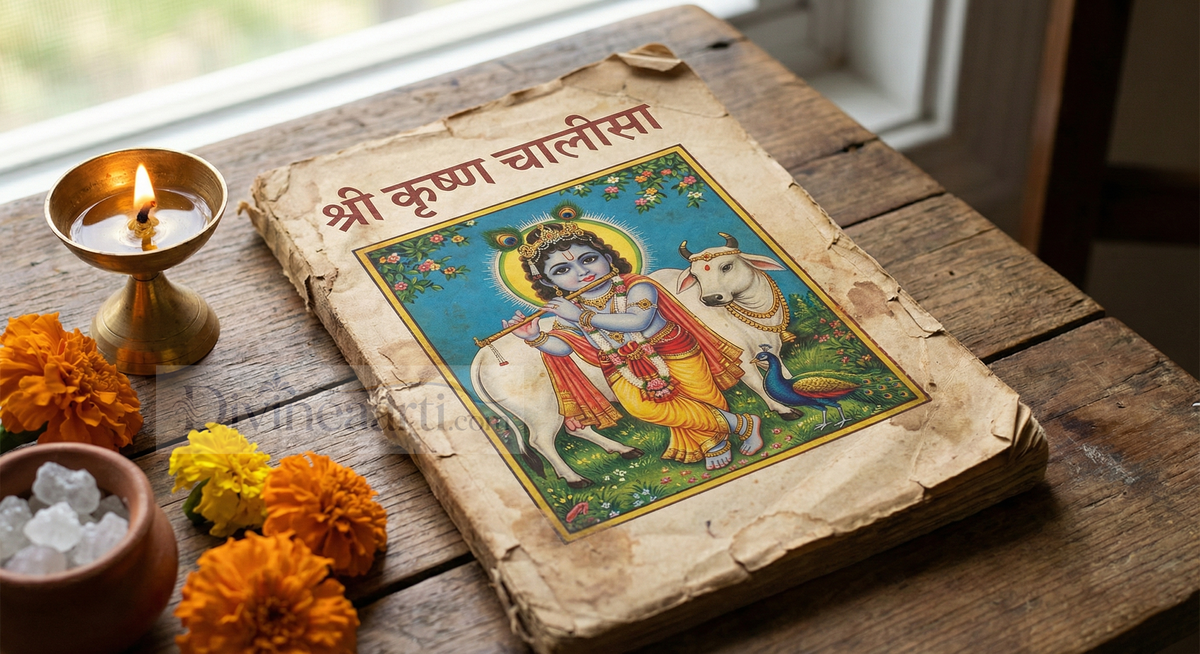
The Shri Krishna Chalisa is a devotional hymn of 40 verses dedicated to Lord Krishna, the eighth avatar of Lord Vishnu. He is the Supreme Personality of Godhead who delivered the sacred Bhagavad Gita to Arjuna on the battlefield of Kurukshetra.
Krishna, meaning "the all-attractive one," is worshipped in numerous forms - as Bal Gopal (child), Makhan Chor (butter thief), Murlidhar (flute player), Radha Vallabh (beloved of Radha), Parthasarathi (Arjuna's charioteer), and Jagannath (Lord of the Universe).
This Chalisa glorifies all aspects of Krishna's life - from His birth in Mathura prison to His childhood pastimes in Vrindavan, His youth in Dwaraka, and His role as the divine guide in Mahabharata. Reciting it bestows divine love, wisdom, and liberation.
Krishna's Divine Forms | Lord Krishna Swaroop
Bal Gopal - The Divine Child
As a child, Krishna performed countless miraculous acts - killing demons like Putana, Shakatasura, and Trinavarta. His childhood in Gokul and Vrindavan is filled with divine play (leela) that captivates devotees' hearts.
Govinda - Protector of Cows
Krishna is called Govinda because he protects cows and all living beings. He lifted Govardhan mountain on his little finger to protect the people of Vrindavan from Indra's wrath.
Murlidhar - The Flute Player
The sound of Krishna's flute enchants all creation. When he plays his divine flute on the banks of Yamuna, even the rivers stop flowing and the Gopis forget everything to run to him.
Parthasarathi - Arjuna's Charioteer
In the Mahabharata, Krishna served as Arjuna's charioteer and delivered the Bhagavad Gita - the song of God - containing timeless wisdom about dharma, karma, and moksha.
Shri Krishna Chalisa - 40 Sacred Verses | Krishna Chalisa Lyrics Hindi
॥ दोहा ॥
बंशी शोभित कर मधुर,नील जलद तन श्याम।

अरुण अधर जनु बिम्बा फल,पिताम्बर शुभ साज॥

जय मनमोहन मदन छवि,कृष्णचन्द्र महाराज।

करहु कृपा हे रवि तनय,राखहु जन की लाज॥

॥ चौपाई ॥
जय यदुनन्दन जय जगवन्दन।जय वसुदेव देवकी नन्दन॥

जय यशुदा सुत नन्द दुलारे।जय प्रभु भक्तन के दृग तारे॥

जय नट-नागर नाग नथैया।कृष्ण कन्हैया धेनु चरैया॥

पुनि नख पर प्रभु गिरिवर धारो।आओ दीनन कष्ट निवारो॥

वंशी मधुर अधर धरी तेरी।होवे पूर्ण मनोरथ मेरो॥

आओ हरि पुनि माखन चाखो।आज लाज भारत की राखो॥

गोल कपोल, चिबुक अरुणारे।मृदु मुस्कान मोहिनी डारे॥

रंजित राजिव नयन विशाला।मोर मुकुट वैजयंती माला॥

कुण्डल श्रवण पीतपट आछे।कटि किंकणी काछन काछे॥

नील जलज सुन्दर तनु सोहे।छवि लखि, सुर नर मुनिमन मोहे॥

मस्तक तिलक, अलक घुंघराले।आओ कृष्ण बाँसुरी वाले॥

करि पय पान, पुतनहि तारयो।अका बका कागासुर मारयो॥

मधुवन जलत अग्नि जब ज्वाला।भै शीतल, लखितहिं नन्दलाला॥

सुरपति जब ब्रज चढ़यो रिसाई।मसूर धार वारि वर्षाई॥

लगत-लगत ब्रज चहन बहायो।गोवर्धन नखधारि बचायो॥

लखि यसुदा मन भ्रम अधिकाई।मुख महं चौदह भुवन दिखाई॥

दुष्ट कंस अति उधम मचायो।कोटि कमल जब फूल मंगायो॥

नाथि कालियहिं तब तुम लीन्हें।चरणचिन्ह दै निर्भय किन्हें॥

करि गोपिन संग रास विलासा।सबकी पूरण करी अभिलाषा॥

केतिक महा असुर संहारयो।कंसहि केस पकड़ि दै मारयो॥

मात-पिता की बन्दि छुड़ाई।उग्रसेन कहं राज दिलाई॥

महि से मृतक छहों सुत लायो।मातु देवकी शोक मिटायो॥

भौमासुर मुर दैत्य संहारी।लाये षट दश सहसकुमारी॥

दै भिन्हीं तृण चीर सहारा।जरासिंधु राक्षस कहं मारा॥

असुर बकासुर आदिक मारयो।भक्तन के तब कष्ट निवारियो॥

दीन सुदामा के दुःख टारयो।तंदुल तीन मूंठ मुख डारयो॥

प्रेम के साग विदुर घर मांगे।दुर्योधन के मेवा त्यागे॥

लखि प्रेम की महिमा भारी।ऐसे श्याम दीन हितकारी॥

भारत के पारथ रथ हांके।लिए चक्र कर नहिं बल ताके॥

निज गीता के ज्ञान सुनाये।भक्तन हृदय सुधा वर्षाये॥

मीरा थी ऐसी मतवाली।विष पी गई बजाकर ताली॥

राना भेजा सांप पिटारी।शालिग्राम बने बनवारी॥

निज माया तुम विधिहिं दिखायो।उर ते संशय सकल मिटायो॥

तब शत निन्दा करी तत्काला।जीवन मुक्त भयो शिशुपाला॥

जबहिं द्रौपदी टेर लगाई।दीनानाथ लाज अब जाई॥

तुरतहिं वसन बने नन्दलाला।बढ़े चीर भै अरि मुँह काला॥

अस नाथ के नाथ कन्हैया।डूबत भंवर बचावत नैया॥

सुन्दरदास आस उर धारी।दयादृष्टि कीजै बनवारी॥

नाथ सकल मम कुमति निवारो।क्षमहु बेगि अपराध हमारो॥

खोलो पट अब दर्शन दीजै।बोलो कृष्ण कन्हैया की जै॥

॥ दोहा ॥
यह चालीसा कृष्ण का,पाठ करै उर धारि।

अष्ट सिद्धि नवनिधि फल,लहै पदारथ चारि॥
॥ Doha ॥
Banshi Shobhita Kara Madhura,Nila Jalada Tana Shyama।

Aruna Adhara Janu Bimba Phala,Pitambara Shubha Saja॥

Jaya Manamohana Madana Chhavi,Krishnachandra Maharaja।

Karahu Kripa He Ravi Tanaya,Rakhahu Jana Ki Laja॥

॥ Chaupai ॥
Jaya Yadunandana Jaya Jagavandana।Jaya Vasudeva Devaki Nandana॥

Jaya Yashuda Suta Nanda Dulare।Jaya Prabhu Bhaktana Ke Driga Tare॥

Jaya Nata-Nagara Naga Nathaiya।Krishna Kanhaiya Dhenu Charaiya॥

Puni Nakha Para Prabhu Girivara Dharo।Ao Dinana Kashta Nivaro॥

Vanshi Madhura Adhara Dhari Teri।Hove Purna Manoratha Mero॥

Ao Hari Puni Makhana Chakho।Aja Laja Bharata Ki Rakho॥

Gola Kapola, Chibuka Arunare।Mridu Muskana Mohini Dare॥

Ranjita Rajiva Nayana Vishala।Mora Mukuta Vaijayanti Mala॥

Kundala Shravana Pitapata Achhe।Kati Kinkani Kachhana Kachhe॥

Nila Jalaja Sundara Tanu Sohe।Chhavi Lakhi, Sura Nara Munimana Mohe॥

Mastaka Tilaka, Alaka Ghungharale।Ao Krishna Bansuri Vale॥

Kari Paya Pana, Putanahi Tarayo।Aka Baka Kagasura Marayo॥

Madhuvana Jalata Agni Jaba Jvala।Bhai Shitala, Lakhitahin Nandalala॥

Surapati Jaba Braja Chadhayo Risai।Masura Dhara Vari Varshai॥

Lagata-Lagata Braja Chahana Bahayo।Govardhana Nakhadhari Bachayo॥

Lakhi Yasuda Mana Bhrama Adhikai।Mukha Mahan Chaudaha Bhuvana Dikhai॥

Dushta Kansa Ati Udhama Machayo।Koti Kamala Jaba Phula Mangayo॥

Nathi Kaliyahin Taba Tuma Linhein।Charanachinha Dai Nirbhaya Kinhein॥

Kari Gopina Sanga Rasa Vilasa।Sabaki Purana Kari Abhilasha॥

Ketika Maha Asura Sanharayo।Kansahi Kesa Pakadi Dai Marayo॥

Mata-Pita Ki Bandi Chhudayi।Ugrasena Kahan Raja Dilai॥

Mahi Se Mritaka Chhahon Suta Layo।Matu Devaki Shoka Mitayo॥

Bhaumasura Mura Daitya Sanhari।Laye Shata Dasha Sahasakumari॥

Dai Bhinhin Trina Chira Sahara।Jarasindhu Rakshasa Kahan Mara॥

Asura Bakasura Adika Marayo।Bhaktana Ke Taba Kashta Nivariyo॥

Dina Sudama Ke Duhkha Tarayo।Tandula Tina Muntha Mukha Darayo॥

Prema Ke Saga Vidura Ghara Mange।Duryodhana Ke Meva Tyage॥

Lakhi Prema Ki Mahima Bhari।Aise Shyama Dina Hitakari॥

Bharata Ke Paratha Ratha Hanke।Liye Chakra Kara Nahin Bala Take॥

Nija Gita Ke Jnana Sunaye।Bhaktana Hridaya Sudha Varshaye॥

Mira Thi Aisi Matavali।Visha Pi Gai Bajakara Tali॥

Rana Bheja Sanpa Pitari।Shaligrama Bane Banavari॥

Nija Maya Tuma Vidhihin Dikhayo।Ura Te Sanshaya Sakala Mitayo॥

Taba Shata Ninda Kari Tatkala।Jivana Mukta Bhayo Shishupala॥

Jabahin Draupadi Tera Lagai।Dinanatha Laja Aba Jai॥

Turatahin Vasana Bane Nandalala।Badhe Chira Bhai Ari Munha Kala॥

Asa Natha Ke Natha Kanhaiya।Dubata Bhanvara Bachavata Naiya॥

Sundaradasa Asa Ura Dhari।Dayadrishti Kijai Banavari॥

Natha Sakala Mama Kumati Nivaro।Kshamahu Begi Aparadha Hamaro॥

Kholo Pata Aba Darshana Dijai।Bolo Krishna Kanhaiya Ki Jai॥

॥ Doha ॥
Yaha Chalisa Krishna Ka,Patha Karai Ura Dhari।

Ashta Siddhi Navanidhi Phala,Lahai Padaratha Chari॥
Detailed Meaning and Translation | Krishna Chalisa Meaning in English
Opening Doha - Divine Beauty
"बंशी शोभित कर मधुर,नील जलद तन श्याम।
अरुण अधर जनु बिम्बा फल,पिताम्बर शुभ साज॥"
Translation: "Sweet flute-adorned hands, dark blue cloud-like body. Red lips like bimba fruit, auspicious yellow garments."
Meaning: Describing Krishna's divine beauty - sweet flute in hands, dark blue complexion like rain clouds, red lips like bimba fruit, and auspicious yellow garments.
Opening Doha - Compassionate Lord
"जय मनमोहन मदन छवि,कृष्णचन्द्र महाराज।
करहु कृपा हे रवि तनय,राखहु जन की लाज॥"
Translation: "Victory to mind-enchanter with Cupid's beauty, Krishna Chandra great king. Show mercy O sun's son, protect devotee's honor."
Meaning: Victory to Krishna who enchants minds with beauty like Cupid, the great king. O son of sun (Karna's descendant), show mercy and protect the devotee's honor.
Verse 1 - Victory to Krishna
"जय यदुनन्दन जय जगवन्दन।जय वसुदेव देवकी नन्दन॥"
Translation: "Victory to Yadu's delight, victory to world's delight. Victory to Vasudeva's son, Devaki's son."
Meaning: Victory to Krishna who delights the Yadu dynasty and the entire world, son of Vasudeva and Devaki.
Verse 2 - Beloved of Parents
"जय यशुदा सुत नन्द दुलारे।जय प्रभु भक्तन के दृग तारे॥"
Translation: "Victory to Yashoda's son, Nanda's beloved. Victory to lord, eye-star of devotees."
Meaning: Victory to Krishna who is Yashoda's son and Nanda's beloved, the lord who is like the star in devotees' eyes.
Verse 3 - Divine Dancer
"जय नट-नागर नाग नथैया।कृष्ण कन्हैया धेनु चरैया॥"
Translation: "Victory to dancer, charmer, serpent controller. Krishna Kanhaiya, cowherd."
Meaning: Victory to Krishna the divine dancer, charmer, controller of serpents, and cowherd Kanhaiya.
Verse 4 - Mountain Lifter
"पुनि नख पर प्रभु गिरिवर धारो।आओ दीनन कष्ट निवारो॥"
Translation: "Again lord lifted great mountain on finger. Come remove humble people's sufferings."
Meaning: Krishna again lifted the great Govardhan mountain on his finger. Come and remove the sufferings of humble people.
Verse 5 - Flute Player
"वंशी मधुर अधर धरी तेरी।होवे पूर्ण मनोरथ मेरो॥"
Translation: "Sweet flute on your lips. May my desires be fulfilled."
Meaning: With sweet flute on your lips, O Krishna, may all my desires be fulfilled.
Verse 6 - Butter Thief
"आओ हरि पुनि माखन चाखो।आज लाज भारत की राखो॥"
Translation: "Come Hari, taste butter again. Today protect India's honor."
Meaning: Come O Hari, taste butter again. Today protect the honor of India (Bharat).
Verse 7 - Enchanting Smile
"गोल कपोल, चिबुक अरुणारे।मृदु मुस्कान मोहिनी डारे॥"
Translation: "Round cheeks, red chin. Soft smile, enchanting glances."
Meaning: Krishna has round cheeks, red chin, soft enchanting smile, and captivating glances.
Verse 8 - Divine Adornment
"रंजित राजिव नयन विशाला।मोर मुकुट वैजयंती माला॥"
Translation: "Lotus-like eyes colored, wide. Peacock crown, Vaijayanti garland."
Meaning: Krishna's eyes are like colored lotuses and wide, adorned with peacock crown and Vaijayanti garland.
Verse 9 - Beautiful Attire
"कुण्डल श्रवण पीतपट आछे।कटि किंकणी काछन काछे॥"
Translation: "Earrings in ears, yellow garments good. Golden bells at waist."
Meaning: Krishna has earrings in ears, beautiful yellow garments, and golden bells at waist.
Verse 10 - All-Attractive Form
"नील जलज सुन्दर तनु सोहे।छवि लखि, सुर नर मुनिमन मोहे॥"
Translation: "Blue lotus-like beautiful body shines. Seeing beauty, gods humans sages' minds enchanted."
Meaning: Krishna's body shines like a beautiful blue lotus. Seeing his beauty, gods, humans, and sages' minds become enchanted.
Verse 11 - Curly Haired Lord
"मस्तक तिलक, अलक घुंघराले।आओ कृष्ण बाँसुरी वाले॥"
Translation: "Tilak on forehead, curly hair. Come Krishna flute player."
Meaning: Krishna has tilak on forehead and curly hair. Come O Krishna, the flute player.
Verse 12 - Demon Slayer
"करि पय पान, पुतनहि तारयो।अका बका कागासुर मारयो॥"
Translation: "Drinking milk, liberated Putana. Killed Aka Baka, Kagasura."
Meaning: While drinking milk, Krishna liberated the demoness Putana. He killed demons Aka, Baka, and Kagasura.
Verse 13 - Fire Extinguisher
"मधुवन जलत अग्नि जब ज्वाला।भै शीतल, लखितहिं नन्दलाला॥"
Translation: "When Madhuvan forest burned with flames. Became cool, seeing Nandalala."
Meaning: When the Madhuvan forest was burning with flames, it became cool upon seeing Nandalala (Krishna).
Verse 14 - Indra's Defeat
"सुरपति जब ब्रज चढ़यो रिसाई।मसूर धार वारि वर्षाई॥"
Translation: "When Indra got angry at Braj. Poured water like masoor lentils."
Meaning: When Indra got angry at Braj and poured water like masoor lentils (heavy rain).
Verse 15 - Govardhan Protector
"लगत-लगत ब्रज चहन बहायो।गोवर्धन नखधारि बचायो॥"
Translation: "About to flood Braj's houses. Protected Govardhan on fingernail."
Meaning: The flood was about to wash away Braj's houses. Krishna protected everyone by lifting Govardhan on his fingernail.
Verse 16 - Universe in Mouth
"लखि यसुदा मन भ्रम अधिकाई।मुख महं चौदह भुवन दिखाई॥"
Translation: "Seeing Yashoda's mind greatly confused. Showed fourteen worlds in mouth."
Meaning: Seeing Yashoda's mind greatly confused, Krishna showed the fourteen worlds in his mouth.
Verse 17 - Lotus Demand
"दुष्ट कंस अति उधम मचायो।कोटि कमल जब फूल मंगायो॥"
Translation: "Wicked Kansa created great uproar. When demanded crores of lotuses."
Meaning: The wicked Kansa created great disturbance and demanded crores of lotus flowers.
Verse 18 - Kaliya Tamer
"नाथि कालियहिं तब तुम लीन्हें।चरणचिन्ह दै निर्भय किन्हें॥"
Translation: "Then you caught Kaliya serpent. Gave fearlessness by foot marks."
Meaning: Then Krishna caught the Kaliya serpent and gave fearlessness by imprinting his foot marks.
Verse 19 - Raas Dance
"करि गोपिन संग रास विलासा।सबकी पूरण करी अभिलाषा॥"
Translation: "With Gopis performed Raas divine play. Fulfilled everyone's desires."
Meaning: Krishna performed the divine Raas dance with Gopis and fulfilled everyone's desires.
Verse 20 - Kansa's Death
"केतिक महा असुर संहारयो।कंसहि केस पकड़ि दै मारयो॥"
Translation: "Destroyed many great demons. Killed Kansa by grabbing hair."
Meaning: Krishna destroyed many great demons and killed Kansa by grabbing his hair.
Verse 21 - Parents' Liberation
"मात-पिता की बन्दि छुड़ाई।उग्रसेन कहं राज दिलाई॥"
Translation: "Freed parents from imprisonment. Gave kingdom to Ugrasena."
Meaning: Krishna freed his parents from imprisonment and restored the kingdom to Ugrasena.
Verse 22 - Six Sons Restored
"महि से मृतक छहों सुत लायो।मातु देवकी शोक मिटायो॥"
Translation: "Brought six dead sons from earth. Removed mother Devaki's sorrow."
Meaning: Krishna brought back Devaki's six dead sons from the earth and removed her sorrow.
Verse 23 - Demon Destroyer
"भौमासुर मुर दैत्य संहारी।लाये षट दश सहसकुमारी॥"
Translation: "Destroyed Bhaumasura, Mura demon. Brought sixteen thousand princesses."
Meaning: Krishna destroyed Bhaumasura and Mura demon, and brought back sixteen thousand imprisoned princesses.
Verse 24 - Jarasandha's Defeat
"दै भिन्हीं तृण चीर सहारा।जरासिंधु राक्षस कहं मारा॥"
Translation: "Gave split straw as support. Killed Jarasandha demon."
Meaning: Krishna gave split straw as support to Bhima and killed the demon Jarasandha.
Verse 25 - Devotee Protector
"असुर बकासुर आदिक मारयो।भक्तन के तब कष्ट निवारियो॥"
Translation: "Killed demons Bakasura etc. Then removed devotees' sufferings."
Meaning: Krishna killed demons like Bakasura and removed the sufferings of devotees.
Verse 26 - Sudama's Blessing
"दीन सुदामा के दुःख टारयो।तंदुल तीन मूंठ मुख डारयो॥"
Translation: "Removed poor Sudama's sorrow. Put three handfuls rice in mouth."
Meaning: Krishna removed poor Sudama's sorrow and blessed him by putting three handfuls of rice in his mouth.
Verse 27 - Vidura's Love
"प्रेम के साग विदुर घर मांगे।दुर्योधन के मेवा त्यागे॥"
Translation: "Asked for love-leaf from Vidura's house. Abandoned Duryodhana's feast."
Meaning: Krishna asked for a love-leaf from Vidura's humble house and abandoned Duryodhana's grand feast.
Verse 28 - Compassionate Lord
"लखि प्रेम की महिमा भारी।ऐसे श्याम दीन हितकारी॥"
Translation: "Seeing great glory of love. Such Shyam, benefactor of humble."
Meaning: Seeing the great glory of pure love, such is Shyam who is the benefactor of the humble.
Verse 29 - Arjuna's Charioteer
"भारत के पारथ रथ हांके।लिए चक्र कर नहिं बल ताके॥"
Translation: "Drove Arjuna's chariot in Mahabharata. Took chakra, not his strength."
Meaning: In the Mahabharata, Krishna drove Arjuna's chariot. He took the chakra (discus), not his own strength.
Verse 30 - Bhagavad Gita
"निज गीता के ज्ञान सुनाये।भक्तन हृदय सुधा वर्षाये॥"
Translation: "Taught knowledge of own Gita. Poured nectar in devotees' hearts."
Meaning: Krishna taught the knowledge of his own Bhagavad Gita and poured nectar into devotees' hearts.
Verse 31 - Meera's Devotion
"मीरा थी ऐसी मतवाली।विष पी गई बजाकर ताली॥"
Translation: "Meera was such an ecstatic devotee. Drank poison clapping hands."
Meaning: Meera was such an ecstatic devotee that she drank poison while clapping her hands in devotion.
Verse 32 - Poison to Nectar
"राना भेजा सांप पिटारी।शालिग्राम बने बनवारी॥"
Translation: "Rana sent snake in basket. Became Shaligram, forest dweller."
Meaning: The Rana sent a poisonous snake in a basket, but it became a Shaligram stone in Krishna's presence.
Verse 33 - Divine Illusion
"निज माया तुम विधिहिं दिखायो।उर ते संशय सकल मिटायो॥"
Translation: "Showed own maya to Brahma. Removed all doubts from heart."
Meaning: Krishna showed his divine illusion (maya) to Brahma and removed all doubts from his heart.
Verse 34 - Shishupala's Liberation
"तब शत निन्दा करी तत्काला।जीवन मुक्त भयो शिशुपाला॥"
Translation: "Then did hundred abuses immediately. Shishupala became liberated in life."
Meaning: Krishna tolerated Shishupala's hundred abuses and then liberated him while still alive.
Verse 35 - Draupadi's Protection
"जबहिं द्रौपदी टेर लगाई।दीनानाथ लाज अब जाई॥"
Translation: "When Draupadi's sari was pulled. Humble lord's honor was going."
Meaning: When Dushasana was pulling Draupadi's sari, the honor of the humble lord (Krishna) was at stake.
Verse 36 - Infinite Sari
"तुरतहिं वसन बने नन्दलाला।बढ़े चीर भै अरि मुँह काला॥"
Translation: "Immediately sari became infinite Nandalala. Increased cloth, enemy faces blackened."
Meaning: Immediately Krishna made the sari infinite. The cloth kept increasing and enemies' faces were blackened with shame.
Verse 37 - Ship in Whirlpool
"अस नाथ के नाथ कन्हैया।डूबत भंवर बचावत नैया॥"
Translation: "Such lord of lords Kanhaiya. Saves sinking ship in whirlpool."
Meaning: Such is Kanhaiya, lord of all lords, who saves a sinking ship in a whirlpool.
Verse 38 - Poet's Prayer
"सुन्दरदास आस उर धारी।दयादृष्टि कीजै बनवारी॥"
Translation: "Sundardas holds hope in heart. Cast merciful glance, forest dweller."
Meaning: Poet Sundardas holds hope in his heart. O forest dweller Krishna, cast your merciful glance.
Verse 39 - Forgiveness Prayer
"नाथ सकल मम कुमति निवारो।क्षमहु बेगि अपराध हमारो॥"
Translation: "Lord remove all my evil thoughts. Forgive quickly my offenses."
Meaning: O Lord, remove all my evil thoughts and quickly forgive my offenses.
Verse 40 - Darshan Prayer
"खोलो पट अब दर्शन दीजै।बोलो कृष्ण कन्हैया की जै॥"
Translation: "Open door now give darshan. Say victory to Krishna Kanhaiya."
Meaning: Open the door now and give darshan. Say victory to Krishna Kanhaiya.
Closing Doha - Benefits
"यह चालीसा कृष्ण का,पाठ करै उर धारि।
अष्ट सिद्धि नवनिधि फल,लहै पदारथ चारि॥"
Translation: "This Krishna Chalisa, recites holding in heart. Gets eight siddhis, nine treasures as fruit, obtains four purusharthas."
Meaning: One who recites this Krishna Chalisa holding it in heart gets eight supernatural powers and nine treasures as fruits, and obtains the four goals of life (dharma, artha, kama, moksha).
Spiritual Benefits of Krishna Chalisa | Krishna Chalisa Benefits
Divine Love
- Bhakti: Develops pure devotion
- Divine Love: Experience of Krishna Prema
- Heart Purification: Cleanses the heart
- Detachment: Freedom from material bondage
Wisdom and Liberation
- Gita Knowledge: Understanding of dharma
- Karma Yoga: Right action without attachment
- Moksha: Liberation from cycle of birth
- Peace: Mental tranquility
How to Recite Krishna Chalisa | Krishna Chalisa Path Vidhi
Preparation
- Take a bath and wear clean clothes (preferably yellow)
- Place Krishna idol or image on altar
- Offer Tulsi leaves, butter, and sweets
- Light lamp with ghee and incense
Special Offerings
- Tulsi leaves (most dear to Krishna)
- Makhan (butter) and Mishri
- Yellow flowers and peacock feather
- Flute as symbol
Best Times & Occasions for Krishna Chalisa
Janmashtami
The most auspicious day is Krishna Janmashtami (Krishna's birthday) - observed on Ashtami of Krishna Paksha in Bhadrapada month. Midnight worship is especially powerful as Krishna was born at midnight.
Other Auspicious Times
- Wednesdays: Krishna's primary day
- Ekadashi: Sacred fasting days
- Brahma Muhurta: 4-6 AM
- Holi: Festival of colors associated with Krishna
Divine Leelas of Lord Krishna | Krishna Leela
Krishna's life is filled with divine pastimes (leelas) that teach spiritual truths. From His birth in Kamsa's prison where chains broke automatically, to Putana Vadha, Kaliya Nardana (taming the serpent Kaliya), Govardhan Leela, Raas Leela with Gopis, to the Mahabharata - each story reveals His divine nature and teachings.
❓ Frequently Asked Questions About Krishna Chalisa
What is Krishna Chalisa and what does it describe?
Krishna Chalisa is a 40-verse devotional hymn dedicated to Lord Krishna, the eighth avatar of Lord Vishnu. It describes his divine childhood pastimes (Bal Leelas) in Vrindavan, his role as the charioteer and guide in the Mahabharata, his teachings in the Bhagavad Gita, and his supreme divine nature as the Purna Purushottam (complete incarnation of God).
When is the best time to recite Krishna Chalisa?
The ideal times are early morning (Brahma Muhurta), during Sandhya (twilight), and especially on Wednesdays and Fridays. It is most auspicious during Janmashtami (Krishna's birthday), on Ekadashi days, during the month of Shravan, and on Purnima (full moon). Reciting at midnight on Janmashtami is considered especially powerful.
What are the benefits of chanting Krishna Chalisa?
Chanting Krishna Chalisa brings divine love (Prem Bhakti), inner peace, and spiritual wisdom. It helps overcome attachment and delusion, grants prosperity and family harmony, and guides devotees on the path of Dharma. Lord Krishna's grace removes suffering, fulfills righteous desires, and ultimately leads to moksha (liberation) through devotion.
How many times should one recite Krishna Chalisa?
For daily devotional practice, reciting once with love and devotion is sufficient. On special occasions like Janmashtami and Ekadashi, reciting 3, 5, or 11 times is recommended. Devotees performing a Sankalpa may recite it 108 times or commit to a 40-day continuous recitation for fulfillment of specific spiritual aspirations.
Can Krishna Chalisa be recited by anyone?
Yes, Krishna Chalisa can be recited by anyone regardless of age, gender, caste, or spiritual background. Lord Krishna himself says in the Bhagavad Gita (9.32) that anyone who takes refuge in Him attains the supreme goal. No special initiation is required — only sincere love and devotion (Bhakti) are needed to receive His grace.
What is the connection between Krishna Chalisa and Bhagavad Gita?
Krishna Chalisa summarizes Lord Krishna's divine nature and teachings that are elaborated in the Bhagavad Gita. While the Gita is a detailed philosophical discourse of 700 verses, the Chalisa is a concise devotional hymn that captures the essence of Krishna's glory, his divine pastimes, and his role as the supreme guide for humanity.