
Gopal Chalisa Lyrics in Hindi | Shri Gopal Chalisa with Meaning
Introduction to Shri Gopal Chalisa | Gopal Chalisa Meaning
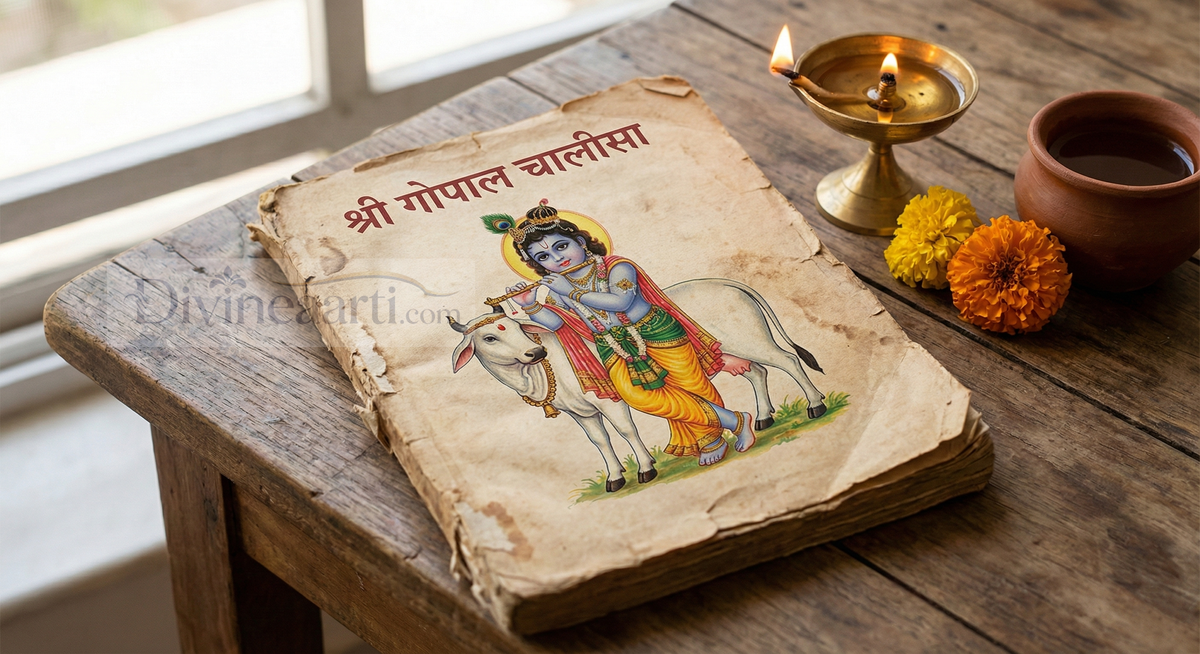
The Shri Gopal Chalisa is a loving devotional hymn of 40 verses dedicated to Bal Gopal, the child form of Lord Krishna. "Gopal" means "Protector of Cows," reflecting Krishna's childhood spent herding cows in Vrindavan with his cowherd friends (Gopas).
Bal Gopal is depicted as the adorable butter-thief (Makhan Chor) who would steal butter from the homes of gopis, the mischievous child who showed the universe in his mouth to Mother Yashoda, and the divine baby who enchanted all of Gokul with his innocent pranks.
Worshipping Gopal invokes the mood of vatsalya bhakti - parental love for God. Devotees approach Bal Gopal as their own child, nurturing this loving relationship through feeding, dressing, and caring for his deity form (Laddu Gopal).
Bal Gopal's Divine Love | Gopal Leela Mahima
The Butter Thief
Krishna's butter-stealing pastimes represent the divine stealing the hearts of his devotees. Just as he couldn't resist fresh butter, he cannot resist the pure love of his devotees. This playful nature makes him the most accessible form of God.
Laddu Gopal Worship
Millions of devotees worship Laddu Gopal (small deity of baby Krishna) in their homes, treating him as their own child. They wake him, bathe him, dress him, feed him, and put him to sleep - creating an intimate relationship with the Divine.
Protector of Innocence
Gopal represents the protection of innocence, childhood, and purity. His worship is especially beneficial for children's welfare, safe pregnancies, and maintaining childlike devotion and wonder.
Shri Gopal Chalisa - 40 Sacred Verses | Gopal Chalisa Lyrics Hindi
॥ दोहा ॥
श्री राधापद कमल रज,सिर धरि यमुना कूल।

वरणो चालीसा सरस,सकल सुमंगल मूल॥

॥ चौपाई ॥
जय जय पूरण ब्रह्म बिहारी।दुष्ट दलन लीला अवतारी॥

जो कोई तुम्हरी लीला गावै।बिन श्रम सकल पदारथ पावै॥

श्री वसुदेव देवकी माता।प्रकट भये संग हलधर भ्राता॥

मथुरा सों प्रभु गोकुल आये।नन्द भवन में बजत बधाये॥

जो विष देन पूतना आई।सो मुक्ति दै धाम पठाई॥

तृणावर्त राक्षस संहार्यौ।पग बढ़ाय सकटासुर मार्यौ॥

खेल खेल में माटी खाई।मुख में सब जग दियो दिखाई॥

गोपिन घर घर माखन खायो।जसुमति बाल केलि सुख पायो॥

ऊखल सों निज अंग बँधाई।यमलार्जुन जड़ योनि छुड़ाई॥

बका असुर की चोंच विदारी।विकट अघासुर दियो सँहारी॥

ब्रह्मा बालक वत्स चुराये।मोहन को मोहन हित आये॥

बाल वत्स सब बने मुरारी।ब्रह्मा विनय करी तब भारी॥

काली नाग नाथि भगवाना।दावानल को कीन्हों पाना॥

सखन संग खेलत सुख पायो।श्रीदामा निज कन्ध चढ़ायो॥

चीर हरन करि सीख सिखाई।नख पर गिरवर लियो उठाई॥

दरश यज्ञ पत्निन को दीन्हों।राधा प्रेम सुधा सुख लीन्हों॥

नन्दहिं वरुण लोक सों लाये।ग्वालन को निज लोक दिखाये॥

शरद चन्द्र लखि वेणु बजाई।अति सुख दीन्हों रास रचाई॥

अजगर सों पितु चरण छुड़ायो।शंखचूड़ को मूड़ गिरायो॥

हने अरिष्टा सुर अरु केशी।व्योमासुर मार्यो छल वेषी॥

व्याकुल ब्रज तजि मथुरा आये।मारि कंस यदुवंश बसाये॥

मात पिता की बन्दि छुड़ाई।सान्दीपनि गृह विद्या पाई॥

पुनि पठयौ ब्रज ऊधौ ज्ञानी।प्रेम देखि सुधि सकल भुलानी॥

कीन्हीं कुबरी सुन्दर नारी।हरि लाये रुक्मिणि सुकुमारी॥

भौमासुर हनि भक्त छुड़ाये।सुरन जीति सुरतरु महि लाये॥

दन्तवक्र शिशुपाल संहारे।खग मृग नृग अरु बधिक उधारे॥

दीन सुदामा धनपति कीन्हों।पारथ रथ सारथि यश लीन्हों॥

गीता ज्ञान सिखावन हारे।अर्जुन मोह मिटावन हारे॥

केला भक्त बिदुर घर पायो।युद्ध महाभारत रचवायो॥

द्रुपद सुता को चीर बढ़ायो।गर्भ परीक्षित जरत बचायो॥

कच्छ मच्छ वाराह अहीशा।बावन कल्की बुद्धि मुनीशा॥

ह्वै नृसिंह प्रह्लाद उबार्यो।राम रुप धरि रावण मार्यो॥

जय मधु कैटभ दैत्य हनैया।अम्बरीय प्रिय चक्र धरैया॥

ब्याध अजामिल दीन्हें तारी।शबरी अरु गणिका सी नारी॥

गरुड़ासन गज फन्द निकन्दन।देहु दरश ध्रुव नयनानन्दन॥

देहु शुद्ध सन्तन कर सङ्गा।बाढ़ै प्रेम भक्ति रस रङ्गा॥

देहु दिव्य वृन्दावन बासा।छूटै मृग तृष्णा जग आशा॥

तुम्हरो ध्यान धरत शिव नारद।शुक सनकादिक ब्रह्म विशारद॥

जय जय राधारमण कृपाला।हरण सकल संकट भ्रम जाला॥

बिनसैं बिघन रोग दुःख भारी।जो सुमरैं जगपति गिरधारी॥

जो सत बार पढ़ै चालीसा।देहि सकल बाँछित फल शीशा॥

॥ छन्द ॥
गोपाल चालीसा पढ़ै नित,नेम सों चित्त लावई।

सो दिव्य तन धरि अन्त महँ,गोलोक धाम सिधावई॥

संसार सुख सम्पत्ति सकल,जो भक्तजन सन महँ चहैं।

'जयरामदेव' सदैव सो,गुरुदेव दाया सों लहैं॥

॥ दोहा ॥
प्रणत पाल अशरण शरण,करुणा-सिन्धु ब्रजेश।

चालीसा के संग मोहि,अपनावहु प्राणेश॥
॥ Doha ॥
Shri Radhapada Kamala Raja,Sira Dhari Yamuna Kula।

Varano Chalisa Sarasa,Sakala Sumangala Mula॥

॥ Chaupai ॥
Jaya Jaya Purana Brahma Bihari।Dushta Dalana Lila Avatari॥

Jo Koi Tumhari Lila Gavai।Bina Shrama Sakala Padaratha Pavai॥

Shri Vasudeva Devaki Mata।Prakata Bhaye Sanga Haladhara Bhrata॥

Mathura Son Prabhu Gokula Aye।Nanda Bhavana Mein Bajata Badhaye॥

Jo Visha Dena Putana Ai।So Mukti Dai Dhama Pathai॥

Trinavarta Rakshasa Sanharyau।Paga Badhaya Sakatasura Maryau॥

Khela Khela Mein Mati Khai।Mukha Mein Saba Jaga Diyo Dikhai॥

Gopina Ghara Ghara Makhana Khayo।Jasumati Bala Keli Sukha Payo॥

Ukhala Son Nija Anga Bandhai।Yamalarjuna Jada Yoni Chhudai॥

Baka Asura Ki Choncha Vidari।Vikata Aghasura Diyo Sanhari॥

Brahma Balaka Vatsa Churaye।Mohana Ko Mohana Hita Aye॥

Bala Vatsa Saba Bane Murari।Brahma Vinaya Kari Taba Bhari॥

Kali Naga Nathi Bhagavana।Davanala Ko Kinhon Pana॥

Sakhana Sanga Khelata Sukha Payo।Shridama Nija Kandha Chadhayo॥

Chira Harana Kari Sikha Sikhai।Nakha Para Giravara Liyo Uthai॥

Darasha Yajna Patnina Ko Dinhon।Radha Prema Sudha Sukha Linhon॥

Nandahin Varuna Loka Son Laye।Gvalana Ko Nija Loka Dikhaye॥

Sharada Chandra Lakhi Venu Bajai।Ati Sukha Dinhon Rasa Rachai॥

Ajagara Son Pitu Charana Chhudayo।Shankhachuda Ko Muda Girayo॥

Hane Arishta Sura Aru Keshi।Vyomasura Maryo Chhala Veshi॥

Vyakula Braja Taji Mathura Aye।Mari Kansa Yaduvansha Basaye॥

Mata Pita Ki Bandi Chhudayi।Sandipani Griha Vidya Pai॥

Puni Pathayau Braja Udhau Jnani।Prema Dekhi Sudhi Sakala Bhulani॥

Kinhin Kubari Sundara Nari।Hari Laye Rukmini Sukumari॥

Bhaumasura Hani Bhakta Chhudaye।Surana Jiti Surataru Mahi Laye॥

Dantavakra Shishupala Sanhare।Khaga Mriga Nriga Aru Badhika Udhare॥

Dina Sudama Dhanapati Kinhon।Paratha Ratha Sarathi Yasha Linhon॥

Gita Jnana Sikhavana Hare।Arjuna Moha Mitavana Hare॥

Kela Bhakta Bidura Ghara Payo।Yuddha Mahabharata Rachavayo॥

Drupada Suta Ko Chira Badhayo।Garbha Parikshita Jarata Bachayo॥

Kachchha Machchha Varaha Ahisha।Bavana Kalki Buddhi Munisha॥

Hvai Nrisinha Prahlada Ubaryo।Rama Rupa Dhari Ravana Maryo॥

Jaya Madhu Kaitabha Daitya Hanaiya।Ambariya Priya Chakra Dharaiya॥

Byadha Ajamila Dinhein Tari।Shabari Aru Ganika Si Nari॥

Garudasana Gaja Phanda Nikandana।Dehu Darasha Dhruva Nayananandana॥

Dehu Shuddha Santana Kara Sanga।Badhai Prema Bhakti Rasa Ranga॥

Dehu Divya Vrindavana Basa।Chhutai Mriga Trishna Jaga Asha॥

Tumharo Dhyana Dharata Shiva Narada।Shuka Sanakadika Brahma Visharada॥

Jaya Jaya Radharamana Kripala।Harana Sakala Sankata Bhrama Jala॥

Binasain Bighana Roga Duhkha Bhari।Jo Sumarain Jagapati Giradhari॥

Jo Sata Bara Padhai Chalisa।Dehi Sakala Banchhita Phala Shisha॥

॥ Chhanda ॥
Gopala Chalisa Padhai Nita,Nema Son Chitta Lavai।

So Divya Tana Dhari Anta Mahan,Goloka Dhama Sidhavai॥

Sansara Sukha Sampatti Sakala,Jo Bhaktajana Sana Mahan Chahain।

'Jayaramadeva' Sadaiva So,Gurudeva Daya Son Lahain॥

॥ Doha ॥
Pranata Pala Asharana Sharana,Karuna-Sindhu Brajesha।

Chalisa Ke Sanga Mohi,Apanavahu Pranesha॥
Detailed Meaning and Translation | Gopal Chalisa Meaning in English
Opening Doha - Auspicious Beginning
"श्री राधापद कमल राज,सिर धरि यमुना कुल।
वरणौ चालीसा सरस,सकल सुमंगल मूल॥"
Translation: "Shri Radha's lotus feet king, bearing on head Yamuna's lineage. Reciting beautiful Chalisa, root of all auspiciousness."
Meaning: Beginning with reverence to Radha's lotus feet and Yamuna's divine lineage, this Chalisa is the source of all auspiciousness.
Verse 1 - Eternal Krishna
"जय जय पुराण ब्रह्म बिहारी।दुष्ट दलन लीला अवतारी॥"
Translation: "Victory, victory to ancient Brahma's delight. Incarnation of playful destroyer of evil."
Meaning: Victory to Krishna, eternal delight of Brahma, who incarnates to playfully destroy evil forces.
Verse 2 - Lila's Power
"जो कोई तुम्हरी लीला गावै।बिना श्रम सकल पदारथ पावै॥"
Translation: "Whoever sings your leelas. Without effort gets all desired objects."
Meaning: Those who sing Krishna's divine leelas effortlessly obtain all their desires.
Verse 3 - Divine Birth
"श्री वसुदेव देवकी माता।प्रकट भये संग हलधर भ्राता॥"
Translation: "Shri Vasudeva, Devaki mother. Manifested with brother Haladhar (Balarama)."
Meaning: Krishna manifested from Vasudeva and Devaki, along with his brother Balarama.
Verse 4 - Gokula Arrival
"मथुरा सों प्रभु गोकुल आए।नंद भवन में बजता बढाए॥"
Translation: "From Mathura lord came to Gokula. In Nanda's home, increased the music."
Meaning: Krishna came from Mathura to Gokula and brought joy and music to Nanda's home.
Verse 5 - Putana's Liberation
"जो विष देना पुत्तना आई।सो मुक्ति दै धाम पठाई॥"
Translation: "Putana who came to give poison. Gave her liberation, sent to divine abode."
Meaning: The demoness Putana who came to poison Krishna was liberated and sent to the divine realm.
Verse 6 - Trinavarta and Shakatasura
"त्रिणावर्त राक्षस संहार्यौ।पगा बढाया शकटासुर मार्यौ॥"
Translation: "Destroyed Trinavarta demon. Increased feet, killed Shakatasura."
Meaning: Krishna destroyed the demon Trinavarta and killed Shakatasura by kicking the cart.
Verse 7 - Universe in Mouth
"खेल खेल में माटी खाई।मुख में सब जग दिख्यो दिखाई॥"
Translation: "Playing, ate dirt. Showed entire world in mouth."
Meaning: While playing, Krishna ate dirt and showed the entire universe in his mouth to Yashoda.
Verse 8 - Butter Thief
"गोपिन घर घर माखन खायो।जसुमति बाल केली सुख पायो॥"
Translation: "Ate butter from Gopis' houses. Enjoyed childhood sports with Yashomati."
Meaning: Krishna stole butter from Gopis' homes and enjoyed childhood play with mother Yashoda.
Verse 9 - Mortar Miracle
"उखल सों निज अंग बंधाई।यमलार्जुन जड़ योनि छुड़ाई॥"
Translation: "Tied own body to mortar. Liberated Yamalarjuna from tree birth."
Meaning: Krishna dragged the mortar he was tied to and liberated the twin Arjuna trees from their curse.
Verse 10 - Baka and Aghasura
"बक आसुर की चोंचा विदारी।विकट अघासुर दियो संहारी॥"
Translation: "Tore beak of Baka Asura. Destroyed terrible Aghasura."
Meaning: Krishna tore the beak of the crane demon Baka and destroyed the terrible demon Aghasura.
Verse 11 - Brahma's Lesson
"ब्रह्म बालक वत्स चुराये।मोहन को मोहन हित आए॥"
Translation: "Brahma stole calves and children. Came for benefit of the enchanter."
Meaning: Brahma stole Krishna's calves and friends to teach him a lesson, but it benefited the divine enchanter.
Verse 12 - Divine Manifestation
"बाल वत्स सब बने मुरारी।ब्रह्म विनय करि तब भरी॥"
Translation: "All calves and children became Murari. Then Brahma filled with humility."
Meaning: All calves and children manifested as Vishnu; Brahma was filled with humility.
Verse 13 - Kaliya and Forest Fire
"काली नाग नाथि भगवाना।दावानल को कीन्हों पाना॥"
Translation: "Danced on Kaliya serpent's head. Made forest fire drink."
Meaning: Krishna danced on the head of Kaliya serpent and made the forest fire drink water.
Verse 14 - Friendship with Shridama
"सखान संग खेलता सुख पायो।श्रीदाम निज कंधा चढ़ायो॥"
Translation: "Playing with friends, enjoyed happiness. Made Shridama ride on shoulder."
Meaning: Krishna enjoyed playing with friends and made Shridama ride on his shoulder.
Verse 15 - Govardhan Lesson
"चिर हरन करि शिक्षा सिखाई।नख पर गिरवर लियो उठाई॥"
Translation: "By stealing clothes, taught lesson. Lifted Govardhan on finger."
Meaning: Krishna taught Gopis a lesson by stealing their clothes and lifted Govardhan mountain on his finger.
Verse 16 - Yajna Offerings
"दर्श यज्ञ पत्नीना को दीन्हों।राधा प्रेम सुधा सुख लीन्हों॥"
Translation: "Gave to yajna wives darshan. Took nectar of Radha's love and happiness."
Meaning: Krishna gave darshan to the wives of yajna performers and experienced the nectar of Radha's love.
Verse 17 - Varuna's Abode
"नंदहिं वरुण लोक सों लाये।ग्वालना को निज लोक दिखाये॥"
Translation: "Brought Nanda from Varuna's world. Showed own world to cowherds."
Meaning: Krishna brought Nanda from Varuna's abode and showed his divine world to the cowherds.
Verse 18 - Rasa Dance
"शरद चन्द्र लखि वेणु बजाई।अति सुख दीन्हों रास रचाई॥"
Translation: "Seeing autumn moon, played flute. Gave great happiness, arranged Rasa dance."
Meaning: Seeing the autumn moon, Krishna played flute and arranged the divine Rasa dance giving immense joy.
Verse 19 - Father's Liberation
"अजगर सों पितु चरण छुड़ायो।शंखचूड़ को मूड़ गिरायो॥"
Translation: "Freed father's feet from python. Threw Shankhachud by twisting."
Meaning: Krishna freed his father's feet from the python demon and threw Shankhachud by twisting him.
Verse 20 - Demon Slaying
"हने अरिष्टा सुर अरु केशी।व्योमासुर मार्यो छल वेषी॥"
Translation: "Killed Arishta, Sur, and Keshi. Killed Vyomasura, deceiver in disguise."
Meaning: Krishna killed the demons Arishta, Sur, Keshi, and the disguised deceiver Vyomasura.
Verse 21 - Mathura Move
"व्याकुल ब्रज तजि मथुरा आए।मारि कंस यदुवंश बसाये॥"
Translation: "Leaving distressed Braj, came to Mathura. Killed Kansa, established Yadu dynasty."
Meaning: Leaving sorrowful Braj, Krishna went to Mathura, killed Kansa, and established the Yadu dynasty.
Verse 22 - Education
"मात पिता की बन्दि छुड़ाई।सान्दीपनि गृह विद्या पाई॥"
Translation: "Freed parents from imprisonment. Received education in Sandipani's home."
Meaning: Krishna freed his parents from Kansa's prison and received education from Guru Sandipani.
Verse 23 - Return to Braj
"पुनि पठयौ ब्रज ऊधौ ज्ञानी।प्रेम देखि सुधि सकल भुलानी॥"
Translation: "Again sent to Braj as wise cowherd. Seeing love, forgot all wisdom."
Meaning: Krishna returned to Braj as a wise cowherd, but seeing Braj's love, forgot all his scholarly knowledge.
Verse 24 - Rukmini's Abduction
"कीन्हीं कुबरी सुन्दर नारी।हरि लाये रुक्मिणि सुकुमारी॥"
Translation: "Made hunchbacked beautiful woman. Hari brought delicate Rukmini."
Meaning: Krishna cured the hunchbacked woman and abducted the delicate Rukmini.
Verse 25 - Narakasura's Defeat
"भौमासुर हनि भक्त छुड़ाये।सुरन जीति सुरतरु महि लाये॥"
Translation: "Killed Bhaumasura, freed devotees. Defeating gods, brought Parijata tree to earth."
Meaning: Krishna killed Narakasura (Bhaumasura), freed 16,000 imprisoned princesses, and brought the divine Parijata tree to earth.
Verse 26 - Enemy Destruction
"दन्तवक्र शिशुपाल संहारे।खग मृग नृग अरु बधिक उधारे॥"
Translation: "Destroyed Dantavakra and Shishupala. Saved birds, animals, humans and butchers."
Meaning: Krishna destroyed Dantavakra and Shishupala, and saved birds, animals, humans, and even butchers.
Verse 27 - Sudama's Blessing
"दीन सुदामा धनपति कीन्हों।पारथ रथ सारथि यश लीन्हों॥"
Translation: "Made poor Sudama wealthy. Became Arjuna's charioteer, earned fame."
Meaning: Krishna made poor Sudama wealthy and became Arjuna's charioteer in the Mahabharata war, earning great fame.
Verse 28 - Bhagavad Gita
"गीता ज्ञान सिखावन हारे।अर्जुन मोह मिटावन हारे॥"
Translation: "Taught Gita knowledge to Arjuna. Removed Arjuna's delusion."
Meaning: Krishna taught the divine knowledge of Bhagavad Gita to Arjuna and removed his confusion.
Verse 29 - Vidura's Blessing
"केला भक्त बिदुर घर पायो।युद्ध महाभारत रचवायो॥"
Translation: "Made Vidura a devotee, got his home. Made Mahabharata war happen."
Meaning: Krishna blessed Vidura with devotion and his home, and orchestrated the Mahabharata war.
Verse 30 - Draupadi's Protection
"द्रुपद सुता को चीर बढ़ायो।गर्भ परीक्षित जरत बचायो॥"
Translation: "Increased Draupadi's sari. Saved Parikshit from womb curse."
Meaning: Krishna miraculously increased Draupadi's sari and saved the unborn Parikshit from Ashwatthama's curse.
Verse 31 - Ten Incarnations
"कच्छ मच्छ वाराह अहीशा।बावन कल्की बुद्धि मुनीशा॥"
Translation: "Tortoise, fish, boar, Narasimha. Twenty-four, Kalki, Buddha, sage Kapila."
Meaning: Krishna is the source of all incarnations: Kurma, Matsya, Varaha, Narasimha, Vamana, Parashurama, Rama, Krishna, Buddha, Kalki.
Verse 32 - Prahlada and Ravana
"ह्वै नृसिंह प्रह्लाद उबार्यो।राम रुप धरि रावण मार्यो॥"
Translation: "Became Narasimha, saved Prahlada. Taking Rama form, killed Ravana."
Meaning: As Narasimha, Krishna saved Prahlada; as Rama, he killed Ravana.
Verse 33 - Demon Slayer
"जय मधु कैटभ दैत्य हनैया।अम्बरीय प्रिय चक्र धरैया॥"
Translation: "Victory to slayer of Madhu-Kaitabha demons. Beloved of Ambarish, holder of chakra."
Meaning: Victory to Krishna who killed Madhu and Kaitabha demons, beloved of Ambarish, wielder of Sudarshana chakra.
Verse 34 - Sinners' Salvation
"ब्याध अजामिल दीन्हें तारी।शबरी अरु गणिका सी नारी॥"
Translation: "Liberated hunter and Ajamila. Shabari and prostitute-like woman."
Meaning: Krishna liberated the hunter, Ajamila, Shabari, and even a prostitute through his grace.
Verse 35 - Divine Darshan
"गरुड़ासन गज फन्द निकन्दन।देहु दरश ध्रुव नयनानन्दन॥"
Translation: "Seated on Garuda, remover of elephant's trap. Give darshan, joy of Dhruva's eyes."
Meaning: O Krishna seated on Garuda, remover of Gajendra's suffering, give darshan that brings joy to Dhruva's eyes.
Verse 36 - Pure Association
"देहु शुद्ध सन्तन कर सङ्गा।बाढ़ै प्रेम भक्ति रस रङ्गा॥"
Translation: "Give association of pure saints. Increase love, devotion, rasa, divine play."
Meaning: Grant association with pure saints that increases divine love, devotion, and spiritual ecstasy.
Verse 37 - Vrindavan Abode
"देहु दिव्य वृन्दावन बासा।छूटै मृग तृष्णा जग आशा॥"
Translation: "Give divine Vrindavan residence. Free from worldly desires and hopes."
Meaning: Grant residence in divine Vrindavan that frees one from worldly illusions and desires.
Verse 38 - Divine Meditators
"तुम्हरो ध्यान धरत शिव नारद।शुक सनकादिक ब्रह्म विशारद॥"
Translation: "Shiva, Narada meditate on you. Shuka, Sanaka etc., Brahma experts."
Meaning: Shiva, Narada, Shuka, Sanaka and other Brahma-knowers constantly meditate on Krishna.
Verse 39 - Compassionate Lord
"जय जय राधारमण कृपाला।हरण सकल संकट भ्रम जाला॥"
Translation: "Victory victory to Radharaman the compassionate. Remover of all obstacles, illusion net."
Meaning: Victory to Radharaman (Krishna), the compassionate one who removes all obstacles and the net of illusions.
Verse 40 - Remover of Suffering
"बिनसैं बिघन रोग दुःख भारी।जो सुमरैं जगपति गिरधारी॥"
Translation: "Obstacles, diseases, heavy sorrows vanish. Whoever remembers lord Giridhari."
Meaning: All obstacles, diseases, and great sorrows vanish for those who remember Lord Giridhari (Krishna).
Verse 41 - Chalisa Benefits
"जो सत बार पढ़ै चालीसा।देहि सकल बाँछित फल शीशा॥"
Translation: "Whoever reads Chalisa hundred times. Give all desired fruits immediately."
Meaning: Those who recite this Chalisa 100 times receive all their desired blessings immediately.
Chhanda - Divine Body
"गोपाल चालीसा पढ़ै नित,नेम सों चित्त लावई।
सो दिव्य तन धरि अन्त महँ,गोलोक धाम सिधावई॥"
Translation: "Whoever daily reads Gopal Chalisa, applies mind with discipline. That one takes divine body at end, reaches Goloka abode."
Meaning: Those who daily recite Gopal Chalisa with focused mind attain a divine body at death and reach Goloka.
Chhanda - Guru's Grace
"संसार सुख सम्पत्ति सकल,जो भक्तजन सन महँ चहैं।
'जयरामदेव' सदैव सो,गुरुदेव दाया सों लहैं॥"
Translation: "All worldly happiness and wealth that devotees desire. 'Jayaramadeva' always they, receive from Guru's grace."
Meaning: Devotees receive all worldly happiness and wealth they desire through the grace of Guru Jayaramadeva.
Closing Doha - Refuge
"प्रणत पाल अशरण शरण,करुणा-सिन्धु ब्रजेश।
चालीसा के संग मोहि,अपनावहु प्राणेश॥"
Translation: "Protector of surrendered, refuge of shelterless, ocean of compassion, lord of Braj. With Chalisa, accept me, lord of life."
Meaning: O compassionate lord of Braj, protector of the surrendered and refuge of the helpless, accept me along with this Chalisa.
Spiritual Benefits of Gopal Chalisa | Gopal Chalisa Benefits
Family Blessings
- Child Welfare: Protection and health for children
- Fertility: Blessings for conception
- Happy Home: Joy and laughter in family
- Parental Love: Deepened bond with children
Spiritual Benefits
- Innocence: Return to childlike purity
- Divine Love: Experience of vatsalya bhakti
- Joy: Inner happiness and contentment
- Krishna's Grace: Direct blessings of the Lord
How to Recite Gopal Chalisa | Gopal Chalisa Path Vidhi
Preparation
- Take a bath and wear clean clothes
- Place Laddu Gopal or Bal Gopal image on altar
- Offer butter, mishri, and tulsi
- Light lamp and incense
Special Offerings
- Fresh butter (makhan)
- Mishri (rock candy)
- Panchamrit (milk, curd, honey, ghee, sugar)
- Fruits and sweets
Best Times & Occasions for Gopal Chalisa
Janmashtami
Krishna Janmashtami (Krishna's birthday) is the most auspicious time for Gopal worship. Midnight celebrations commemorate his birth.
Other Auspicious Times
- Wednesday: Associated with Krishna
- Ekadashi: Fasting days sacred to Vishnu
- Purnima: Full moon days
- Morning Worship: When Gopal "wakes up"
Historical Significance | Gopal Krishna Katha
The tradition of Laddu Gopal worship became particularly prominent through the Vallabhacharya sampradaya (Pushti Marg). The famous Shrinathji temple in Nathdwara houses a beautiful form of child Krishna. This tradition emphasizes seva (loving service) to the deity as a child.
❓ Frequently Asked Questions About Gopal Chalisa
What is Gopal Chalisa and who is Gopal?
Gopal Chalisa is a 40-verse devotional hymn dedicated to Lord Gopal (Krishna as the divine cowherd). The name 'Gopal' means 'protector of cows' and refers to young Krishna who spent his childhood in Vrindavan tending cows and enchanting everyone with his flute. The Chalisa celebrates his playful childhood, his love for devotees, and his supreme divine nature.
When should one recite Gopal Chalisa?
Gopal Chalisa can be recited daily, especially during early morning and evening prayers. It is particularly auspicious during Janmashtami, on Wednesdays and Fridays, during Gopashtami (celebrating Krishna the cowherd), and in the months of Bhadrapada and Shravan. Parents often recite it for the well-being and protection of their children.
What are the benefits of chanting Gopal Chalisa?
Chanting Gopal Chalisa bestows divine love, joy, and protection. It is especially powerful for the well-being of children, bringing them health, intelligence, and happiness. For adults, it cultivates innocent devotion (Bal Bhakti), removes stress and worry, and brings the sweetness of Krishna's divine grace into daily life. It promotes loving family relationships and contentment.
How is Gopal Chalisa different from Krishna Chalisa?
While both celebrate Lord Krishna, Gopal Chalisa specifically focuses on Krishna's childhood and cowherd form in Vrindavan — his playful nature, his love for cows, his enchanting flute, and his innocent relationships with the Gopis and Gopas. Krishna Chalisa covers a broader scope including the Mahabharata, Bhagavad Gita, and his role as the supreme divine being.
Can Gopal Chalisa be recited for children's well-being?
Yes, Gopal Chalisa is especially recommended for the protection and well-being of children. Lord Gopal is the divine child himself, and his Chalisa invokes his protective grace over young ones. Parents often recite it daily for their children's health, safety, intelligence, and overall growth. It is also recited during Bal Gopal Puja and Annaprashan ceremonies.