
Giriraj Chalisa Lyrics in Hindi | Shri Giriraj Chalisa with Meaning
Introduction to Shri Giriraj Chalisa | Giriraj Chalisa Meaning
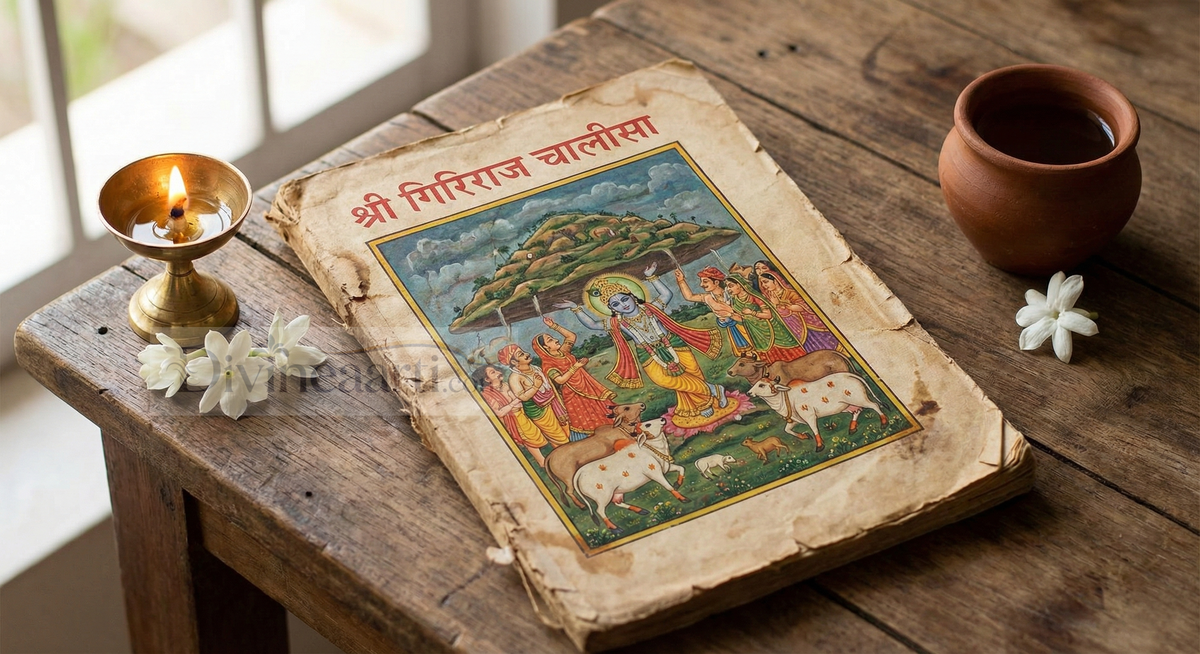
The Shri Giriraj Chalisa is a devotional hymn of 40 verses dedicated to Giriraj Govardhan, the sacred mountain lifted by Lord Krishna on his little finger to protect the people of Vrindavan from Indra's devastating rains.
Giriraj, meaning "King of Mountains," is worshipped as a form of Lord Krishna himself. The mountain is located in the Braj region of Uttar Pradesh and is circumambulated (Parikrama) by millions of devotees who walk the 21-kilometer path around it.
Devotees believe that Govardhan Hill is alive and conscious, having descended from Goloka (Krishna's eternal abode). Worshipping Giriraj grants the same blessings as worshipping Krishna directly, bringing prosperity, protection, and divine grace.
Krishna's Mountain: The Divine Protector | Giriraj Govardhan Mahima
The Govardhan Leela
When young Krishna convinced the residents of Vrindavan to worship Govardhan instead of Indra, the rain god became furious and sent devastating storms. Krishna lifted the entire mountain on his little finger for seven days and nights, sheltering all the villagers and their cattle beneath it.
Non-Different from Krishna
According to Vaishnava tradition, Giriraj is Krishna's body manifested as a mountain. Stones from Govardhan (Govardhan Shilas) are worshipped in homes and temples as sacred representations of the Lord.
Annakut Festival
The day after Diwali is celebrated as Govardhan Puja or Annakut, when devotees offer 56 types of food items (Chhappan Bhog) to Giriraj, commemorating Krishna's divine act of protecting his devotees.
Shri Giriraj Chalisa - 40 Sacred Verses | Giriraj Chalisa Lyrics Hindi
॥ दोहा ॥
बन्दहुँ वीणा वादिनी,धरि गणपति को ध्यान।

महाशक्ति राधा सहित,कृष्ण करौ कल्याण॥

सुमिरन करि सब देवगण,गुरु पितु बारम्बार।

बरनौ श्रीगिरिराज यश,निज मति के अनुसार॥

॥ चौपाई ॥
जय हो जय बंदित गिरिराजा।ब्रज मण्डल के श्री महाराजा॥

विष्णु रूप तुम हो अवतारी।सुन्दरता पै जग बलिहारी॥

स्वर्ण शिखर अति शोभा पामें।सुर मुनि गण दरशन कूं आमें॥

शांत कन्दरा स्वर्ग समाना।जहाँ तपस्वी धरते ध्याना॥

द्रोणगिरि के तुम युवराजा।भक्तन के साधौ हौ काजा॥

मुनि पुलस्त्य जी के मन भाये।जोर विनय कर तुम कूँ लाये॥

मुनिवर संघ जब ब्रज में आये।लखि ब्रजभूमि यहाँ ठहराये॥

विष्णु धाम गौलोक सुहावन।यमुना गोवर्धन वृन्दावन॥

देख देव मन में ललचाये।बास करन बहु रूप बनाये॥

कोउ बानर कोउ मृग के रूपा।कोउ वृक्ष कोउ लता स्वरूपा॥

आनन्द लें गोलोक धाम के।परम उपासक रूप नाम के॥

द्वापर अंत भये अवतारी।कृष्णचन्द्र आनन्द मुरारी॥

महिमा तुम्हरी कृष्ण बखानी।पूजा करिबे की मन ठानी॥

ब्रजवासी सब के लिये बुलाई।गोवर्द्धन पूजा करवाई॥

पूजन कूँ व्यञ्जन बनवाये।ब्रजवासी घर घर ते लाये॥

ग्वाल बाल मिलि पूजा कीनी।सहस भुजा तुमने कर लीनी॥

स्वयं प्रकट हो कृष्ण पूजा में।माँग माँग के भोजन पामें॥

लखि नर नारि मन हरषामें।जै जै जै गिरिवर गुण गामें॥

देवराज मन में रिसियाए।नष्ट करन ब्रज मेघ बुलाए॥

छाँया कर ब्रज लियौ बचाई।एकउ बूँद न नीचे आई॥

सात दिवस भई बरसा भारी।थके मेघ भारी जल धारी॥

कृष्णचन्द्र ने नख पै धारे।नमो नमो ब्रज के रखवारे॥

करि अभिमान थके सुरसाई।क्षमा माँग पुनि अस्तुति गाई॥

त्राहि माम् मैं शरण तिहारी।क्षमा करो प्रभु चूक हमारी॥

बार बार बिनती अति कीनी।सात कोस परिकम्मा दीनी॥

संग सुरभि ऐरावत लाये।हाथ जोड़ कर भेंट गहाये॥

अभय दान पा इन्द्र सिहाये।करि प्रणाम निज लोक सिधाये॥

जो यह कथा सुनैं चित लावें।अन्त समय सुरपति पद पावें॥

गोवर्द्धन है नाम तिहारौ।करते भक्तन कौ निस्तारौ॥

जो नर तुम्हरे दर्शन पावें।तिनके दुःख दूर ह्वै जावें॥

कुण्डन में जो करें आचमन।धन्य धन्य वह मानव जीवन॥

मानसी गंगा में जो न्हावें।सीधे स्वर्ग लोक कूँ जावें॥

दूध चढ़ा जो भोग लगावें।आधि व्याधि तेहि पास न आवें॥

जल फल तुलसी पत्र चढ़ावें।मन वांछित फल निश्चय पावें॥

जो नर देत दूध की धारा।भरौ रहे ताकौ भण्डारा॥

करें जागरण जो नर कोई।दुख दरिद्र भय ताहि न होई॥

'श्याम' शिलामय निज जन त्राता।भक्ति मुक्ति सरबस के दाता॥

पुत्र हीन जो तुम कूँ ध्यावें।ताकूँ पुत्र प्राप्ति ह्वै जावें॥

दंडौती परिकम्मा करहीं।ते सहजहि भवसागर तरहीं॥

कलि में तुम सम देव न दूजा।सुर नर मुनि सब करते पूजा॥

॥ दोहा ॥
जो यह चालीसा पढ़ै,सुनै शुद्ध चित्त लाय।

सत्य सत्य यह सत्य है,गिरिवर करै सहाय॥

क्षमा करहुँ अपराध मम,त्राहि माम् गिरिराज।

श्याम बिहारी शरण में,गोवर्द्धन महाराज॥
॥ Doha ॥
Bandahun Vina Vadini,Dhari Ganapati Ko Dhyana।

Mahashakti Radha Sahita,Krishna Karau Kalyana॥

Sumirana Kari Saba Devagana,Guru Pitu Barambara।

Baranau Shrigiriraja Yasha,Nija Mati Ke Anusara॥

॥ Chaupai ॥
Jaya Ho Jaya Bandita Giriraja।Braja Mandala Ke Shri Maharaja॥

Vishnu Rupa Tuma Ho Avatari।Sundarata Pai Jaga Balihari॥

Svarna Shikhara Ati Shobha Pamein।Sura Muni Gana Darashana Kun Amein॥

Shanta Kandara Svarga Samana।Jahan Tapasvi Dharate Dhyana॥

Dronagiri Ke Tuma Yuvaraja।Bhaktana Ke Sadhau Hau Kaja॥

Muni Pulastya Ji Ke Mana Bhaye।Jora Vinaya Kara Tuma Kun Laye॥

Munivara Sangha Jaba Braja Mein Aye।Lakhi Brajabhumi Yahan Thaharaye॥

Vishnu Dhama Gauloka Suhavana।Yamuna Govardhana Vrindavana॥

Dekha Deva Mana Mein Lalachaye।Basa Karana Bahu Rupa Banaye॥

Kou Banara Kou Mriga Ke Rupa।Kou Vriksha Kou Lata Svarupa॥

Ananda Lein Goloka Dhama Ke।Parama Upasaka Rupa Nama Ke॥

Dvapara Anta Bhaye Avatari।Krishnachandra Ananda Murari॥

Mahima Tumhari Krishna Bakhani।Puja Karibe Ki Mana Thani॥

Brajavasi Saba Ke Liye Bulai।Govarddhana Puja Karavai॥

Pujana Kun Vyanjana Banavaye।Brajavasi Ghara Ghara Te Laye॥

Gvala Bala Mili Puja Kini।Sahasa Bhuja Tumane Kara Lini॥

Svayam Prakata Ho Krishna Puja Mein।Manga Manga Ke Bhojana Pamein॥

Lakhi Nara Nari Mana Harashamein।Jai Jai Jai Girivara Guna Gamein॥

Devaraja Mana Mein Risiyaye।Nashta Karana Braja Megha Bulaye॥

Chhanya Kara Braja Liyau Bachai।Ekau Bunda Na Niche Ai॥

Sata Divasa Bhai Barasa Bhari।Thake Megha Bhari Jala Dhari॥

Krishnachandra Ne Nakha Pai Dhare।Namo Namo Braja Ke Rakhavare॥

Kari Abhimana Thake Surasai।Kshama Manga Puni Astuti Gai॥

Trahi Mam Main Sharana Tihari।Kshama Karo Prabhu Chuka Hamari॥

Bara Bara Binati Ati Kini।Sata Kosa Parikamma Dini॥

Sanga Surabhi Airavata Laye।Hatha Joda Kara Bhenta Gahaye॥

Abhaya Dana Pa Indra Sihaye।Kari Pranama Nija Loka Sidhaye॥

Jo Yaha Katha Sunain Chita Lavein।Anta Samaya Surapati Pada Pavein॥

Govarddhana Hai Nama Tiharau।Karate Bhaktana Kau Nistarau॥

Jo Nara Tumhare Darshana Pavein।Tinake Duhkha Dura Hvai Javein॥

Kundana Mein Jo Karein Achamana।Dhanya Dhanya Vaha Manava Jivana॥

Manasi Ganga Mein Jo Nhavein।Sidhe Svarga Loka Kun Javein॥

Dudha Chadha Jo Bhoga Lagavein।Adhi Vyadhi Tehi Pasa Na Avein॥

Jala Phala Tulasi Patra Chadhavein।Mana Vanchhita Phala Nishchaya Pavein॥

Jo Nara Deta Dudha Ki Dhara।Bharau Rahe Takau Bhandara॥

Karein Jagarana Jo Nara Koi।Dukha Daridra Bhaya Tahi Na Hoi॥

'Shyama' Shilamaya Nija Jana Trata।Bhakti Mukti Sarabasa Ke Data॥

Putra Hina Jo Tuma Kun Dhyavein।Takun Putra Prapti Hvai Javein॥

Dandauti Parikamma Karahin।Te Sahajahi Bhavasagara Tarahin॥

Kali Mein Tuma Sama Deva Na Duja।Sura Nara Muni Saba Karate Puja॥

॥ Doha ॥
Jo Yaha Chalisa Padhai,Sunai Shuddha Chitta Laya।

Satya Satya Yaha Satya Hai,Girivara Karai Sahaya॥

Kshama Karahun Aparadha Mama,Trahi Mam Giriraja।

Shyama Bihari Sharana Mein,Govarddhana Maharaja॥
Detailed Meaning and Translation | Giriraj Chalisa Meaning in English
Opening Doha - Devotion to Ganesha
"बंदहुं विना वादिनी,धरि गणपति को ध्यान।
महाशक्ति राधा सहित,कृष्ण करौ कल्याण॥"
Translation: "Without any dispute, meditating on Ganesha. With great power Radha, do Krishna's welfare."
Meaning: Beginning with devotion to Ganesha, the composer seeks Krishna's welfare along with Radha's divine power.
Opening Doha - Remembering Deities
"सुमिरन करि सब देवगण,गुरु पितु बरम्बार।
बरणौ श्रीगिरिराज यश,निज मति के अनुसार॥"
Translation: "Remembering all gods, guru and father repeatedly. Describe Shri Giriraj's glory according to my intellect."
Meaning: Remembering all deities, guru, and ancestors, the composer describes Giriraj's glory to the best of his understanding.
Verse 1 - Victory to Giriraj
"जय हो जय बंदित गिरिराज।ब्रज मंडल के श्री महाराज॥"
Translation: "Victory, victory to praised Giriraj. Shri king of Braj Mandal."
Meaning: Praising Giriraj (Govardhan mountain) as the glorious king of the Braj region.
Verse 2 - Vishnu's Incarnation
"विष्णु रूप तुम हो अवतारी।सुंदरता पै जग बलीहारी॥"
Translation: "You are incarnation of Vishnu form. World is sacrificed at your beauty."
Meaning: Giriraj is an incarnation of Lord Vishnu, whose beauty captivates the entire world.
Verse 3 - Golden Peaks
"स्वर्ण शिखर अति शोभा पमें।सुर मुनि गण दर्शन कुन अमें॥"
Translation: "Golden peaks get great splendor. Gods and sages desire your darshan."
Meaning: Giriraj's golden peaks are supremely beautiful; gods and sages yearn to see him.
Verse 4 - Peaceful Caves
"शांत कंदर स्वर्ग समाना।जहाँ तपस्वी धरते ध्यान॥"
Translation: "Peaceful caves equal to heaven. Where ascetics hold meditation."
Meaning: Giriraj's peaceful caves are like heaven where sages meditate.
Verse 5 - Crown Prince of Dronagiri
"द्रोणागिरि के तुम युवराज।भक्तन के साधौ हौ काज॥"
Translation: "You are crown prince of Dronagiri. You fulfill devotees' tasks."
Meaning: Giriraj is the crown prince of the Drona mountain range and fulfills devotees' wishes.
Verse 6 - Sage Pulastya's Wish
"मुनि पुलस्त्य जी के मन भये।जोर विनय कर तुम कुन लये॥"
Translation: "Sage Pulastya's mind became pleased. With force and humility you brought him."
Meaning: Sage Pulastya was pleased and Giriraj brought him with both force and humility.
Verse 7 - Sages in Braj
"मुनिवर संघ जब ब्रज में आए।लखि ब्रजभूमि यहाँ ठहराए॥"
Translation: "When group of great sages came to Braj. Seeing Braj land, stayed here."
Meaning: When great sages came to Braj, they stayed upon seeing the beautiful land.
Verse 8 - Divine Abode
"विष्णु धाम गौलोक सुहावना।यमुना गोवर्धन वृंदावन॥"
Translation: "Vishnu's abode beautiful Goloka. Yamuna, Govardhan, Vrindavan."
Meaning: The beautiful Goloka (Vishnu's abode) includes Yamuna, Govardhan, and Vrindavan.
Verse 9 - Divine Jealousy
"देखा देव मन में ललचाए।बसा करन बहु रूप बनाए॥"
Translation: "Gods saw, became greedy in mind. Made many forms to reside."
Meaning: The gods became jealous seeing this divine place and took many forms to reside there.
Verse 10 - Various Forms
"कौ बनर कौ मृग के रूपा।कौ वृक्ष कौ लता स्वरूपा॥"
Translation: "Some became monkeys, some deer forms. Some trees, some creepers forms."
Meaning: The gods took forms of monkeys, deer, trees, and creepers to live in Braj.
Verse 11 - Supreme Devotees
"आनंद लें गोलोक धाम के।परम उपासक रूप नाम के॥"
Translation: "Take joy of Goloka abode. Supreme worshippers by form and name."
Meaning: They enjoy Goloka's bliss as supreme devotees in form and name.
Verse 12 - Krishna's Incarnation
"द्वापर अंत भये अवतारी।कृष्णचन्द्र आनंद मुरारी॥"
Translation: "At end of Dvapara became incarnate. Krishnachandra, joy, enemy of Mura."
Meaning: At the end of Dvapara Yuga, Krishna incarnated as the joyful destroyer of the demon Mura.
Verse 13 - Krishna's Glory
"महिमा तुम्हारी कृष्ण बखानी।पूजा करिबे कि मन ठानी॥"
Translation: "Your glory Krishna narrated. Made up mind to worship."
Meaning: Krishna narrated Giriraj's glory and decided to worship him.
Verse 14 - Govardhan Puja
"ब्रजवासी सब के लिये बुलाई।गोवर्द्धन पूजा करवाई॥"
Translation: "Called all Braj residents. Made them do Govardhan worship."
Meaning: Krishna called all Braj residents and had them worship Govardhan mountain.
Verse 15 - Food Offerings
"पूजन कुन व्यंजन बनवाये।ब्रजवासी घर घर ते लाये॥"
Translation: "For worship made various dishes. Braj residents brought from every house."
Meaning: For the worship, various dishes were prepared and Braj residents brought offerings from every home.
Verse 16 - Krishna's Manifestation
"ग्वाल बाल मिलि पूजा कीनी।सहस भुजा तुमने कर लीनी॥"
Translation: "Cowherd boys together did worship. You accepted thousand arms."
Meaning: The cowherd boys worshipped together and Giriraj accepted their offerings with a thousand arms.
Verse 17 - Krishna Appears
"स्वयं प्रकट हो कृष्ण पूजा में।माँग माँग के भोजन पामें॥"
Translation: "Himself manifested in Krishna's worship. Begging, begging, got food."
Meaning: Giriraj himself appeared in Krishna's worship and received food by begging.
Verse 18 - Universal Joy
"लखि नर नारि मन हरषामें।जै जै जै गिरिवर गुण गामें॥"
Translation: "Seeing men and women minds became joyful. Victory victory victory, sing mountain king's virtues."
Meaning: Seeing this, men and women were filled with joy and sang praises of the mountain king.
Verse 19 - Indra's Anger
"देवराज मन में रिसियाए।नष्ट करन ब्रज मेघ बुलाए॥"
Translation: "King of gods became angry in mind. To destroy Braj, called clouds."
Meaning: Indra (king of gods) became angry and summoned clouds to destroy Braj.
Verse 20 - Krishna's Protection
"छाँया कर ब्रज लियौ बचाई।एकउ बूँद न नीचे आई॥"
Translation: "Made shade, saved Braj. Not a single drop fell below."
Meaning: Krishna lifted Giriraj as an umbrella to protect Braj; not a single raindrop fell.
Verse 21 - Seven Days of Rain
"सात दिवस भई बरसा भारी।थके मेघ भारी जल धारी॥"
Translation: "Seven days heavy rain occurred. Clouds tired carrying heavy water."
Meaning: It rained heavily for seven days; the clouds became exhausted carrying the heavy water.
Verse 22 - Krishna's Finger
"कृष्णचन्द्र ने नख पै धारे।नमो नमो ब्रज के रखवारे॥"
Translation: "Krishnachandra held on finger. Salutations salutations to Braj's protector."
Meaning: Krishna held the entire mountain on his little finger; salutations to Braj's protector.
Verse 23 - Indra's Pride Broken
"करि अभिमान थके सुरसाई।क्षमा माँग पुनि अस्तुति गाई॥"
Translation: "Doing pride, tired lord of gods. Asked forgiveness, then sang praises."
Meaning: Indra's pride was broken; he became tired and asked forgiveness, then sang praises.
Verse 24 - Indra's Surrender
"त्राहि माम् मैं शरण तिहारी।क्षमा करो प्रभु चूक हमारी॥"
Translation: "Save me, I take your refuge. Forgive lord our mistake."
Meaning: Indra surrendered saying "Save me, I take refuge in you. Forgive our mistake, lord."
Verse 25 - Repeated Prayers
"बार बार बिनती अति कीनी।सात कोस परिकम्मा दीनी॥"
Translation: "Again and again made great requests. Gave seven kos parikrama."
Meaning: Indra repeatedly made humble requests and performed seven kos (miles) circumambulation.
Verse 26 - Divine Gifts
"संग सुरभि ऐरावत लाये।हाथ जोड़ कर भेंट गहाये॥"
Translation: "Brought with Surabhi, Airavata. Folding hands, accepted gifts."
Meaning: Indra brought his divine cow Surabhi and elephant Airavata, offering them with folded hands.
Verse 27 - Fearless Assurance
"अभय दान पा इन्द्र सिहाये।करि प्रणाम निज लोक सिधाये॥"
Translation: "Got fearless boon, Indra became happy. Doing salutation, went to his world."
Meaning: Indra received the boon of fearlessness, became happy, bowed, and returned to his world.
Verse 28 - Story's Power
"जो यह कथा सुनैं चित लावें।अन्त समय सुरपति पद पावें॥"
Translation: "Whoever hears this story with concentration. At end time gets Indra's position."
Meaning: Whoever hears this story attentively attains Indra's position at death.
Verse 29 - Govardhan's Name
"गोवर्द्धन है नाम तिहारौ।करते भक्तन कौ निस्तारौ॥"
Translation: "Govardhan is your name. You liberate devotees."
Meaning: Govardhan is Giriraj's name, and he liberates his devotees.
Verse 30 - Darshan's Power
"जो नर तुम्हरे दर्शन पावें।तिनके दुःख दूर ह्वै जावें॥"
Translation: "Whoever gets your darshan. Their sorrows go far away."
Meaning: Those who get Giriraj's darshan have all their sorrows removed.
Verse 31 - Sacred Bathing
"कुण्डन में जो करें आचमन।धन्य धन्य वह मानव जीवन॥"
Translation: "Whoever does achaman in kunds. Blessed blessed that human life."
Meaning: Those who perform ritual sipping in Giriraj's sacred ponds have blessed human lives.
Verse 32 - Mansi Ganga Bath
"मानसी गंगा में जो न्हावें।सीधे स्वर्ग लोक कूँ जावें॥"
Translation: "Whoever bathes in Mansi Ganga. Go straight to heaven."
Meaning: Those who bathe in the sacred Mansi Ganga stream go directly to heaven.
Verse 33 - Milk Offering
"दूध चढ़ा जो भोग लगावें।आधि व्याधि तेहि पास न आवें॥"
Translation: "Whoever offers milk as bhog. Fever and diseases don't come near them."
Meaning: Those who offer milk to Giriraj are protected from fever and all diseases.
Verse 34 - Water, Fruit, Tulsi
"जल फल तुलसी पत्र चढ़ावें।मन वांछित फल निश्चय पावें॥"
Translation: "Offer water, fruit, tulsi leaves. Certainly get mind-desired fruits."
Meaning: Those who offer water, fruits, and tulsi leaves to Giriraj get their desired wishes fulfilled.
Verse 35 - Milk Stream
"जो नर देत दूध की धारा।भरौ रहे ताकौ भण्डारा॥"
Translation: "Whoever gives stream of milk. Their storehouse remains full."
Meaning: Those who offer continuous streams of milk to Giriraj have their granaries always full.
Verse 36 - Night Vigil
"करें जागरण जो नर कोई।दुख दरिद्र भय ताहि न होई॥"
Translation: "Whoever does night vigil. Pain, poverty, fear don't happen to them."
Meaning: Those who keep night vigil for Giriraj are free from pain, poverty, and fear.
Verse 37 - Shyam Protector
"'श्याम' शिलामय निज जन त्राता।भक्ति मुक्ति सर्वस के दाता॥"
Translation: "Shyam (Krishna) stone-form protector of own people. Giver of devotion and liberation to all."
Meaning: Giriraj is Krishna in stone form, protector of devotees, giver of devotion and liberation to all.
Verse 38 - Childless Devotees
"पुत्र हीन जो तुम कूँ ध्यावें।ताकूँ पुत्र प्राप्ति ह्वै जावें॥"
Translation: "Childless who meditate on you. They get son attainment."
Meaning: Childless devotees who meditate on Giriraj obtain children.
Verse 39 - Dandavat Parikrama
"दंडौती परिकम्मा करहीं।ते सहजहि भवसागर तरहीं॥"
Translation: "Those who do dandavat parikrama. They easily cross worldly ocean."
Meaning: Those who circumambulate Giriraj doing dandavat (full prostration) easily cross the ocean of worldly existence.
Verse 40 - Unique in Kali Yuga
"कलि में तुम सम देव न दूजा।सुर नर मुनि सब करते पूजा॥"
Translation: "In Kali no god like you. Gods, men, sages all do worship."
Meaning: In Kali Yuga, there is no god equal to Giriraj; gods, humans, and sages all worship him.
Closing Doha - Truth and Help
"जो यह चालीसा पढ़ै,सुनै शुद्ध चित्त लाय।
सत्य सत्य यह सत्य है,गिरिवर करै सहाय॥"
Translation: "Whoever reads this Chalisa, hears with pure mind. True true this is true, Girivar gives help."
Meaning: Those who read or hear this Chalisa with pure mind receive Giriraj's true help.
Closing Doha - Forgiveness and Refuge
"क्षमा करहुँ अपराध मम,त्राहि माम् गिरिराज।
श्याम बिहारी शरण में,गोवर्द्धन महाराज॥"
Translation: "Forgive my offenses, save me Giriraj. In Shyam Bihari's refuge, Govardhan Maharaj."
Meaning: The composer seeks forgiveness for offenses and takes refuge in Shyam Bihari (Krishna) and Govardhan Maharaj.
Spiritual Benefits of Giriraj Chalisa | Giriraj Chalisa Benefits
Divine Protection
- Shelter: Protection from life's storms and difficulties
- Krishna's Grace: Direct blessings of Lord Krishna
- Family Welfare: Prosperity and harmony in household
- Devotion: Deepened love for Krishna
Material Blessings
- Agriculture: Good harvest and cattle prosperity
- Business: Success in trade and commerce
- Wishes Fulfilled: Desires granted through sincere worship
How to Recite Giriraj Chalisa | Giriraj Chalisa Path Vidhi
Preparation
- Take a bath and wear clean clothes
- Place Govardhan Shila or image on altar
- Offer tulsi leaves and butter
- Light lamp and incense
Special Offerings
- Tulsi leaves (most beloved by Giriraj)
- Butter and milk products
- Food offerings (bhog)
- Circumambulation if visiting Govardhan
Best Times & Occasions for Giriraj Chalisa
Govardhan Puja
The day after Diwali (Kartik Shukla Pratipada) is the most auspicious day for Giriraj worship. Devotees create a mountain from cow dung and offer 56 food items.
Other Auspicious Times
- Ekadashi: Especially Kamika and Pausha Ekadashi
- Wednesday: Day associated with Krishna
- Janmashtami: Krishna's birthday celebrations
- During Parikrama: While circumambulating Govardhan
Historical Significance | Giriraj Katha
Govardhan Hill is considered to have descended from Goloka, Krishna's spiritual abode, upon the request of sage Pulastya. The mountain settled in Braj and later witnessed Krishna's divine pastimes. Today, the 21km Govardhan Parikrama is one of the most sacred pilgrimages in Vaishnavism.
❓ Frequently Asked Questions About Giriraj Chalisa
What is Giriraj Chalisa and who is Giriraj?
Giriraj Chalisa is a 40-verse devotional hymn dedicated to Giriraj (Govardhan Parvat), the sacred mountain lifted by Lord Krishna on his little finger to protect the people of Vrindavan from Indra's devastating rains. Giriraj is not merely a mountain but is worshipped as a living deity, a form of Krishna himself, and is central to Pushti Marg devotion.
When should one recite Giriraj Chalisa?
Giriraj Chalisa is best recited on Govardhan Puja (the day after Diwali), during Annakut festival, on Ekadashi days, and while performing Govardhan Parikrama (circumambulation). The holy month of Kartik is especially auspicious. Devotees following the Pushti Marg tradition recite it regularly as part of their worship of Shrinathji and Giriraj.
What are the benefits of chanting Giriraj Chalisa?
Chanting Giriraj Chalisa brings the blessings of Lord Krishna in the form of Govardhan. It bestows abundance, protection from natural calamities, prosperity for farmers and households, and the divine grace of Krishna's Vrindavan Leela. Devotees believe that Giriraj Maharaj fulfills all wishes and provides sustenance and shelter to those who seek his refuge.
What is Govardhan Parikrama and its connection to Giriraj Chalisa?
Govardhan Parikrama is the sacred circumambulation of Govardhan Hill (approximately 21 km) in Braj, Uttar Pradesh. Devotees walk barefoot around the hill, reciting prayers including Giriraj Chalisa. The Parikrama is considered one of the holiest pilgrimages in Vaishnavism and is especially performed during Govardhan Puja, Ekadashi, and Purnima.
Can Giriraj Chalisa be recited at home?
Yes, Giriraj Chalisa can be recited at home with a Giriraj Shila (sacred stone from Govardhan Hill) or an image of Govardhan. Many Pushti Marg devotees keep a Giriraj Shila at home and worship it daily. Even without a Shila, sincere recitation with devotion brings Giriraj Maharaj's blessings. The key is to worship with love (Prem Bhakti).